



We all have our preferences, presuppositions, and favorites; the subjects, outlooks, and topics that we gravitate to again and again. That’s why I love randomness. It’s a tool I use frequently to challenge my own inherent biases in my work here at The Strong. I know that if I just follow my interests, my work will too often flow in the same channels. So sometimes I use a random number generator to call up a random artifact from our collection and see what paths of inquiry it leads me down.
I wrote about this a few years ago, when a randomly generated number led me to a McDonald’s Happy Meal Toy of a winged Barbie fairy. Part of the charm of this artifact was that it was so commonplace, a toy cheaply acquired and easily disposed of. This was not an expensive plaything like an American Girl doll, but something almost anyone could afford. In writing the blog about this figurine, I learned much about the history of fast food toys, plastics, and American consumers’ hunger for cheap playthings along with their lunch.
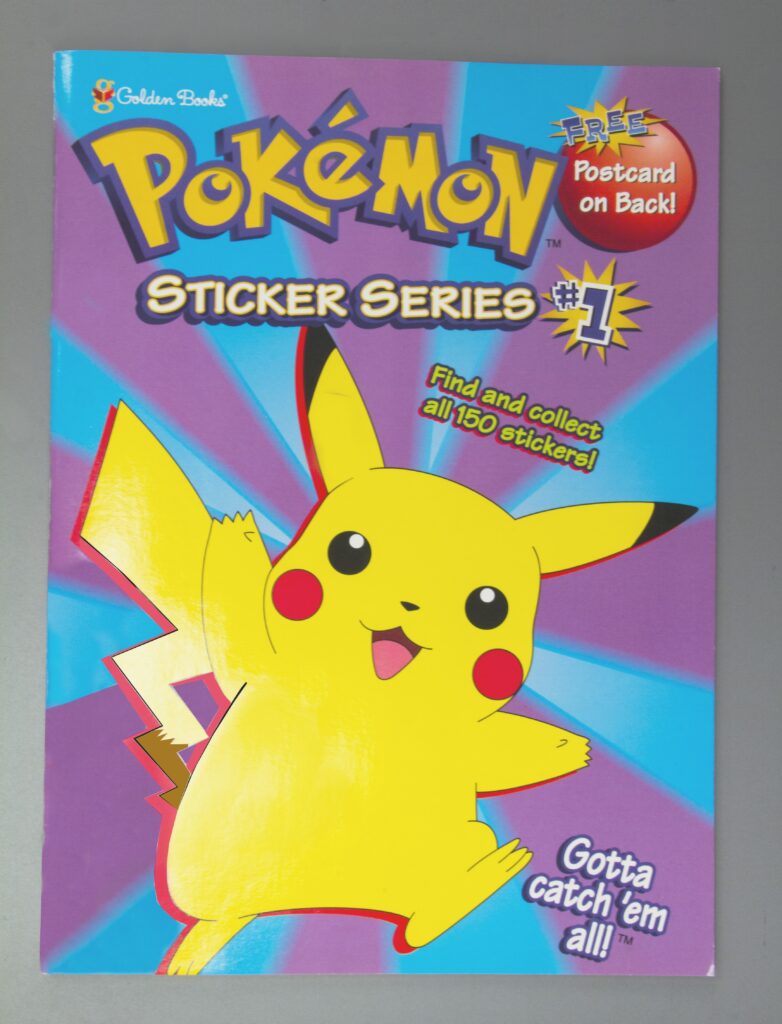
When I generated another random object number (117.3470) recently, I was again led to an ordinary object, this time a Pokémon sticker book. Number one of a series, a consumer might have bought this at a mass-market retailer like Walmart or as an impulse buy in a supermarket checkout line to appease an eager child. The book is copyrighted to 1993 and was published as part of the Little Golden Books book line that had long offered Americans inexpensive but fun reading entertainment—think The Poky Little Puppy (1942) or The Little Engine That Could (1930). This Pokémon sticker book came to the museum as part of a gift of 1,200 Little Golden Books by Brian Schultz.
Most Little Golden Books are traditional stories, but this one was different because it was built around an activity: pasting stickers. Sticker books have been around for a while. They are descendants of scrapbooks, popular pastimes of the Victorian age of the 19th century when revolutions in mass-printing provided lots of material to put into books, from newspaper clippings to colorful advertising postcards. The Strong has an extensive collection of these scrapbooks.
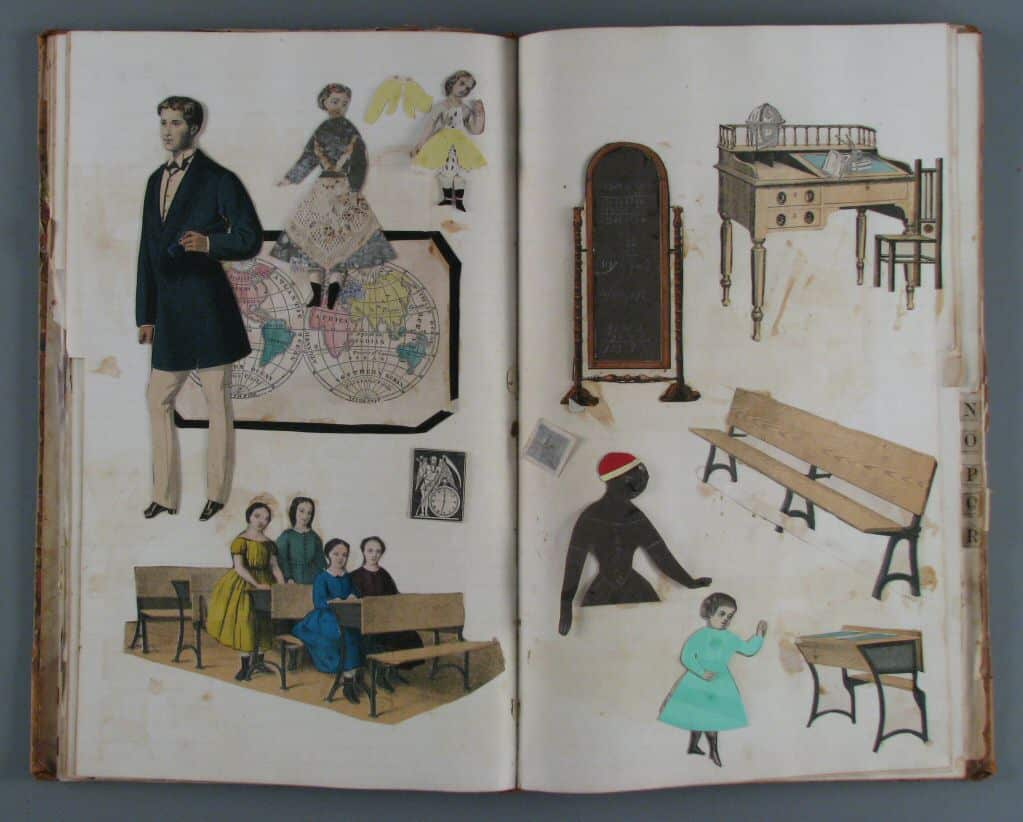
The most tedious and often overlooked aspect of scrapbooking was the adhesive part, making the cutout stick to the page. People used glue or paste to do the job, but it was somewhat cumbersome, especially when the paste pot dried out. Mark Twain even created and patented a successful line of self-pasting scrapbooks in 1873. Still, it was the development of the sticker, a self-adhesive label that didn’t require glue or paste, that really transformed this activity. As best as I can tell, it was invented and patented by Avery Dennison in 1935.
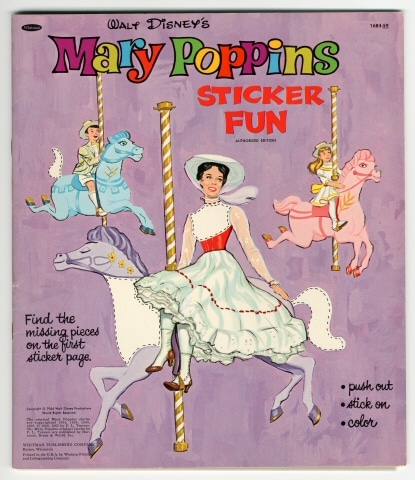
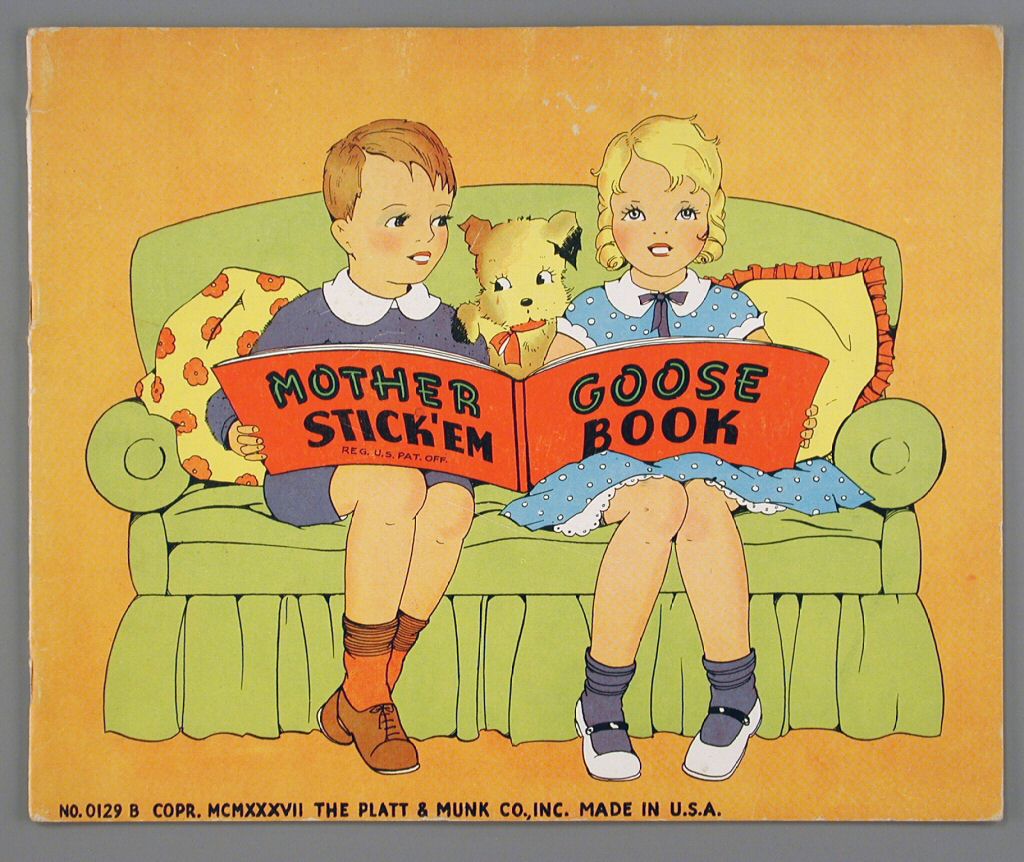
The sticker’s first uses were in retail, but people quickly found uses for them in activity books. The oldest sticker books I could find in The Strong’s collection were from the early 1940s, shortly after the sticker’s invention (though the Mother Goose Stick’Em Book in our collection from 1937 is similar, it did require moistening the back of the cutout). At a time of wartime rationing of materials such as metal and rubber that were used to make toys, sticker books were an accessible way to pass the time. While not as freeform and creative as scrapbooks, they kept little hands busy. The key was to have a subject for the stickers that was popular with kids, and here brands made an appealing subject for these sticker books, such as the Walt Disney’s Mary Poppins Sticker Fun book from 1964.
That brings us to Pokémon….
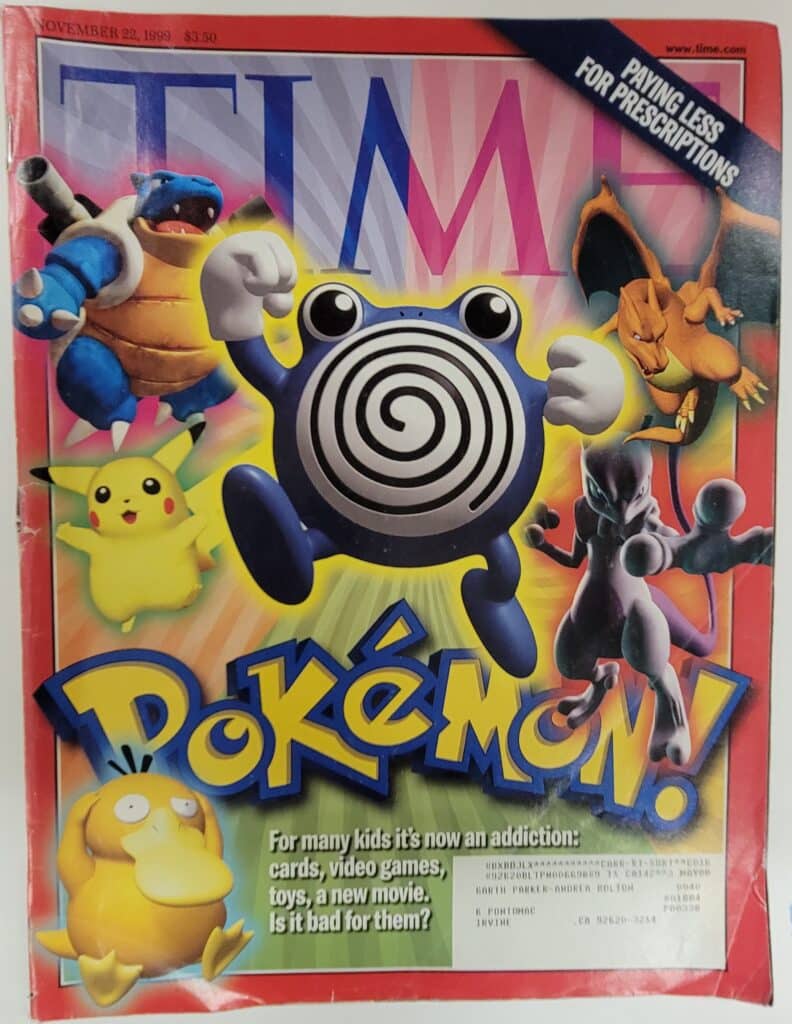
This Pokémon activity sticker book is copyrighted 1998, the same year as the brand’s North American launch and two years after it had debuted in Japan on the Game Boy. Pokémon came to the United States as a multipronged media blitz, featuring not only the video game (Pokémon Red and Green in the United States) but also cards, an anime television show, and plenty of related merchandise such as this activity book. American children embraced it immediately. Time magazine featured it on its November 22, 1999 cover with the usual moral panic language about addiction and potential harm to children, calling it “a pestilential Ponzi scheme.” Such criticism did nothing to dampen the phenomenon, and over the years, its popularity, while waxing and waning, has never truly abated, as new games and iterations such as Pokémon Go (which has players finding Pokémon monsters living out in the real world) keep it a favorite with fans of many generations.
As spin offs from a brand go, the sticker activity book in our collection actually fits well with the central theme of the game, which is collecting monsters. The activity of finding a particular Pokémon creature, peeling it off, and sticking it in another spot is intrinsically related to the core mechanic of the original video game. This itself was inspired by creator Satoshi Tajiri’s love of bug collecting as a kid (so much so that he had the childhood nickname, Dr. Bug) and infused the game with his childhood passion.
Just as sticker books hearken back to Victorian scrapbooks, in the 19th century, nature collecting—especially insects such as butterflies—was a favored form of recreation. Today, children have less access to wild nature, spend more time inside, and are operating in an environment with an increased sensitivity to capturing and pinning live bugs. As a result, insect collecting has declined in popularity. But its basic appeal to the collecting instinct remains, and Pokémon breathed new life into this old play, where the thrill rests in the quest to complete a collection, or, in the memorable words of the game, you “gotta catch ‘em all.”
Collecting is an ancient form of play, and Pokémon shows how play patterns persist in fundamental ways even as they evolve in form, from scrapbooks to sticker books and from butterflies and moths to Pikachu and Charizard.

