



By: Joshita Manohar, 2026 Strong Research Fellow
A child picks up a puzzle piece, turns it once, then twice, and presses it into place. It does not fit. They pause. Try again. This time, they push a little harder, then pull it back out. For a moment, nothing happens. The piece stays where it is, slightly misaligned, waiting. On a tablet, the same moment might unfold differently. The piece snaps into place or it refuses to move at all.
These small differences point to a larger question: what happens when play removes the possibility of getting something wrong? During my time as a research fellow at The Strong National Museum of Play, I began looking more closely at how play materials are designed to handle failure. While contemporary toys and digital games often aim to make play smooth, intuitive, and error-free, archival materials suggest that earlier designers approached difficulty differently. Rather than eliminating mistakes, they structured them, treating moments of failure as part of the learning process itself.
The Computer as a “Patient Mirror”
Early educational computing materials reveal a strikingly different approach — one that treated errors as part of the process, not problems to be eliminated. In a 1981 issue of Classroom Computer News, the computer is described as “an honest and patient mirror of our own mind.” Unlike a teacher or caregiver, the computer does not react with frustration, encouragement, or judgment. If a child makes an error, the system responds consistently and without emotion. If the child refuses to act, the system simply waits. One article describes this dynamic as a form of “passive resistance,” where the computer neither yields nor intervenes.
This framing shifts how we might think about digital play. Rather than correcting the child, the system reflects their thinking back to them. Progress depends not on being guided toward the right answer, but on continuing to engage.
Designing Error into the System
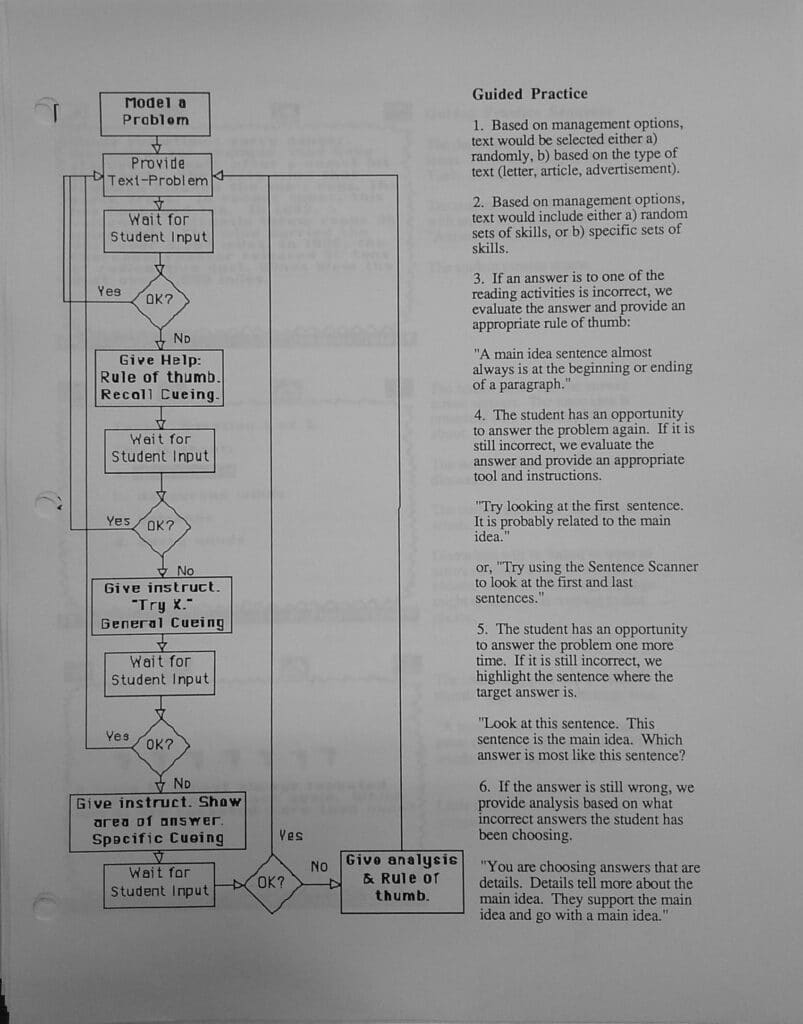
This idea becomes even more explicit in design documents from the MECC (Minnesota Educational Computing Corporation) collection, which describe a model of sequenced feedback. Instead of immediately correcting mistakes, systems were designed to respond to errors in stages, offering guidance, then tools, and only eventually pointing toward the correct answer. Error, in this model, is not a disruption. It is a starting point.
This stands in contrast to many contemporary digital experiences, where incorrect actions are often prevented entirely or resolved instantly. Pieces snap into place. Wrong moves are blocked. Feedback is immediate and often invisible. While these features can make play more efficient, they also reshape the experience of difficulty. If there is no opportunity to make a mistake, there is also no opportunity to work through one.
Control, Constraint, and Exploration
Design guidelines from The Learning Company in the 1980s further emphasized that effective learning environments should be open-ended, exploratory, and child-controlled. Programs were designed to offer multiple paths and solutions, and space for discovery.
This philosophy is easily recognizable in analog play. A physical puzzle allows for continuous manipulation. Pieces can be rotated, misplaced, and reconsidered. Errors remain visible, and the child maintains control over the process. There is no system enforcing correctness or preventing failure.
Digital environments, by contrast, often introduce constraints that guide the child toward specific outcomes. These constraints can support learning, but they also narrow the range of possible actions, shaping how children experience both success and failure.
Play as a Space for Risk
The Doris Bergen Papers reinforce the idea that play is uniquely suited for encountering and working through difficulty. Bergen argues that play provides a “low risk environment that is under the child’s control,” where children can experiment, take risks, and try again without lasting consequences. Within this space, failure takes on a different meaning. It is not something to avoid, but something to engage with.
Other materials in the archive similarly emphasize that strong problem solvers are not those who seek a single correct answer, but those who explore multiple possibilities and are willing to experiment.
What Materials Invite Children to Do
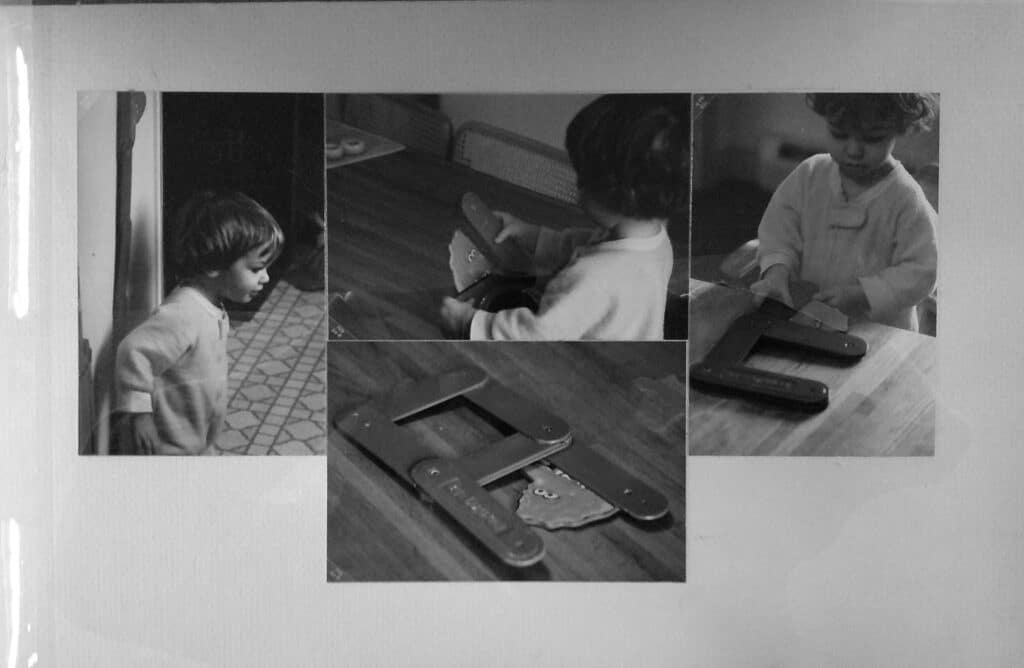
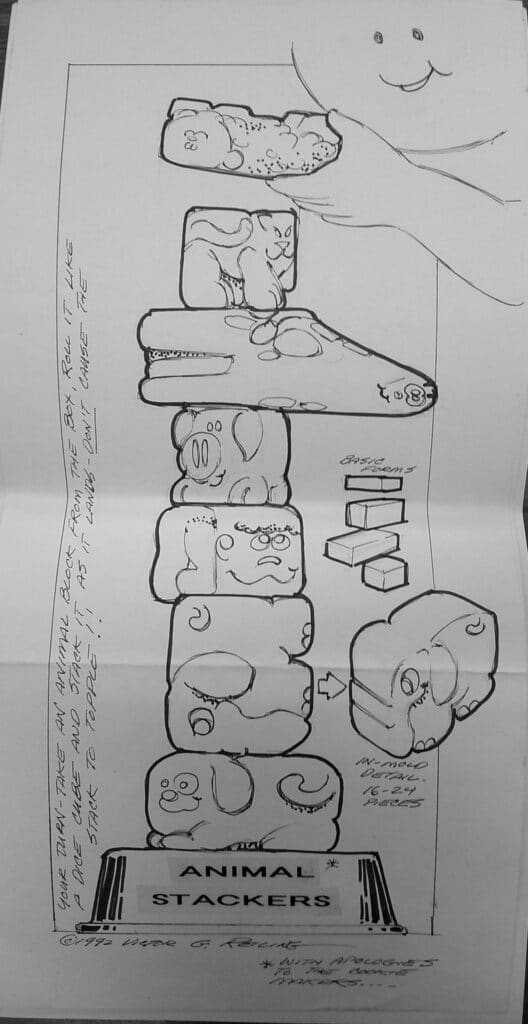
The concept of affordances, the idea that objects suggest certain actions, offers another way to understand these differences. A puzzle invites fitting pieces together. A block invites stacking. These physical properties shape how children interact, explore, and respond to challenges. Traditional toys often allow for a wide range of actions, supporting open-ended play and experimentation. Technology-enhanced toys, depending on their design, may either expand these possibilities or narrow them, guiding children toward specific interactions.
The question is not whether one type of play is better than another, but how different designs shape the kinds of challenges children encounter, and how they respond to them. Seen this way, persistence is not simply a trait a child possesses. It is something that emerges from the interaction between the child and the environment.
Rethinking Failure in Play
The archival materials at The Strong National Museum of Play suggest that difficulty was once treated as an integral part of learning. Feedback was structured, not removed. Exploration was encouraged, not constrained. Errors were expected, and even necessary.
Today, many play experiences are designed to minimize friction. While this can make interactions more seamless, it may also reduce opportunities for children to engage in the very processes that support persistence: retrying, revising, and adapting. This raises an important question for designers, educators, and researchers alike: what does it mean to design not just for success, but for struggle?
Looking Forward
The materials preserved in the Brian Sutton-Smith Library and Archives of Play offer more than a historical record. They provide a lens through which to reconsider how play environments are designed today. As digital and analog play continue to evolve, the challenge is not to eliminate failure, but to design it thoughtfully; to create spaces where children can encounter difficulty, remain engaged, and discover that trying again is part of the process. Failure, in this sense, is not a flaw in play. It is one of its most valuable features.

