



In the fall of 1950, Charles Schultz’s first Peanuts comic strip ran in the daily newspapers. The comic centered on the disenchanted figure of Charlie Brown and a cast of characters with realistic faults and deep observations about daily life. Schultz introduced Charlie Brown’s dog, Snoopy, in the third comic strip. Snoopy first won my heart during a meet and greet at Knott’s Berry Farm in California. I was four years old. Now, a few decades later, I understand how sophisticated Schultz’ work is and I’m excited to see it celebrated in Take Care with Peanuts: The Exhibit created by the Miami Children’s Museum at The Strong National Museum of Play until September 7, 2026.
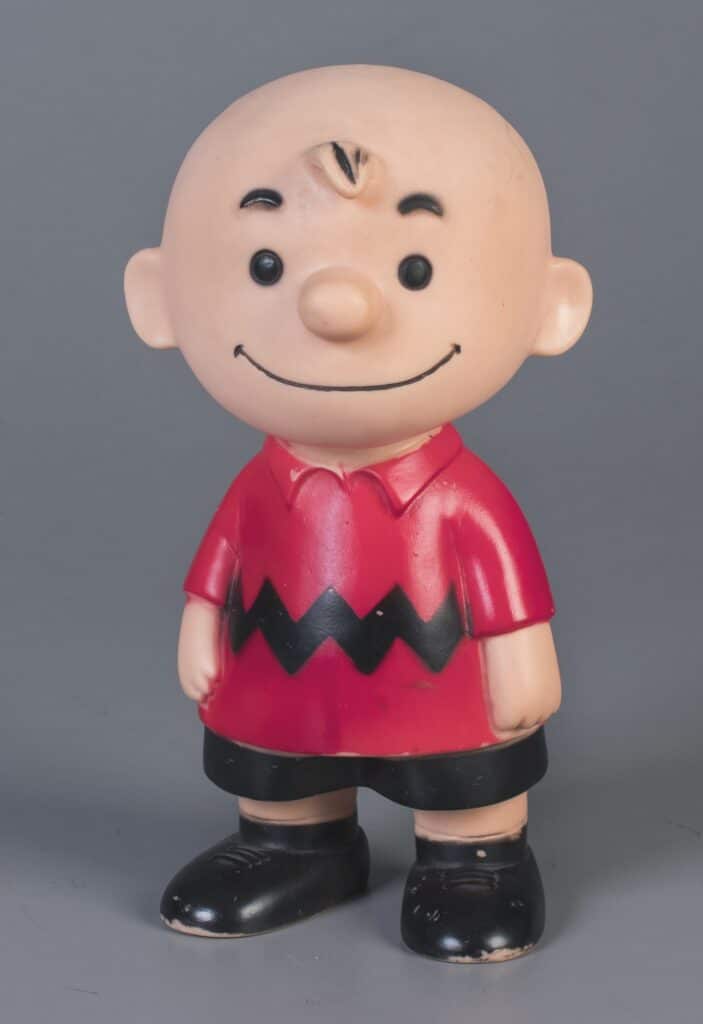
During his career, Schultz drew nearly 18,000 Peanuts comic strips. While the brand proved highly marketable, Schutlz was conflicted about licensing. He was a commercial cartoonist with five kids to support, but he also considered creating licensed products as more about the ambitions of others rather than his own. Nevertheless, if manufacturers were going to create Peanuts products, Schulz wanted licensors to get his beloved characters right. According to a 1987 Los Angeles Times article by Carla Lazzareschi, Schulz had a “Bible,” which laid out his licensing rules in a “five-pound, 12-inch-by-18-inch binder” that established “accepted poses for each character and painstakingly details their personalities.” The museum has a collection of nearly 300 licensed artifacts related to the comic strip ranging from the 1960s to present day. Here are a few of my favorite Peanuts-related artifacts in The Strong’s collections.
Peanuts in Plastic
One of the first licensed Peanuts playthings was introduced by Hungerford Plastics Corp. in 1958. Their character dolls represented Snoopy, Linus, and Charlie Brown, among others. The dolls were advertised as being “made of safe, sanitary, unbreakable vinyl.” It’s rumored that Schutlz’s children liked to float the Charlie Brown doll in their swimming pool. As I imagine this scenario, it seems poetic—a hollow doll representing its creator’s insecurities and melancholy apathetically floating in a seemingly vast pool of water as children splash, laugh, and occasionally push the figure past.
Snoopy Goes to Space
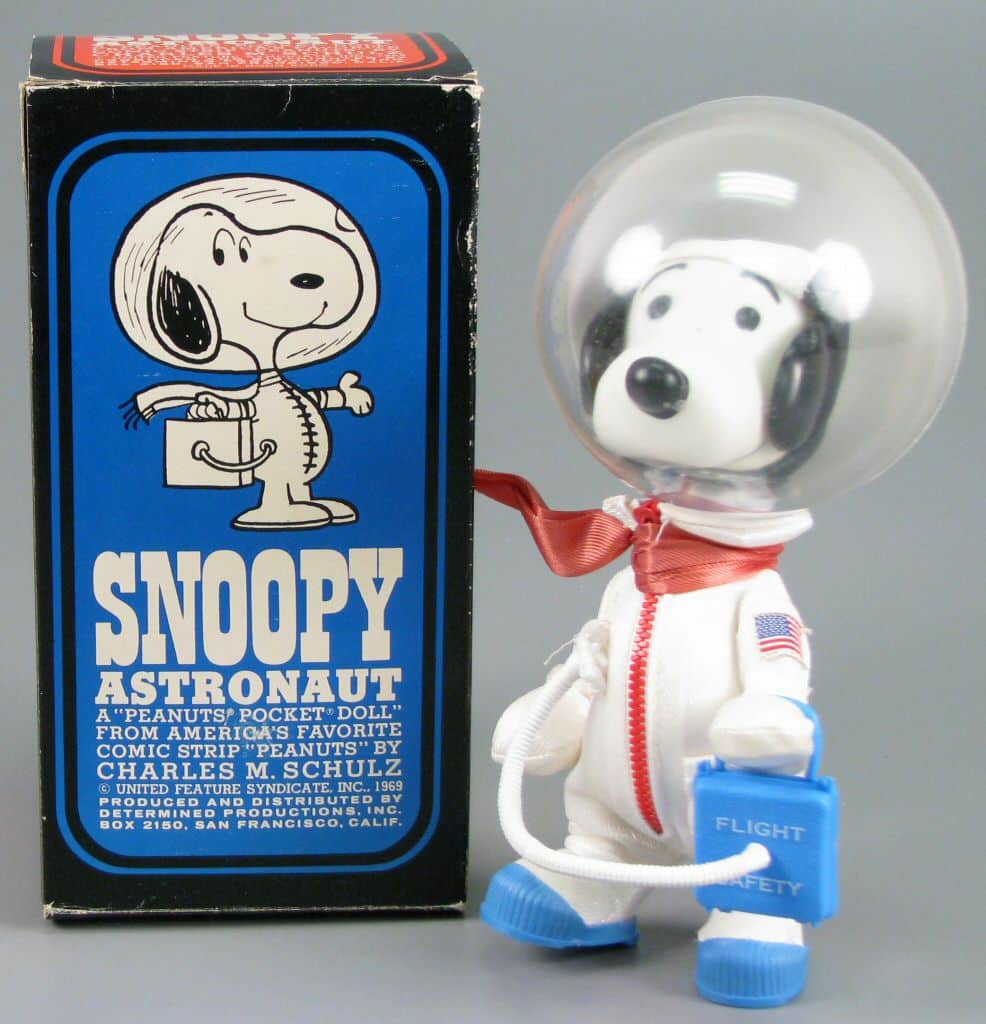
A decade later, during the Apollo spaceflight missions, Snoopy became the mascot for NASA’s spaceflight safety materials. Schultz also created a few comic strips depicting Snoopy as an astronaut and the “first Beagle on the moon!” My favorite product from this period is the Snoopy Astronaut described on the packaging as a “Peanuts Pocket Doll.” The figure remains popular among collectors today. In 2025, Super7 released a limited-edition 15” version of Snoopy in a white spacesuit. Priced at just under $400 it was clearly intended for nostalgic fans.
Hopping with Woodstock
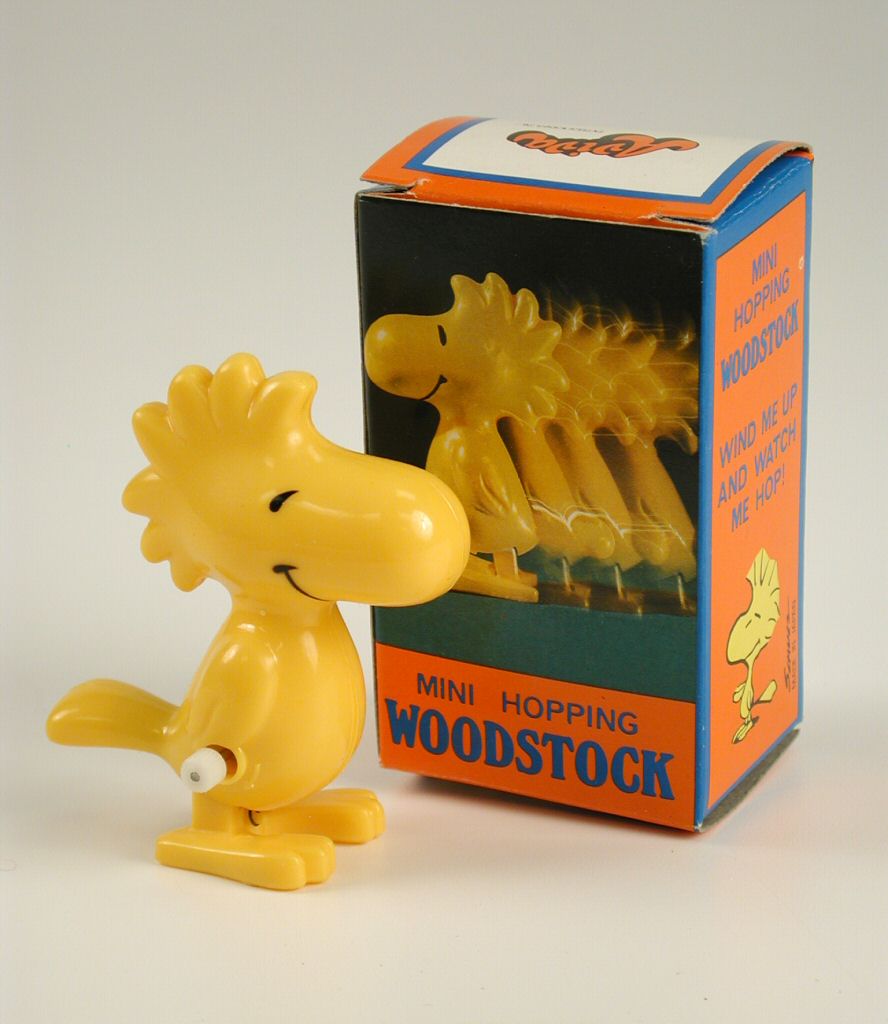
In the 1970s, Aviva Enterprises produced several Peanuts products ranging from 14 karat gold-plated jewelry to a line of trophies shipped in a ready-to-mail box called the “gift-a-gram.” In 1974, Elliot Steinberg, the company’s president, established a toy division and released Snoopy and Woodstock wind-up walker toys. I adore their Mini Hopping Woodstock. There’s something charming about the tiny yellow bird. Perhaps Schutlz captured the appeal of the character best when he noted that “Woodstock knows that he is very small and inconsequential indeed. It’s a problem we all have. The universe boggles us…Woodstock is a lighthearted expression of that idea.”
A Portable Playhouse
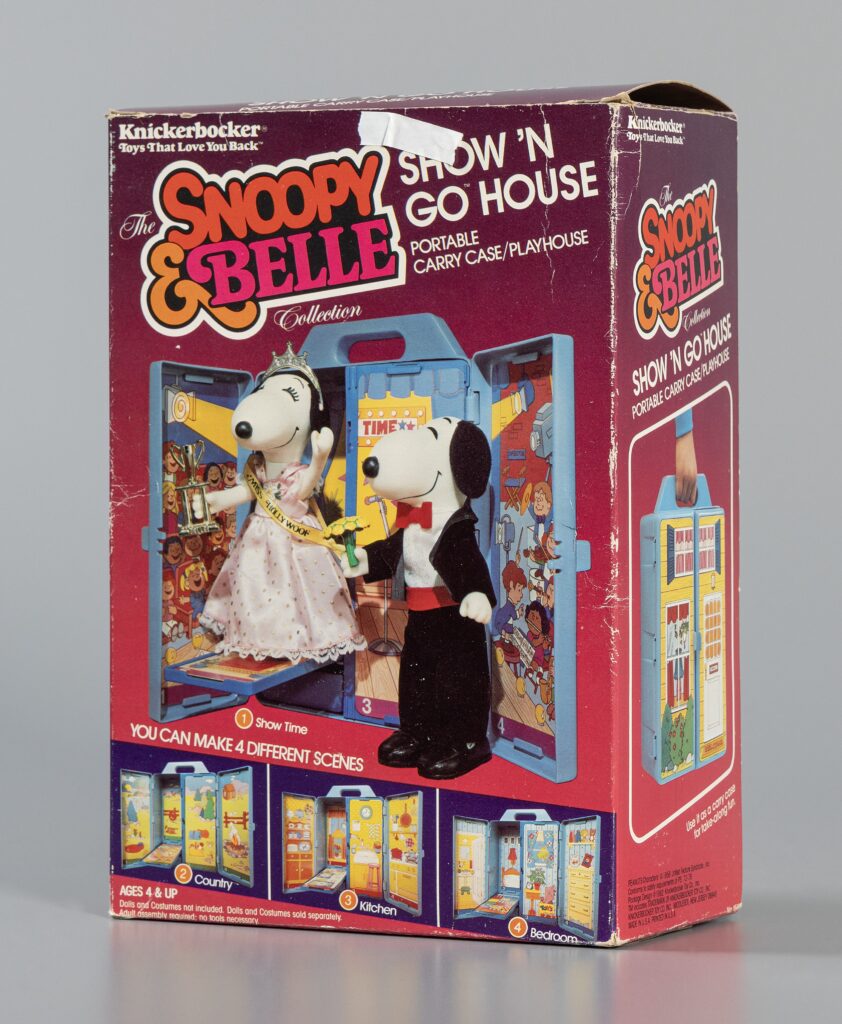
Just last year, the museum received a prototype of The Snoopy & Belle Show ‘N Go House produced by Knickerbocker in the early 1980s. Judith Blau created a collection of kids’ products that used design to expand the world of play into multiple categories where play could happen. For The Snoopy & Belle Show ‘N Go House, Blau created a portable case that transformed into a playhouse for the character figures. Graphic cards could be inserted to change the setting. Knickerbocker also produced Snoopy and Belle character dolls and fashion accessories.
From Peanuts to Licca-chan
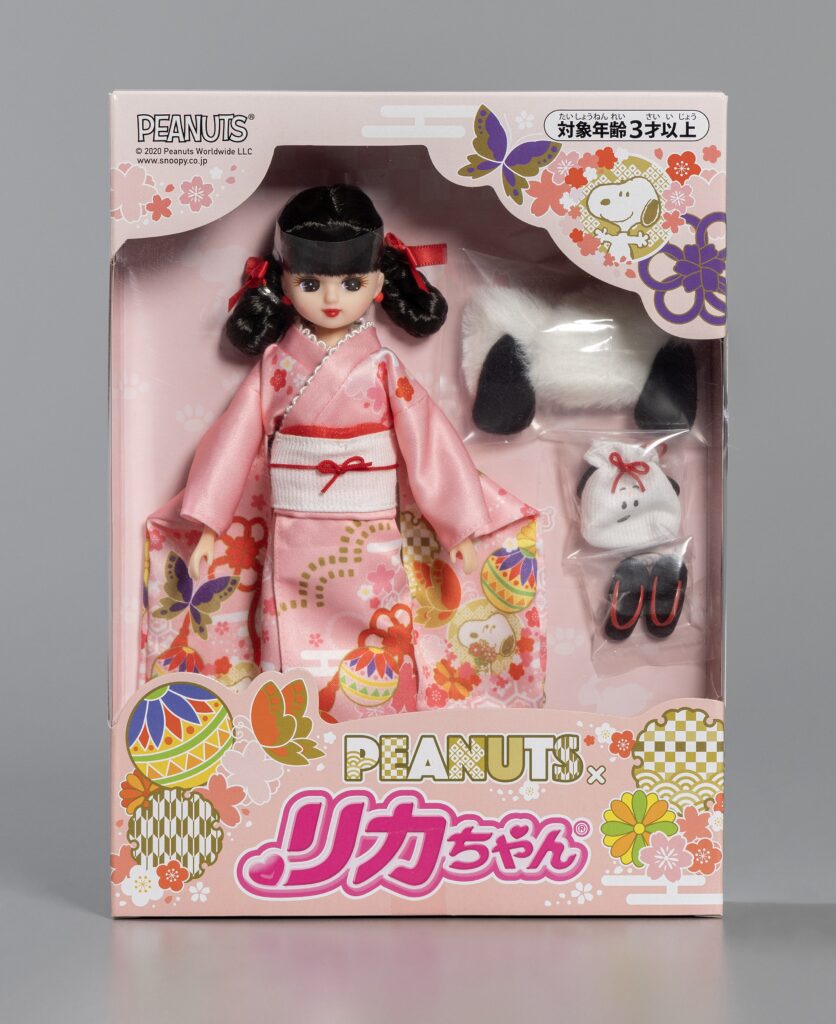
Over the years, Charlie Brown and his friends became global icons and remain especially popular in Japan. In the 1960s, a Japanese publisher hired poet Shuntaro Tanikawa to translate Schultz’s “Peanuts” into Japanese. Tanikawa’s poetry captured the loneliness of small moments in everyday life. In The New York Times article following Tanikawa’s death in 2024, Michael S. Rosenwald suggested that one of the reasons Snoopy was successful in Japan was because of Tanikawa’s ability to “mimic” the voices of the characters whose “philosophical sensibilities” resonated with Japanese society. During the 1960s, Japanese art also reflected an interest in simple shapes and minimal figures. Not long after Peanuts entered the Japanese market, Takara introduced Licca-chan, a fashion doll with large eyes and chestnut hair. Like Snoopy, Licca-chan became a social phenomenon in Japan. In 2020, Takara released a Licca-chan doll in celebration of the 70th anniversary of Peanuts.
The final Peanuts comic strip ran in newspapers on February 13, 2000. The comic shared a heartfelt farewell message from Schultz and typewritten by Snoopy. Schultz had passed away just a few hours before it was published. The terms of his contract stated that no other artist could take over Peanuts. Even the most talented illustrators would not have been able to capture the characters like he did—they were an extension of Schultz. According to a 2025 Smithsonian magazine online piece, Schultz had once told his wife, Jean, that “Snoopy is the way I’d like to be—fearless, the life of the party, and brushing off Lucy’s bad temper with a gentle kiss.” The brand continues to thrive with reports of more than 1,2000 licensed products around the world and more than one million followers on TikTok.

