
• Skip to primary navigation
  • Skip to main content
Open Today clockOpen 10 a.m.–5 p.m., Fri. 10 a.m.–8 p.m.
  • Educators
    • Philosophy
    • Pre-K to Grade 6
    • Grades 7 to 12
    • Field Trips
    • School Visit FAQs
    • College and University Programs
    • Professional Development
  • Woodbury School
    • Woodbury School FAQs
    • Woodbury School Staff
    • Current Academic Calendar
  • Blog
  • Journal of Play
    • About
    • Journal Issues
    • Information for Authors
    • Book Reviews
    • Subscribe
  • search-icon
Logo for The Strong National Museum of Play with a marble replacing the "O" in "Strong". The word "Strong" is in purple as well as the word "Play" in the subheading.

The Strong National Museum of Play

Visit the Ultimate Play Destination

  • Visit
    • Hours and Admission
    • Directions and Parking
    • Events Calendar
    • Membership
    • Accessibility
    • Museum Rentals
    • Dine and Shop
  • Exhibits
    • Museum Exhibits
    • Online Exhibits
    • National Toy Hall of Fame
    • World Video Game Hall of Fame
    • Skyline Climb
    • Play Lab
    • Butterfly Garden
    • Carousel and Train
  • Collections
    • Search Collections
    • Brian Sutton-Smith Library & Archives of Play
    • International Center for the History of Electronic Games
    • The National Archives of Game Show History
    • Research Access
    • Research Fellowships
    • Donate an Artifact
    • Preservation
  • Support
    • Expansion Campaign
    • Individual Giving
    • Corporate Giving
    • The Play Ball
  • About
    • Margaret Woodbury Strong
    • Museum News
    • Board of Trustees
    • Play Makers Leadership Council
    • Community Access
    • Annual Reports
    • Press Room
    • Books
    • Play Quotes
  • Donate
  • Buy Tickets
Home triangle separator Blog triangle separatorThe Strong’s ICHEG Acquires Massive Japanese Video Game Collection

The Strong’s ICHEG Acquires Massive Japanese Video Game Collection

ICHEG has acquired a collection of nearly 7,000 Japanese video games produced for 22 game systems made by Nintendo, NEC, Sega, and Pioneer. Assembled by André and Sylvio Hodos—collectors who began playing Japanese games as teenagers in France—and who then set out to amass full-sets of the systems included in this collection, these beautifully-preserved games will be a tremendous resource for anyone interested in the history of video games, their impact on the way we play, and the global rise of Japanese culture.
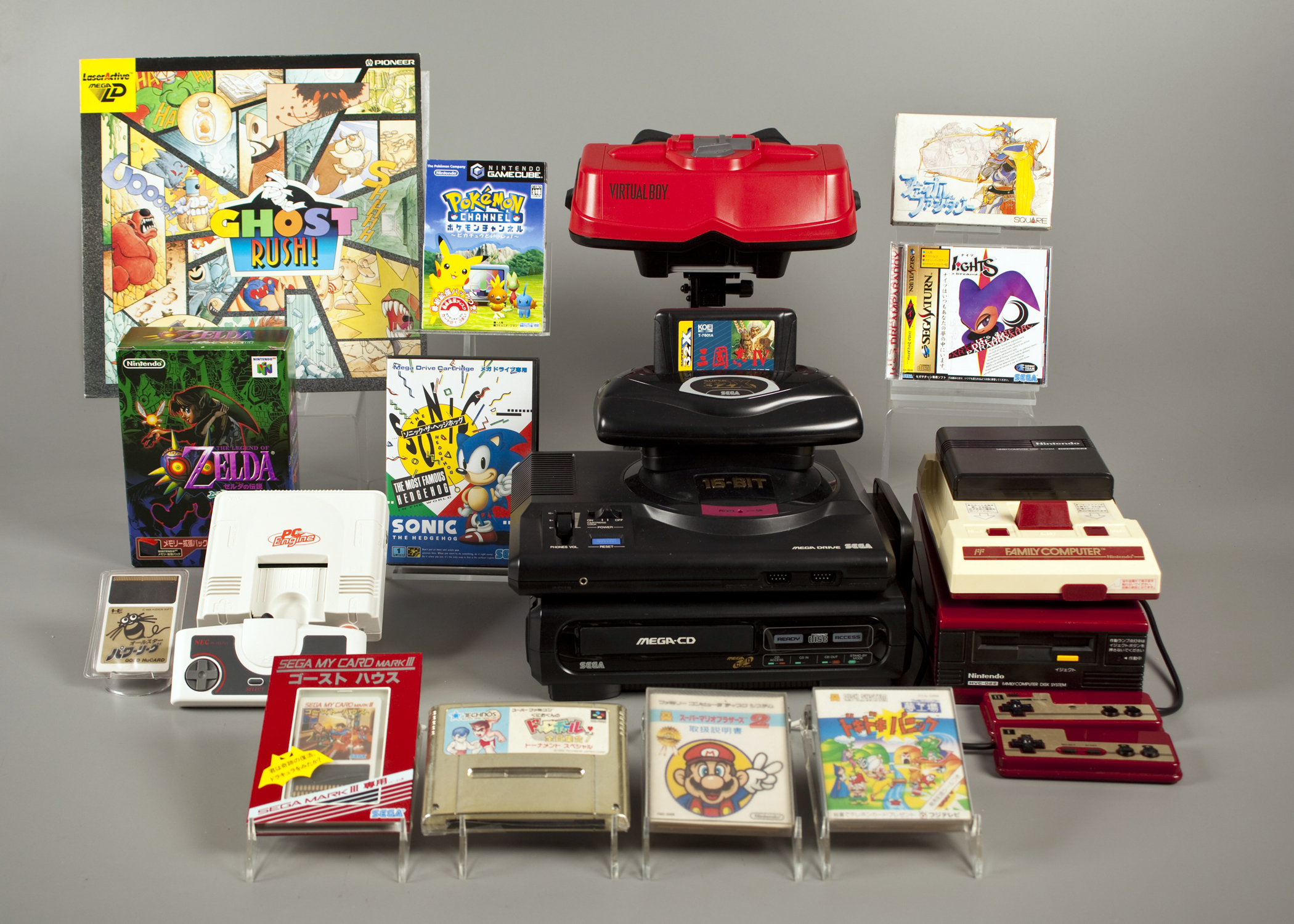
Group of Games, Courtesy of The Strong, Rochester NYopens IMAGE file

The history and impact of video games span the globe. Atari jumpstarted the video game industry in the 1970s and subsequently made California the epicenter for game development for many years. Similarly, during the 1980s programmers in Europe introduced many innovations in microcomputer gaming using systems like the BBC Micro, the Sinclair Spectrum, and the Commodore 64. But Japanese console developers in the 1980s and afterwards had one of the most outsized influences on the development of video games.

Japanese companies began exerting global reach as early as the 1970s with arcade cabinets like Space Invaders and Pac-Man, but Japanese console makers truly altered the course of gaming. In the United States, by the early 1980s the home console market was in decline. In Japan, however, Nintendo’s Family Computer (Famicom) brought new energy to the Japanese video game market when it debuted in 1983. Two years later Nintendo introduced the Famicom to American customers as the Nintendo Entertainment System (NES), and a new boom began as Japanese game makers competed with each other to pioneer new technologies, develop better systems, and offer more compelling games.

Japanese games of this era not only sold well in the market place but also introduced many features that have become common in video games. Japanese manufacturers presented games that told compelling stories, used cinematic cut scenes, and gave us some of the industry’s most recognizable characters, from Mario to Sonic the Hedgehog. Some titles like the Super Mario Bros., Pokémon, and Final Fantasy games sold well internationally, while others like Dragon Quest and Mother did better in the Japanese market than elsewhere. In varying degrees all these games helped introduce Japanese cultural style to a global audience, creating generations who fell in love with the aesthetics of manga and anime featured in many of these games.

The nearly 7,000 Japanese games ICHEG recently acquired documents this age of Japanese gaming. The comprehensive acquisition spans 22 systems and not only includes the most popular games but also rare titles like Kunio-kun no Dodgeball da yo Zenin Shuugou! Tournament Special Gold Cartridge (translation: Mr. Kunio’s Dodgeball, Assemble Everyone! Tournament Special Gold Cartridge) and All Star Power League Gold HuCard—both limited edition games that were given away as prizes for tournament winners.
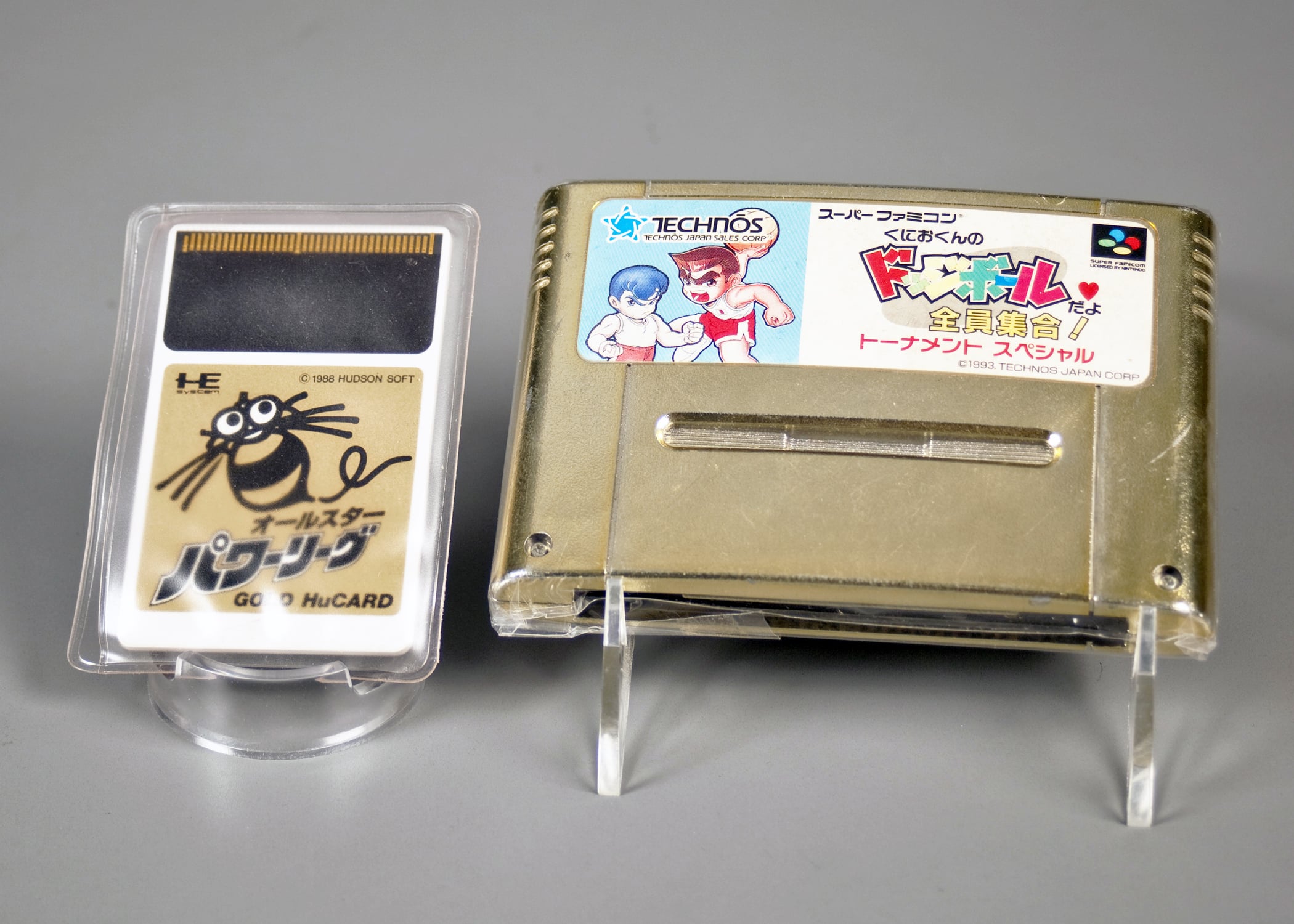
Technos Japan Corp, LtdEdition, Courtesy of The Strong, Rochester, NYopens IMAGE file

ICHEG is proud to have acquired a collection so unique in scope and quality and is honored to preserve such a rich representation of Japanese gaming. We look forward to sharing it with scholars and other museum guests.

By Jon-Paul Dyson, Director, International Center for the History of Electronic Games and Vice President for Exhibits

Previous Post
Next Post

Published on:
October 7, 2013

Sign Up for Museum E-News

This field is for validation purposes and should be left unchanged.
  • opens in a new windowYouTube
  • opens in a new windowTwitter
  • opens in a new windowTripAdvisor
  • opens in a new windowInstagram
  • opens in a new windowFacebook

One Manhattan Square
Rochester, New York 14607
+1 (585) 263-2700
info@museumofplay.orgcreate new email

Become a Member

  • Visit
    • Hours and Admission
    • Directions and Parking
    • Events Calendar
    • Membership
    • Accessibility
    • Museum Rentals
    • Dine and Shop
  • Exhibits
    • Museum Exhibits
    • Online Exhibits
    • National Toy Hall of Fame
    • World Video Game Hall of Fame
    • Skyline Climb
    • Play Lab
    • Butterfly Garden
    • Carousel and Train
  • Collections
    • Search Collections
    • Brian Sutton-Smith Library & Archives of Play
    • International Center for the History of Electronic Games
    • The National Archives of Game Show History
    • Research Access
    • Research Fellowships
    • Donate an Artifact
    • Preservation
  • Support
    • Expansion Campaign
    • Individual Giving
    • Corporate Giving
    • The Play Ball
  • About
    • Margaret Woodbury Strong
    • Museum News
    • Board of Trustees
    • Play Makers Leadership Council
    • Community Access
    • Annual Reports
    • Press Room
    • Books
    • Play Quotes

Copyright 2021 The Strong. All Rights Reserved.

  • Careers & Internships
  • Privacy & Terms of Use
  • Site Mapopens XML file