




It’s 1995. I’m 4 years old, in my pajamas, planted in front of my television. In the VCR is a VHS tape with a recording of the 1987 A Garfield Christmas special. A Garfield stuffed animal (also in his pajamas) is within reach. Cut to a Sunday morning with my grandmother. At the kitchen table, she sits with her instant coffee reading the “funnies.” Populating the newspaper page are the likes of Cathy, Dilbert, Peanuts and, of course, Garfield. It’s 1999. I sit down in my 1st grade classroom with my Garfield folder and pencils. Can you see a pattern developing? Flash forward to me as an adult, having since invested in a plethora of Garfield memorabilia from housewares and stuffed animals to original art pieces. The lasagna-eating orange cat gripped my heart in his relatability, antics, and nostalgic qualities in ways other characters haven’t. During my first job interview at The Strong Museum, I divulged my Garfield addiction. . . modestly. Soon after that, I learned of The Strong’s collection of Garfield merchandise and it was then I truly understood the all-consuming nature of the character trademark.
Jim Davis, the creator of Garfield, debuted his first comic strip back in 1978. The name “Garfield” originated from his late grandfather, James A. Garfield Davis. According to an article for Time magazine in 2024, Davis cited a variety of inspirations for the character. For one thing, Davis grew up on a farm surrounded by animals and wanted to depict a fat hungry cat. He states that Garfield’s hungry personality was also based on himself, a lover of lasagna.
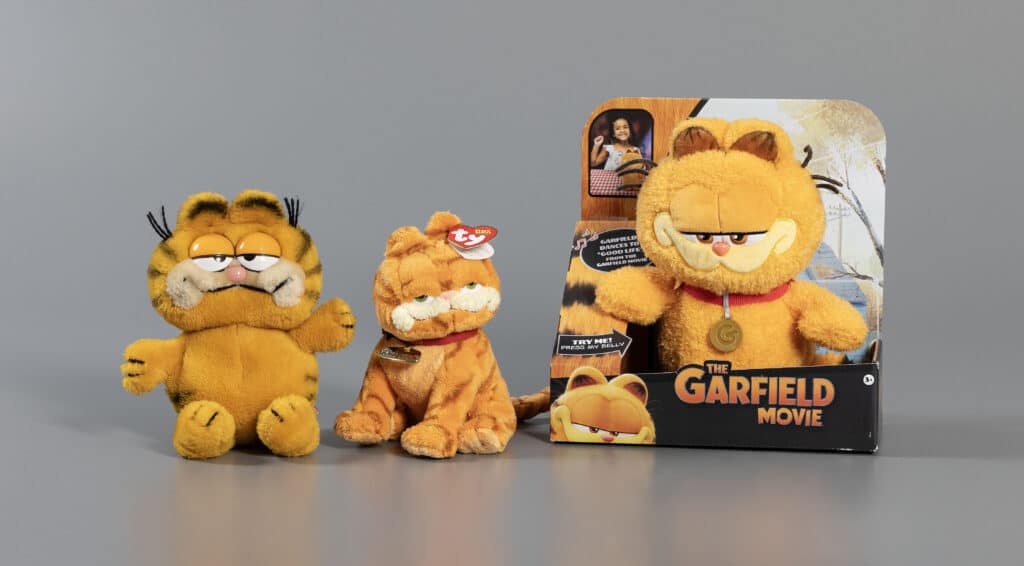
As time passed, Davis met with friend Charles Shultz, creator of the iconic comic strip Peanuts. Shultz offered Davis advice on character merchandising based on his success with Snoopy, Charlie Brown’s pet dog. By 2002, Garfield had appeared in nearly 2,500 newspapers and sold between 750 million to one billion dollars in merchandise in 111 countries worldwide.
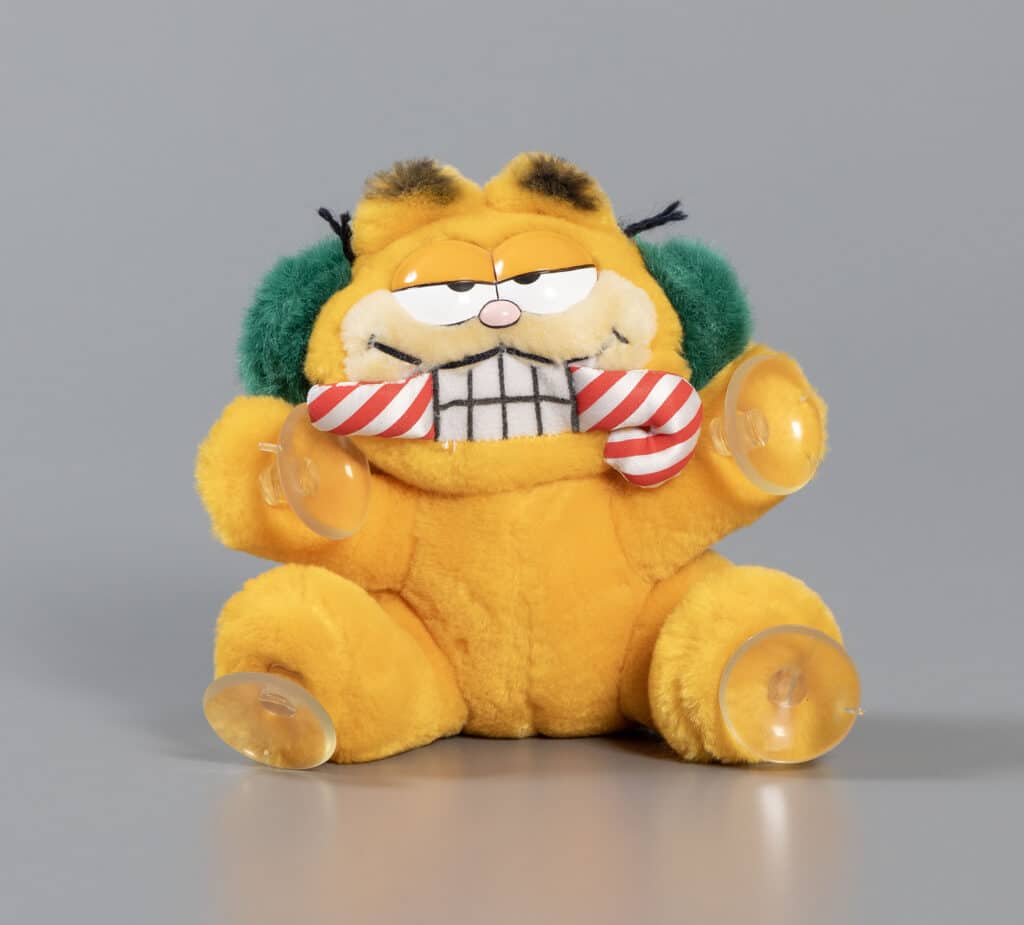
A popular (and obvious) merchandise play was plush toys. There have been seemingly limitless iterations of the Garfield plush, but one classic design was the Garfield window “hang-on.” These plush toys featured suction cups on the end of each foot that would adhere to the interior of a window, usually seen in automobiles. This iteration is a special holiday version featuring a peppermint candy cane clenched between Garfield’s teeth.
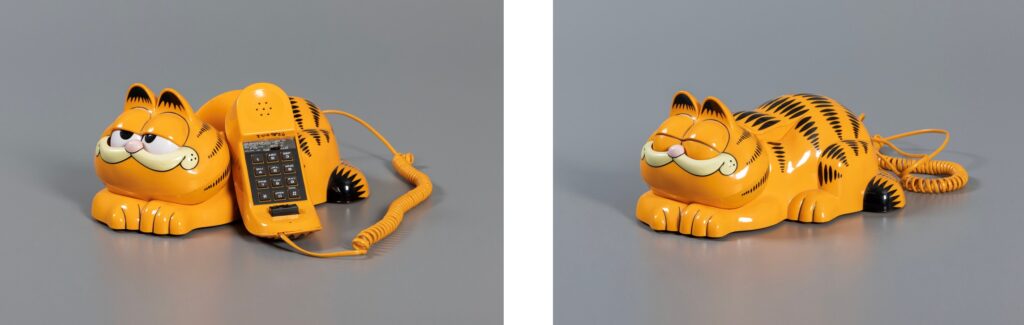
Another iconic and highly collectible Garfield design is this landline telephone. Designed in 1986, the phone consists of Garfield lying in what cat people call “loaf position.” When the phone’s receiver is in place on his back, the eyes are closed. When you pick up the receiver, Garfield’s eyelids retract and reveal his big eyes. In 2019, the phone made headlines when Time magazine released an article about a phenomenon on the beaches of Brittany, France. Residents reported that thousands of these Garfield phones had been washing up on French beaches for more than 30 years. It was discovered that a cargo ship container became trapped in a sea cave in the early 1980s, causing the phones to escape and float to shore overtime.
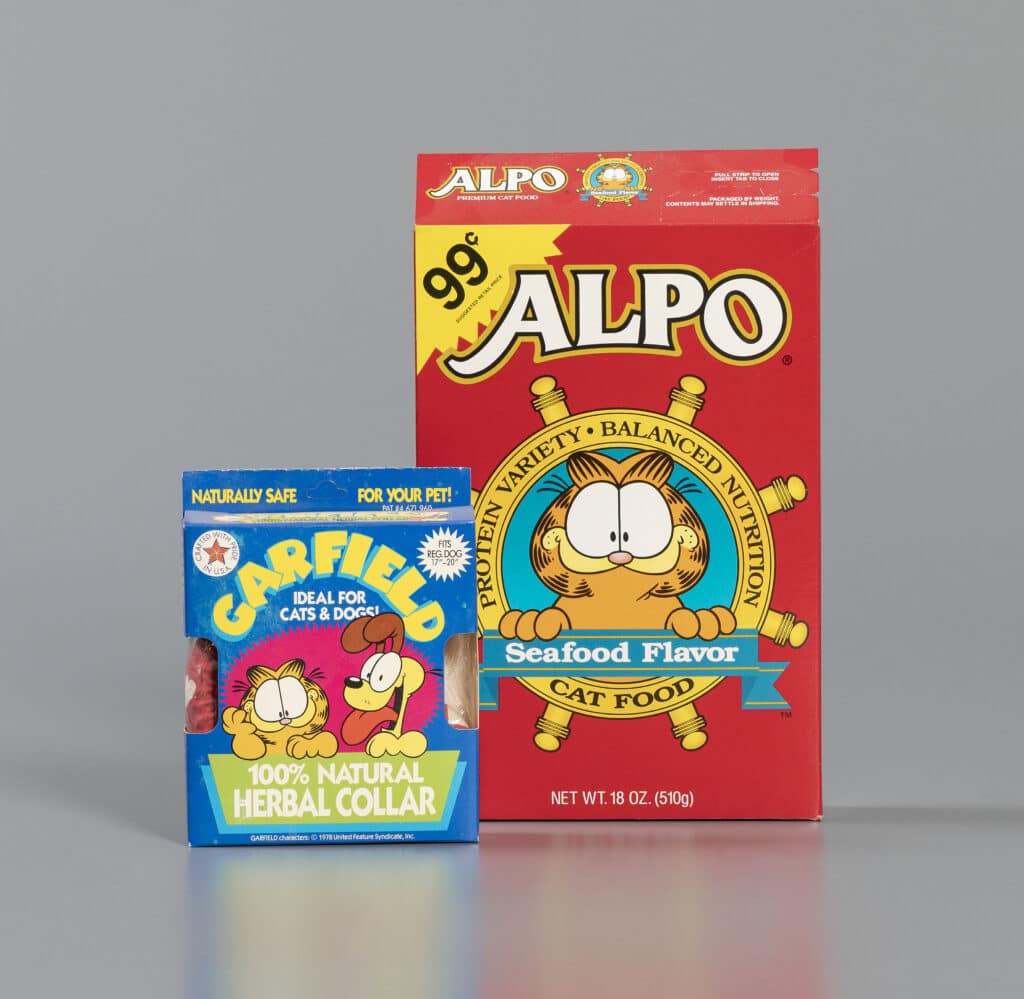
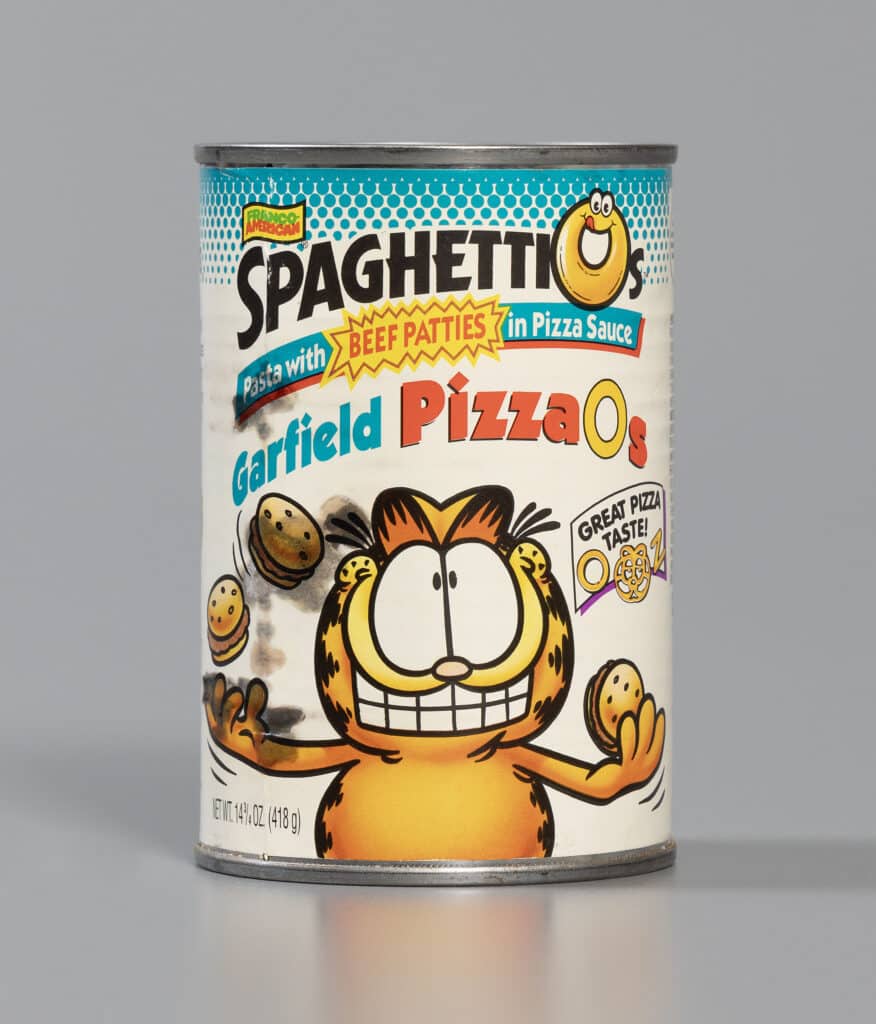
Garfield’s image stretched to other household items, including canned food and pet supplies. Garfield partnered with pet brand ALPO in 1988. This collaboration resulted in Garfield branded cat food boxes and featured television commercials. Have a stinky animal? Try the Garfield herbal pet collar! This collar is one of a few products produced under the Garfield specific pet product brand (PAWS inc.) in 1993. Hungry? Grab a can of Spaghettios! This can of Spaghettios depicts Garfield juggling burgers, advertising that pasta inside comes with “BEEF PATTIES” in pizza sauce. Spaghettios were a highly popular food amongst young people in the 90s, and the brand often collaborated with licensing such as the Teenage Mutant Ninja Turtles and Star Wars. These Garfield Spaghettios from 1993 have a special pasta shape designed to look like Garfield’s head.
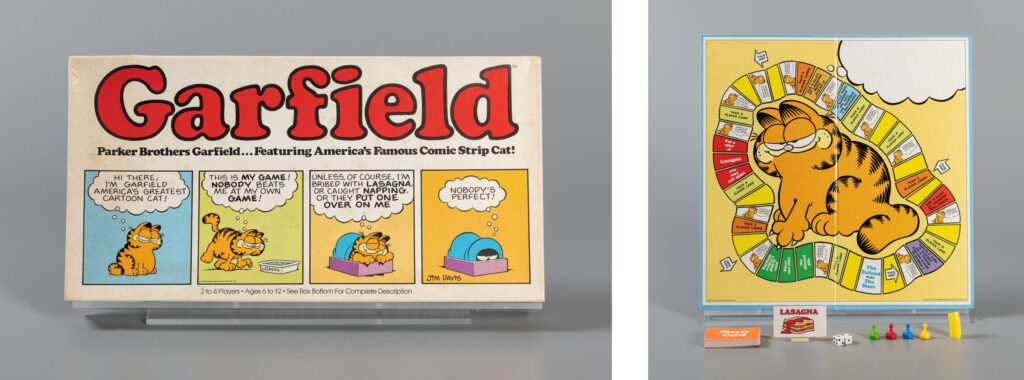
Davis also brought Garfield into the world of games. In 1981, Parker Brothers released a board game simply titled Garfield. This race-style game follows the whims of the lasagna-loving cat which is revealed through cards used during the course of play. The lasagna cards act as currency for additional dice rolls, while player cards offer benefits or challenges to complete throughout the game. Complete three loops around the board and you win!
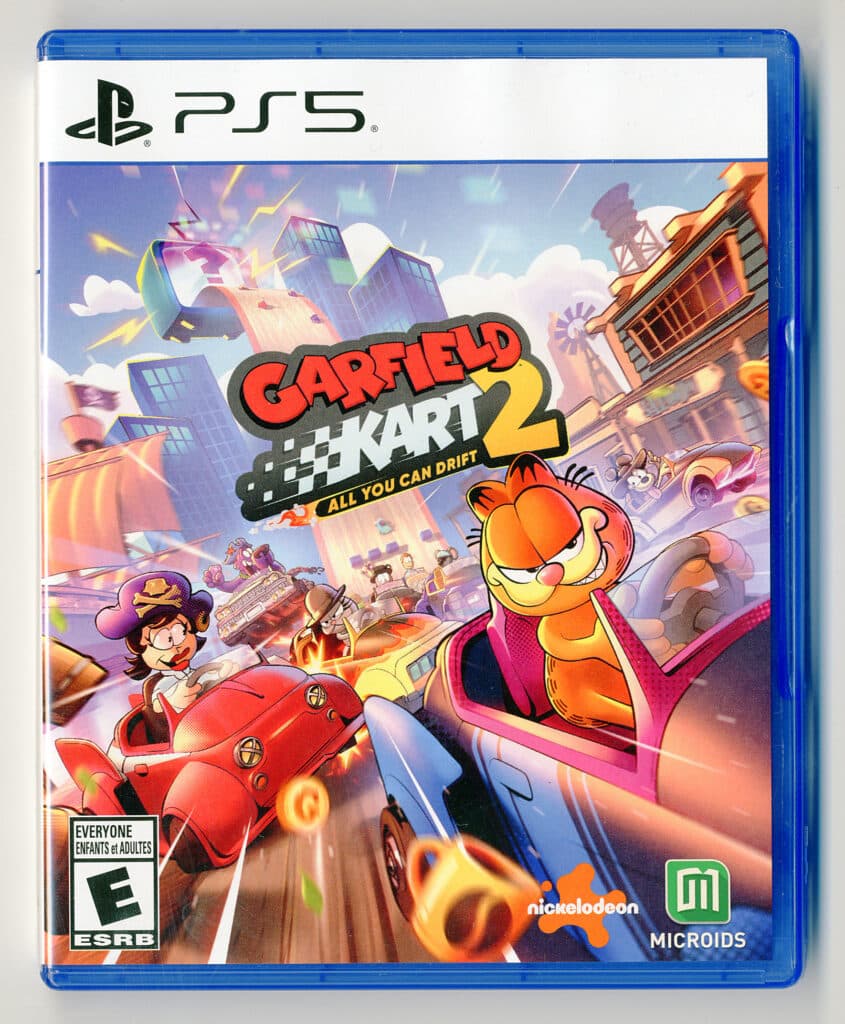
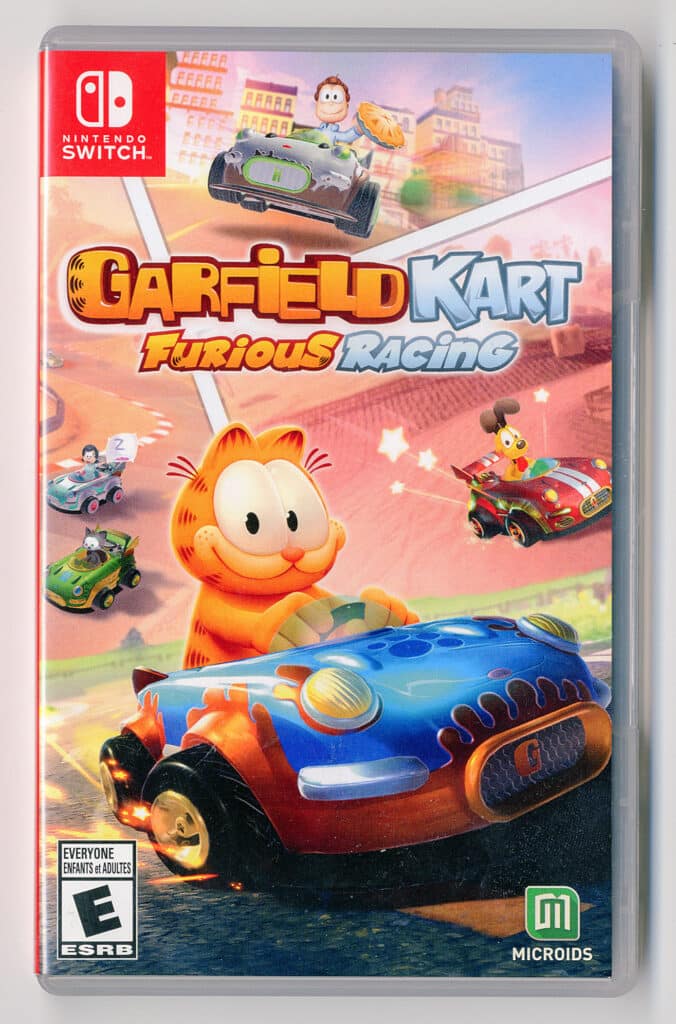
After populating the board game realm came video game concepts. As of 2026, Garfield has been featured in about 35 different video games across multiple platforms, the first game dating back to 1985. A notable and more recent video game is Garfield Kart. This racing game harkens back to the kart specific racing games like Super Mario Kart, and Crash Team Racing. Garfield Kart includes all the comic strip regulars, and three cups to compete in: Lasagna Cup, Pizza Cup, and Hamburger Cup. The original iteration made its debut on the Nintendo 3DS in 2013, and its subsequent sequels Garfield Kart: Furious Racing (2019) and most recently Garfield Kart 2: All You Can Drift (2025) are available platform wide. This franchise has created a niche cult following, with game specific Discord servers for fans to compete in tournaments and talk.
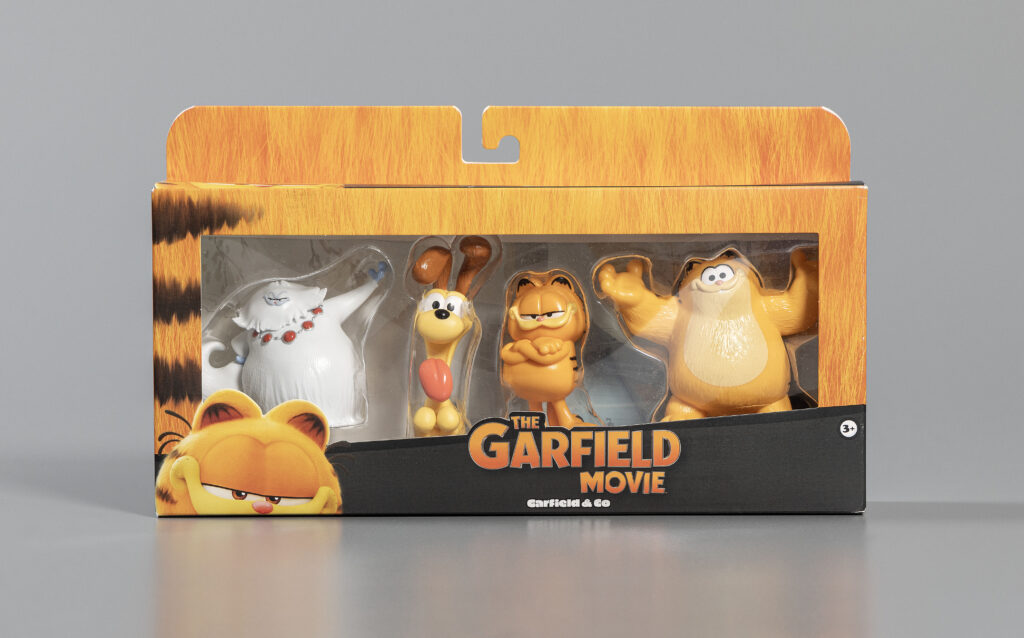
In 2003, Garfield was dubbed the world’s most “widely syndicated comic strip” by the Guinness Book of World Records. The comic strip spawned many television specials, two animated series, two full-length films that combined live action with animation, and most recently a computer-animated theatrical film titled The Garfield Movie. In 2019, the popular kids’ television network Nickelodeon acquired the rights to the Garfield franchise from Jim Davis, releasing a new generation of the world’s favorite cat onto our screens and into our homes. For fans like me, Garfield’s appeal and relatability is truly timeless. I can only hope that as the legacy continues, he will keep gripping the hearts of us hungry, Monday-hating, bed-loving humans forever.

