



The Education Task Force of Sonoma County Commission on the Status of Women held a “Women’s History Week” celebration to correspond with International Women’s Day in 1978. The movement spread and, in 1987, Congress passed Public Law 100-9, which designated March as Women’s National History Month. Despite these initiatives, I have no memory of special celebrations or lessons on women’s contributions to history while growing up in public schools in the 1980s and 1990s. In a note to her readers, Peggy Orenstein, an award-winning journalist and speaker on gender issues, expressed a similar sentiment, “It seemed that even as new educational and professional opportunities unfurled before my daughter and her peers, so did the path that encouraged them to equate identity with image, self-expression with appearance, femininity with performance, pleasure with pleasing and sexuality with sexualization.” The toy aisle has often been criticized for similar reasons, but I plan to deep-dive into the history of pink and gendered toys another time. This month is for celebrating. The National Women’s History Alliance declared the theme for Women’s History Month 2026: “Leading the Change: Women Shaping a Sustainable Future.” The five toys and dolls below draw on The Strong’s huge collection to highlight just a few of the thousands of women who contributed to play and inspired young minds.
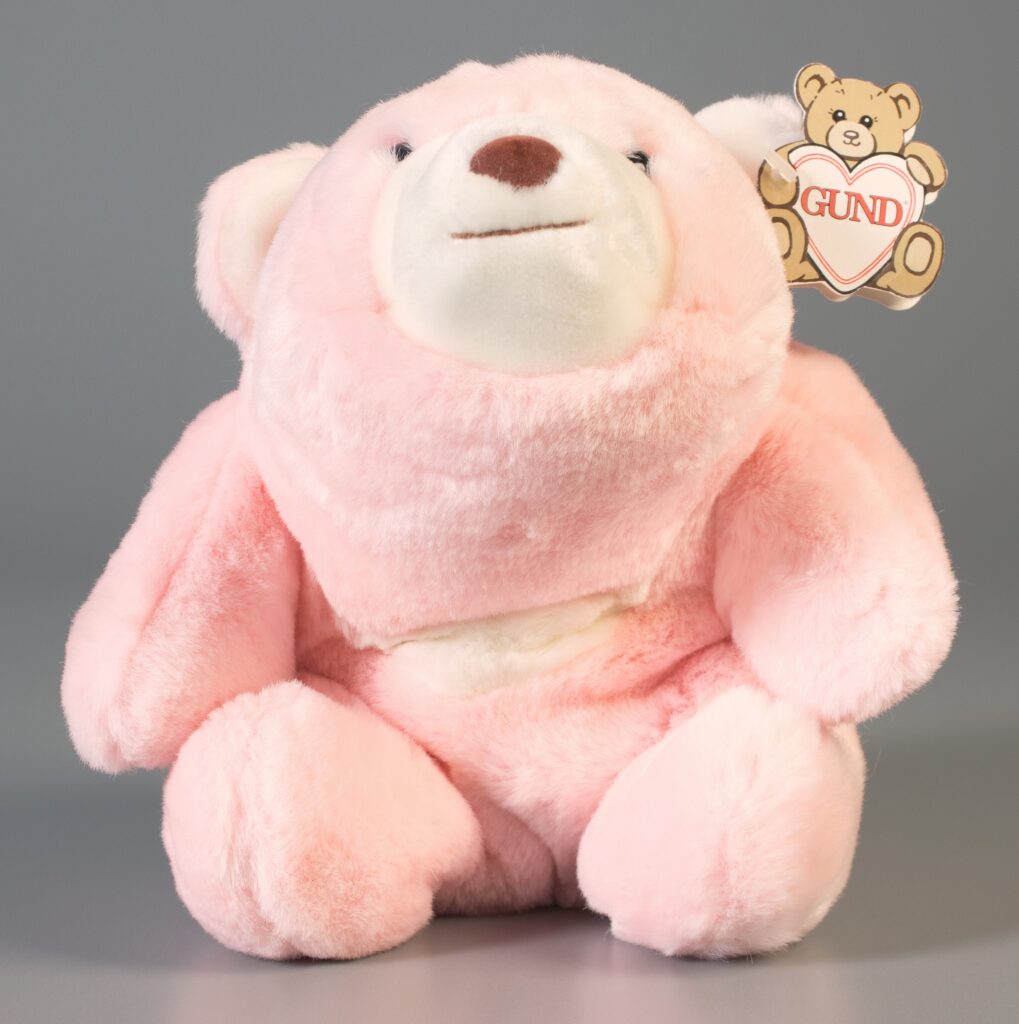
1. Snuffles, Rita Swedlin Raiffe
Rita Swedlin Raiffe, GUND Director of Design, revolutionized the toy industry with huggable plush designs by reducing stuffing, and introducing softer textiles and gentle patterns. In 1980, Raiffe was inspired by the shape of the crescent moon and designed Snuffles, a bear looking up at the moon. In a 2004 company catalog, GUND touted, “Whatever his size or color, Snuffles has been a GUND icon for over 23 years and his popularity continues to grow. Adults who were given Snuffles as a child are now parents themselves, and buying Snuffles for their children. What a wonderful legacy for this extraordinary bear.”
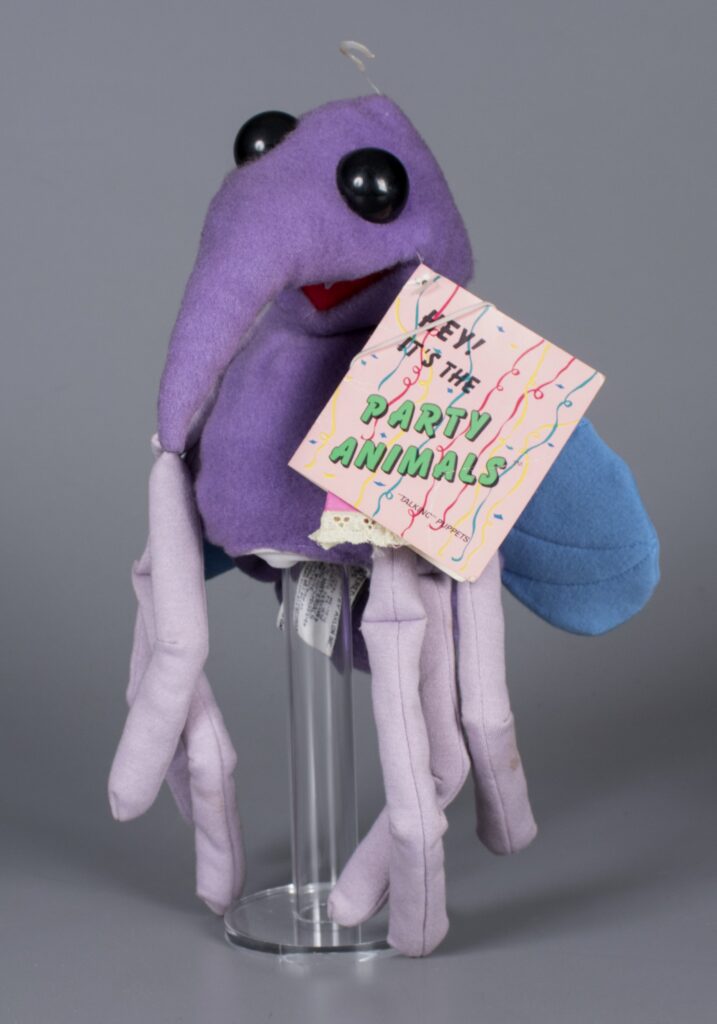
2. Sting Mosquito Party Animal Hand Puppet Prototype, Bonnie Erickson
While Bonnie Erickson is best known for creating the Muppet characters Miss Piggy, Statler, and Waldorf, she has also designed a plethora of innovative toys. Released in 1986 and designed by Harrison/Erickson, Inc., the Party Animals line included Sting Mosquito, Darwin Gorilla, Tetrazini Turkey, Dippity Dolphin, Silly Goose, and London Frog. These talking puppets made comical animal noises when a kid opened the mouth and triggered the light-activated sound box. A preview of the appeared in the 1985 New York Times article “In High-Tech Silicon Valley, Entrepreneurs Turn to Toys.”
3. Alvin Ailey American Dance Theater Barbie, Judith Jamison
The Alvin Ailey American Dance Theater was founded by Alvin Ailey in 1958 to enrich the American modern dance heritage and preserve the uniqueness of the Black cultural experience. When the company celebrated their 50th anniversary in 2008, Mattel commemorated the occasion with a Barbie doll designed by dancer and choreographer Judith Jamison. Barbie wore a custom piece inspired by Alvin Ailey’s masterpiece, “Revelations.”
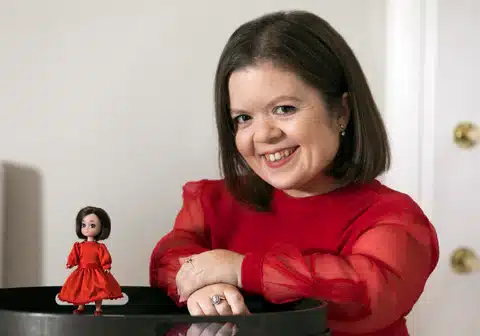
4. Lottie: Sinéad Doll, Sinéad Burke
Lottie dolls are inspired by real kids. Sinéad is a doll produced in collaboration with activist Sinéad Burke. The doll’s torso and head are consistent with other Lottie dolls, but her shorter arms and legs match the growth pattern of people with achondroplasia, a rare form of Dwarfism. Burke saw the project as having potential “to change how the world views little people.”
5. Jilly Bing, Eleanor Mak
Eleanor Mak founded Jilly Bǐng, after she was unable to find an Asian doll for her two-year-old daughter, Jillian. Mak felt that the Asian dolls in major toy stores were cartoonish or cliched. A team of designers, storytellers, and parents researched and spent months designing dolls that resembled Asian American children. Jilly Bǐng introduced The Jilly Doll in 2023. She was intended to help connect children to their heritage, celebrate diversity, and change the narrative of Asian American female stereotypes. The doll was an immediate success.
The inventive and ingenious people behind toys and dolls aren’t always well known. That’s especially true when the toy’s creator is female. The museum has a treasure trove of additional examples of toys and dolls created by women like Judith Blau, co-inventor of Baby Alive; Martha Jenks Chase, creator of the Hospital Doll; and Carol Spencer, Barbie fashion designer. The Brian Sutton-Smith Library and Archives of Play at The Strong houses the Women in Toys Collection, which includes materials from Claire Marschak, Maureen Trotto, and Erin Libby, among others. Online exhibits such as A Brief History of Black Doll Designers since the 1950s; Women in Games Artifact Tour; and “We Are You:” How Yla Eason’s Olmec Toys Reshaped the Multicultural Toy Market call attention to many women in the industry. This month celebrate women toy and doll designers by sharing their stories or by putting your favorite example in your own playroom.
