



What makes a puzzle difficult? For a lot of folks, their gut response to this question would be the more pieces a puzzle has, the more difficult it is. As children we work our way up, 24 pieces, 100-300 pieces, 500-750 pieces, and on up to 2,000+ pieces for the “serious” puzzlers. There is, however, a certain puzzle of only 340 pieces that has gained notoriety to puzzle hobbyists and collectors —Convergence
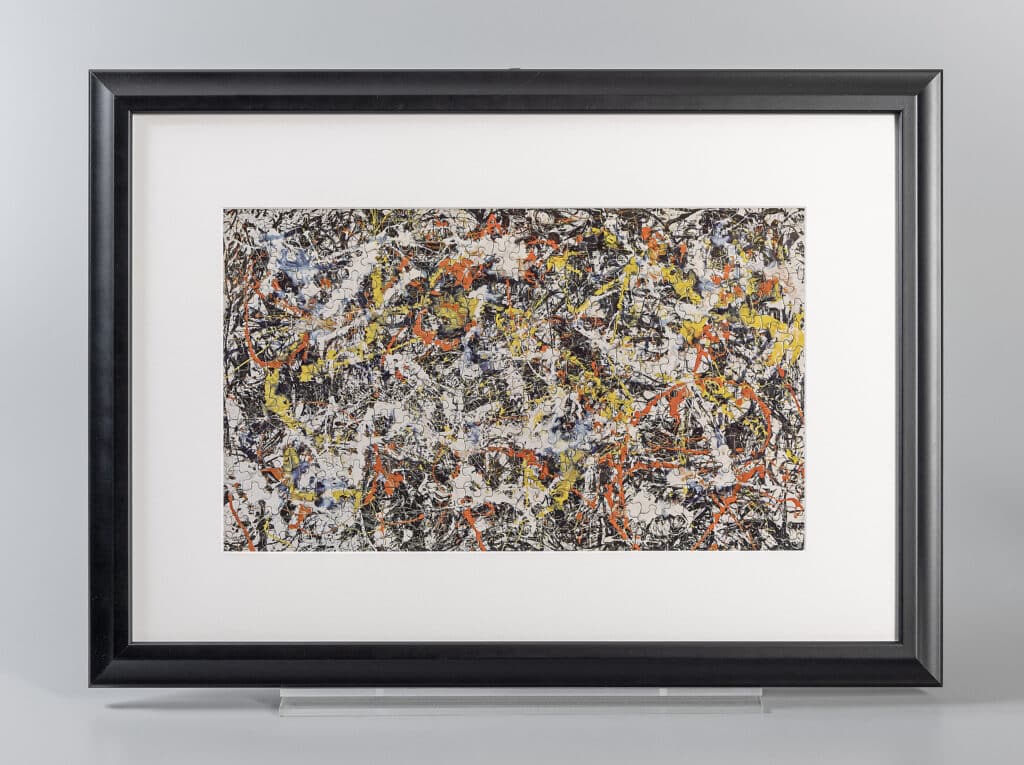
In 1964, Springbok Editions sold a puzzle billed as “the world’s most difficult jigsaw puzzle.” Springbok was known at the time for their fine art puzzles. They worked with museums and directly with artists to create high quality puzzles that distinguished them among puzzle makers. The image featured on this notoriously difficult puzzle is Convergence, a 1952 abstract painting by Jackson Pollock. You can go see the painting in person at the Buffalo AKG Art Gallery, the first museum Springbok co-founders Bob and Katie Lewin worked with to produce fine art puzzles.
I learned about the Convergencepuzzle while listening to recordings from the Anne D. Williams oral histories project. Anne is an expert on jigsaw puzzles who has written several books on the topic. During her research, she spoke to puzzle manufacturers and their family members about anything and everything puzzle related. These oral history recordings have found a home at The Strong’s Brian Sutton-Smith Library and Archives of Play. After the completion of a digitization project funded by the Recordings at Risk grant program administered by CLIR (Council on Library and Information Resources), the recordings are now accessible to the public online. Several of these conversations mention Convergenceand the consensus supports its reputation of extreme difficulty.
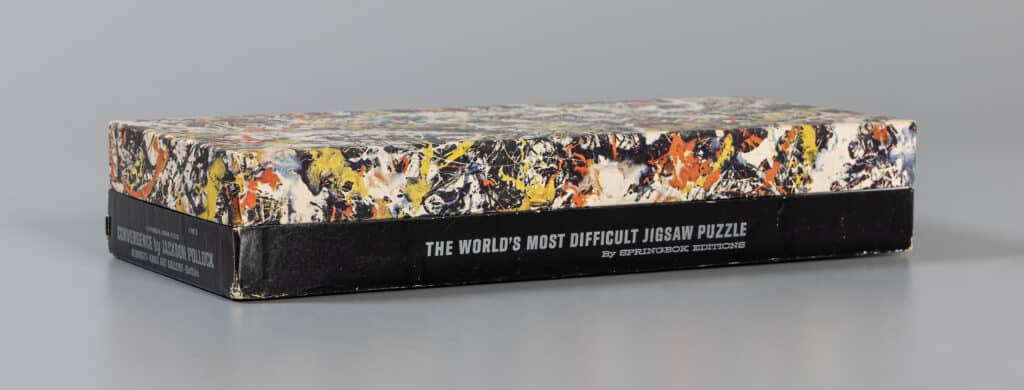
In a 2003 conversation, Anne shared an anecdote with British oral historian Alan Dein that when her family did the Convergence puzzle, after they were done, her mother threw it away and said, “I never want to see it again!” Dein discussed his project to make a documentary highlighting the Convergence puzzle which would include recordings of people putting it together. Completing it, by the way, is a feat that Dein said he attempted and gave up on several times. I am an avid puzzler myself and this seeming universal dread of the puzzle got me wondering, how difficult could it really be? How long would it take me to complete it?
About seven hours is the answer! I can now personally attest, it is indeed a challenging puzzle. Having once completed a 1,000-piece puzzle that is simply all white—that one took me about three weeks (impressive or disappointing depending on who you ask!)—I had some idea of how to approach this one. Though there is an image on it, the patterns are so consistently random, it may as well be blank. In this case, you need to rely on the shape of the pieces. Maybe a hot take but, personally, I don’t enjoy using the “edges first” method of puzzling. With Convergence and with the white puzzle, I made an exception. I needed at least something to build off, and my preferred method of grouping pieces by colors and patterns wouldn’t work this time.
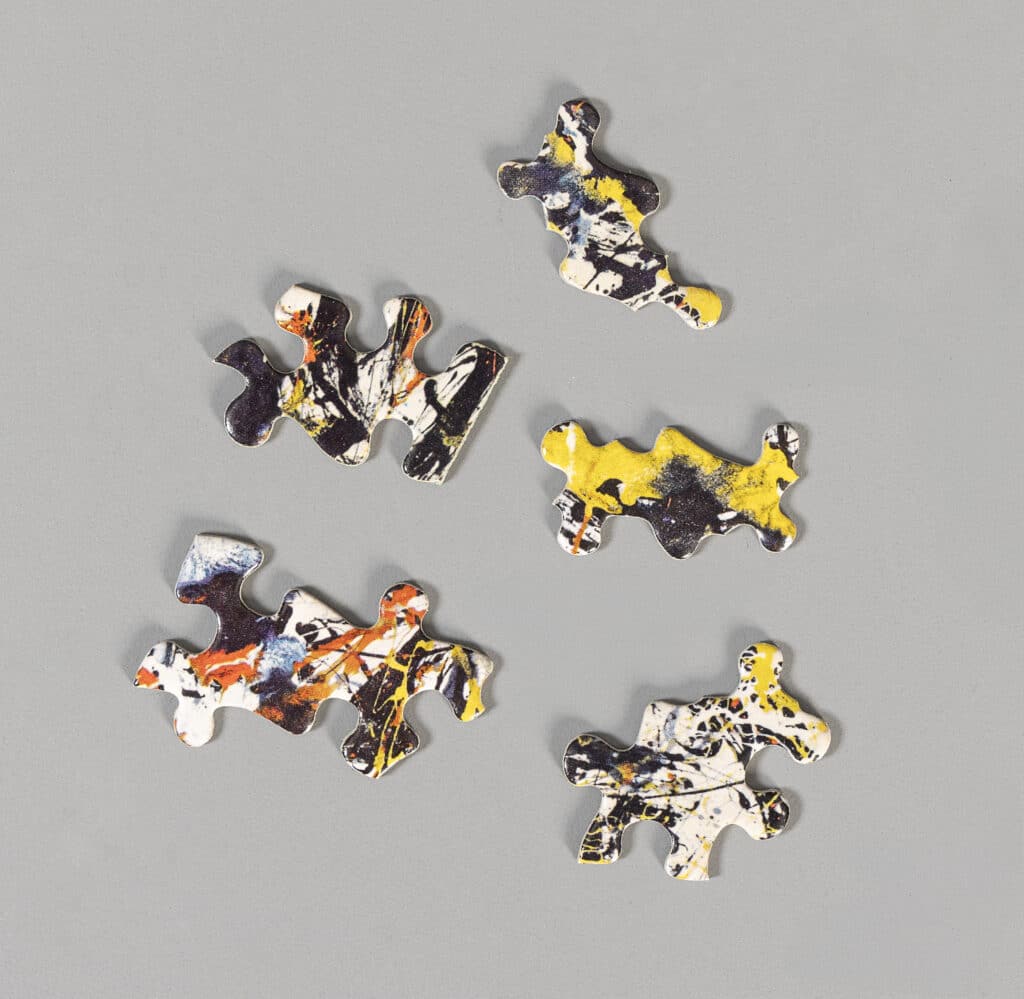
After assembling the edge, my next step was to sort pieces by shape. I ran into some difficulty there because of the shape of Springbok puzzle pieces. Some shapes are reminiscent of a typical puzzle piece, but most are non-traditional, uniquely shaped pieces. Another challenge I encountered was completing the puzzle in several sessions of an hour or so on multiple evenings. Each time I returned to working on the puzzle, I found I had to acclimate to the challenge all over again. The more time I spent looking at pieces, the sooner I started to recognize shapes and even some colors. Gradually I managed to piece it together.
Convergencewas finally ready to be admired in all its infamy on my coffee table. Rather than throw it in the trash never to be seen again, I started thinking about whether I could improve my time by setting aside an entire weekend day to work on it uninterrupted. To all the puzzlers out there, if you’re up for a challenge, this “most difficult puzzle in the world,” may be just the one!

