



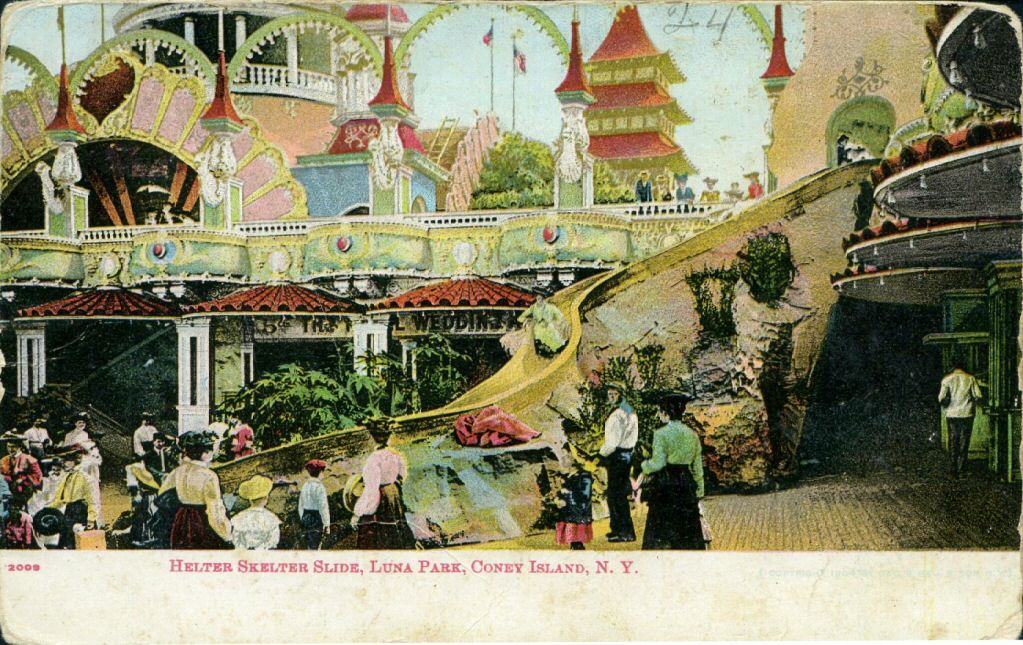
While the origins of the first slide for play and recreation are debated, many scholars believe they have existed for centuries. In one prominent example from the 19th century, biologist Charles Darwin commissioned a carpenter in 1842 to install a wooden slide over a section of staircase in his Down House in the English countryside. I love to imagine the chaos that ensued as his 10 children took turns sliding down and landing on a floor cushion. By the 1900s, slides became fixtures at funhouses and amusement parks providing opportunities for boisterous play outside of the home. The Helter Skelter Slide at Coney Island, New York’s Luna Park opened in 1906. Participants rode an escalator to the top of the chute, slid down, and landed on a mattress. Just a few years later, entrepreneur and inventor George Tilyou introduced the Panama Slide, made from maple wood, at Steeplechase Park inside Coney Island. Slides remained popular amusements for people of all ages.
The United States playground movement of the early 1900s further introduced slides into public spaces dedicated to giving kids from crowded city streets healthy places to grow physically and socially. During his tenure from 1934 to 1960 as Parks Commissioner of the New York City Parks Department, Robert Moses grew the number of playgrounds in New York City to more than 650. The designers of these parks created what became the traditional playground with benches, water fountains, and asphalted areas with see-saws, swings, and slides made from wood or galvanized steel. Metal slides were common for decades. I still remember the burn on the back of my legs as I slid down a steep metal slide into a pile of leaves at Letchworth State Park in the late 1980s.
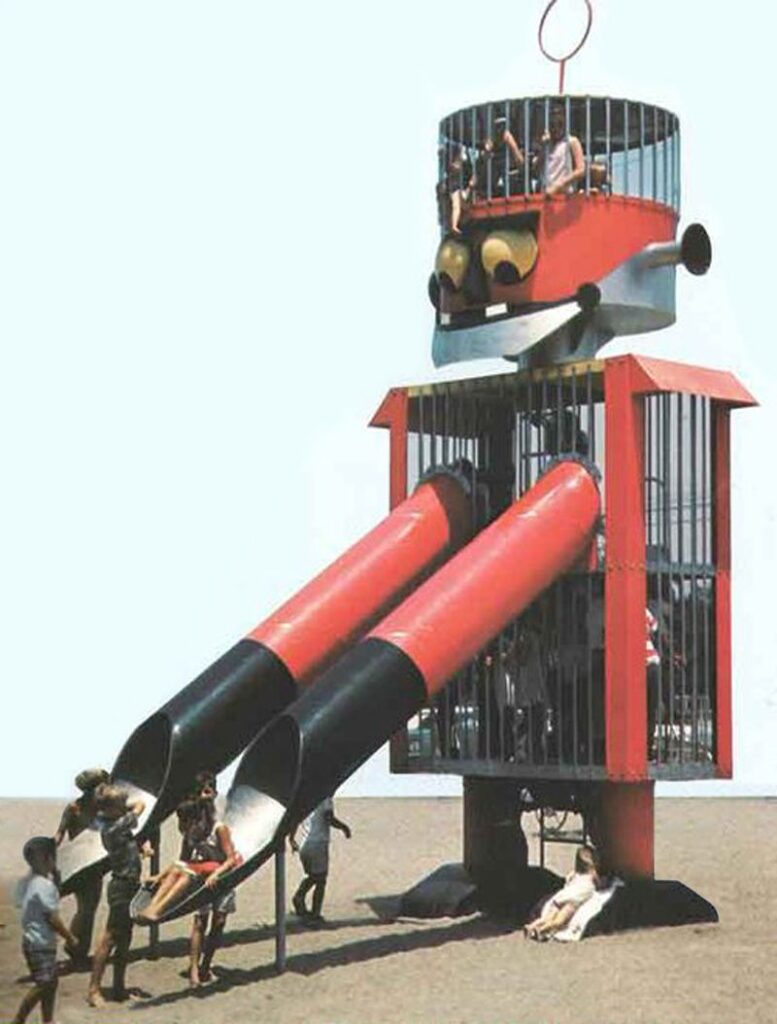
I am most intrigued by the novelty playgrounds of the 1950s, 1960s, and 1970s. These featured imaginative slides related to space exploration, animals, or fantasy. An advertisement for the Giganta Attraction featured a “triple-decker climber with two tunnel slides and a monster-like appearance.” In 1965, Mexican-American artist Benjamin Dominguez designed La Laguna de San Gabriel playground in California. Kids could climb to the top of a lighthouse structure and slide down the back of a dragon. Pure magic!
In 1981, the Consumer Product Safety Commission published the Handbook for Public Playground Safety. The new regulations urged for fewer climbing opportunities and additional guardrails. They also endorsed the use of vinyl coating, rounded edges, and plastics. Mass-produced prefabricated slides like Little Tikes Jumbo Hide ‘N Slide became available for home use. Many Americans placed freestanding slides in their sunny suburban lots or inside their elaborate playrooms.
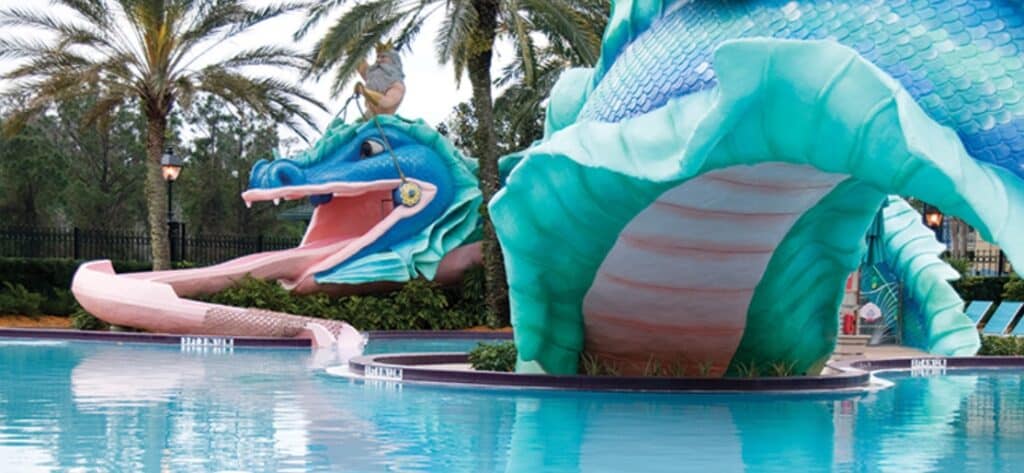
Today, slides are customizable, modular, and more flexible. With the right materials and imaginations, slides are a vehicle for free play in any environment. One of my favorite slides is Scales, a 51-foot-long sea serpent at the Port Orleans Resort in Orlando, Florida’s Walt Disney World. I love to watch my kids slip down the snaking slide and splash into the lagoon. German artist Carsten Höller evokes this type of experience with his experimental slide installations. For Höller, the slide is not just a sculpture, but an inner spectacle for the rider and a visual spectacle for the person watching.
Although the apparatus has changed over time, the benefits of playing with a slide remain the same. Slides help kids to develop motor skills, encourage exploration, and promote risky play. And many grown-ups agree that sliding down a slide is invigorating. These are just a few of the reasons that the slide was inducted into the 2026 class of the National Toy Hall of Fame.

