



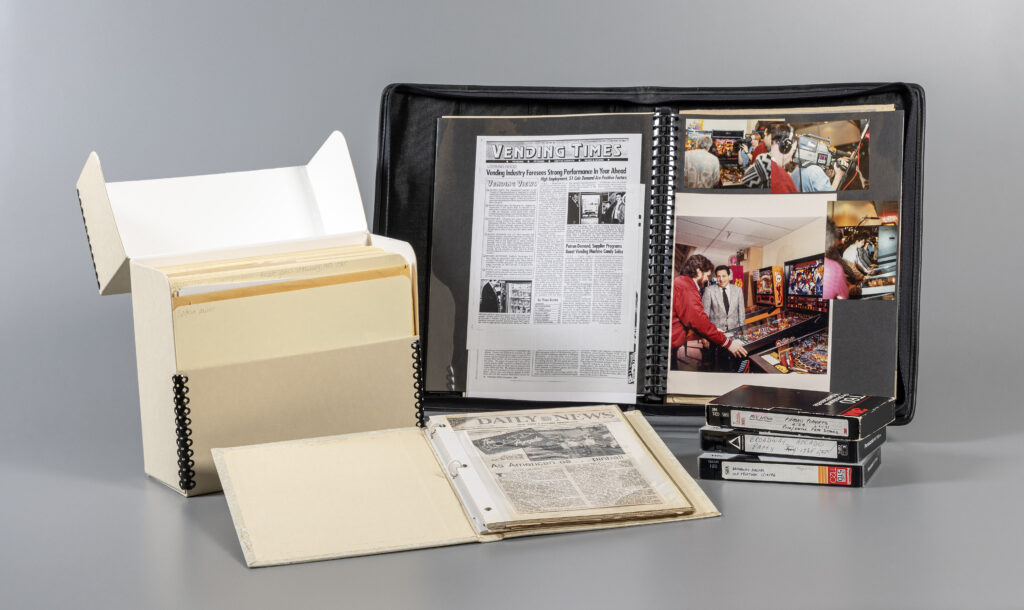
The history of coin-operated games often focuses on the stories of big companies, savvy executives, talented game designers, and iconic games. But that is hardly the full story. As my colleague JP Dyson reminds us, where we play matters. That’s one reason why I was so delighted to work with the family of Steve Epstein (1948–2020) to preserve a collection of materials related to his career, including his work to turn The Broadway Arcade in New York City into a pinball and coin-op gaming mecca in the 1980s and 1990s.
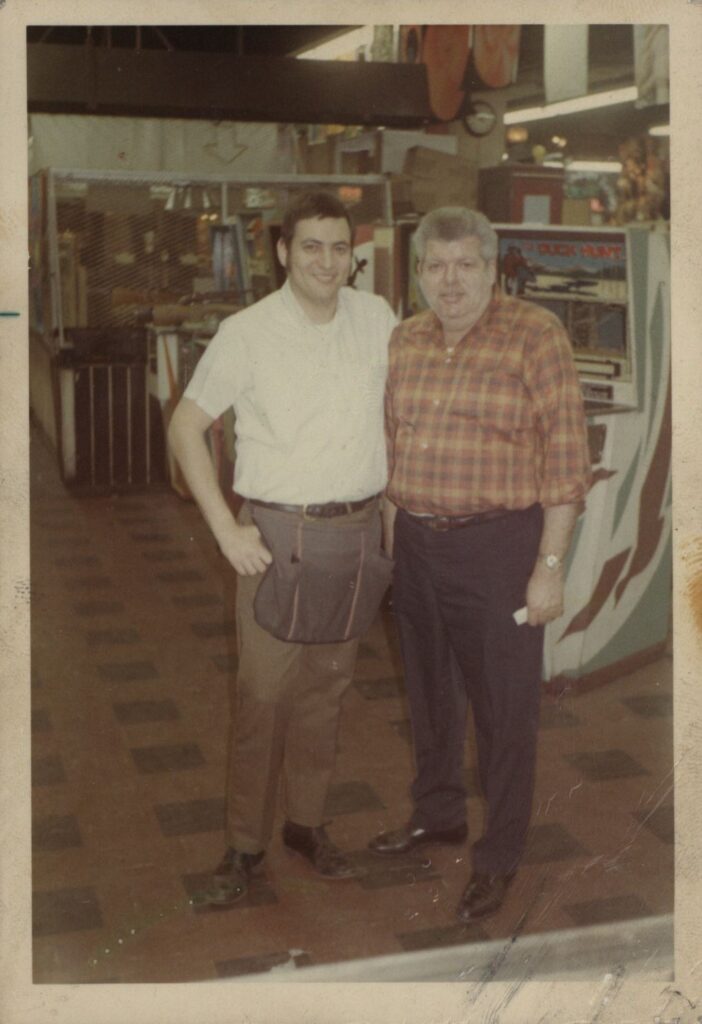
Steve Epstein’s love for pinball began at an early age. As a young boy in the 1950s, he stood on a milk crate to play the pinball machines in the Newark, New Jersey arcade his father David managed. By the mid-1960s, Epstein’s father had purchased an arcade on New York City’s Broadway and renamed it fittingly, The Broadway Arcade. The location, which had operated for more than 30 years prior to the purchase, featured two floors, a live-ammunition shooting gallery (closed in 1965), Skee-Ball, Pokerino (a game in which players roll balls into holes that correspond with playing card suits and numbers), other mechanical games, and a concessions area with fresh-roasted nuts and popcorn. At 14 years old, Epstein started working with his father on weekends and holidays. After he graduated from the University of Bridgeport with his bachelor’s degree in 1970, he joined the family business full-time as manager of the arcade’s nut, candy, and poster sales. Eight years later, he took over the entire business as owner and operator and began the project of transforming The Broadway Arcade into what many called “the pinball capital of the world.”
The path from a boardwalk-style arcade to a world-famous pinball and coin-op gaming destination was not easy. For starters, former New York City mayor Fiorello La Guardia’s ban on pinball had been in place since the early 1940s. Epstein, his friend Roger Sharpe, and others successfully lobbied the New York City council to overturn the ban in 1976. The effort culminated in Sharpe demonstrating that pinball was a game of skill and not chance—a dramatic moment portrayed in 2022 film Pinball: The Man Who Saved the Game. The legalization of pinball in New York City combined with the surging popularity of video games brought The Broadway Arcade to new heights in the late 1970s through the early 1980s.
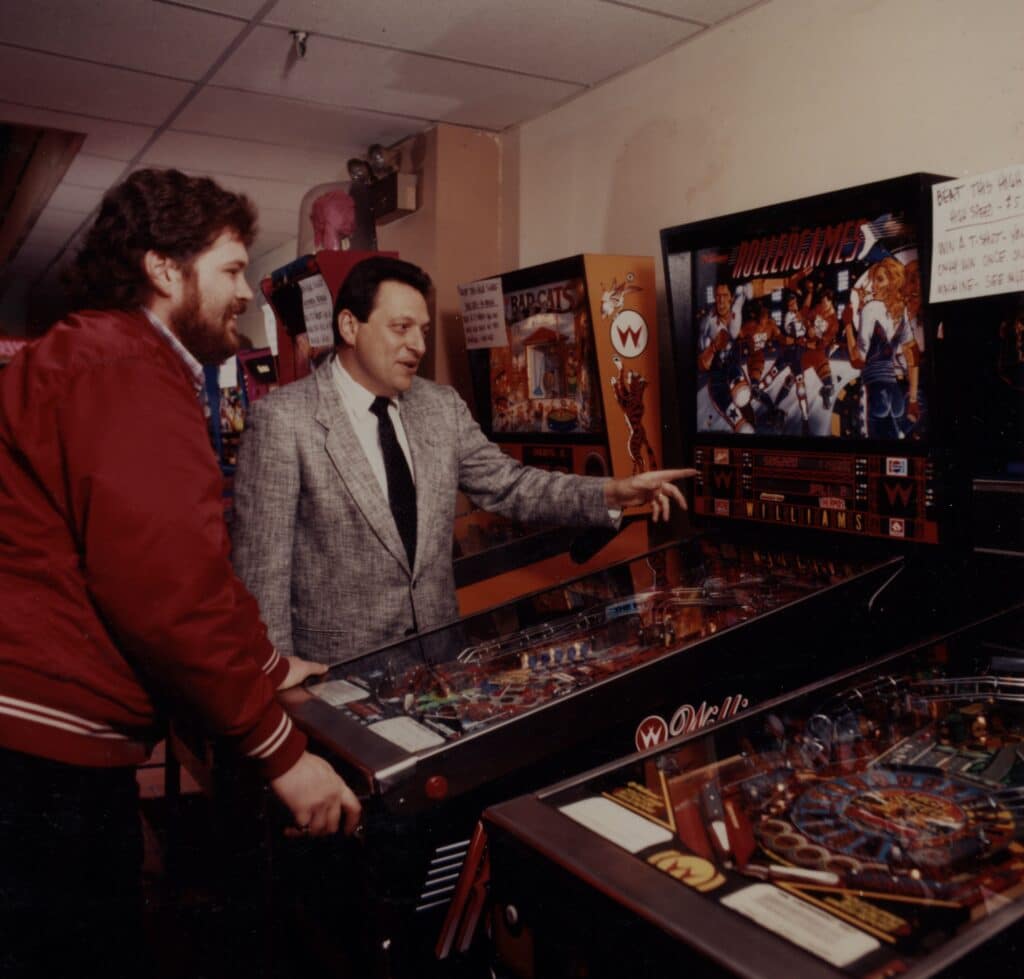
But even as players lined up to play the latest pinball and arcade video games, Epstein had to contend with decades-old perceptions that arcades like his were seedy places, and pinball was associated with crime. These beliefs stemmed in part from deep anxieties about cheap amusements attracting unsavory characters. Epstein pushed back against these views in a variety of ways. He and his employees worked hard to create a clean and safe environment where anyone with as little as 25 cents could have fun. Well, almost anyone. You were free to enter and play unless you had been banned for previous bad behavior or were a kid attempting to play during school hours without a parent. In reality, The Broadway Arcade attracted city dwellers and tourists alike. On any given day, one would find Broadway performers, executives, and office workers playing with or next to bike messengers and construction workers. As Epstein noted in a September 7, 1985, Cash Box magazine interview, “We’re extremely fortunate because our clients range from the rich and powerful to Hell’s Kitchen inhabitants. What’s important is that there’s no class distinction. Everyone is able to play side-by-side in equal comfort, enjoying the games.”
Epstein also fought back against these negative perceptions through the arcade’s pinball leagues. He believed deeply that pinball was a sport and that people just needed a place (and a way) to compete against each other in organized leagues. He set up leagues for single players, doubles, couples, and fathers and sons. “What you’re doing with leagues,” Epstein explained in an April 1994 Play Meter magazine interview, “is creating something to emotionally attach players to your place.” To put it another way, he created an atmosphere where friends and families invested in the arcade in ways that tourists or occasional players never would. And Epstein invested in these players. Unlike some arcade owners, he was on the floor greeting and getting to know players personally. For many league players, The Broadway Arcade became a kind of clubhouse.
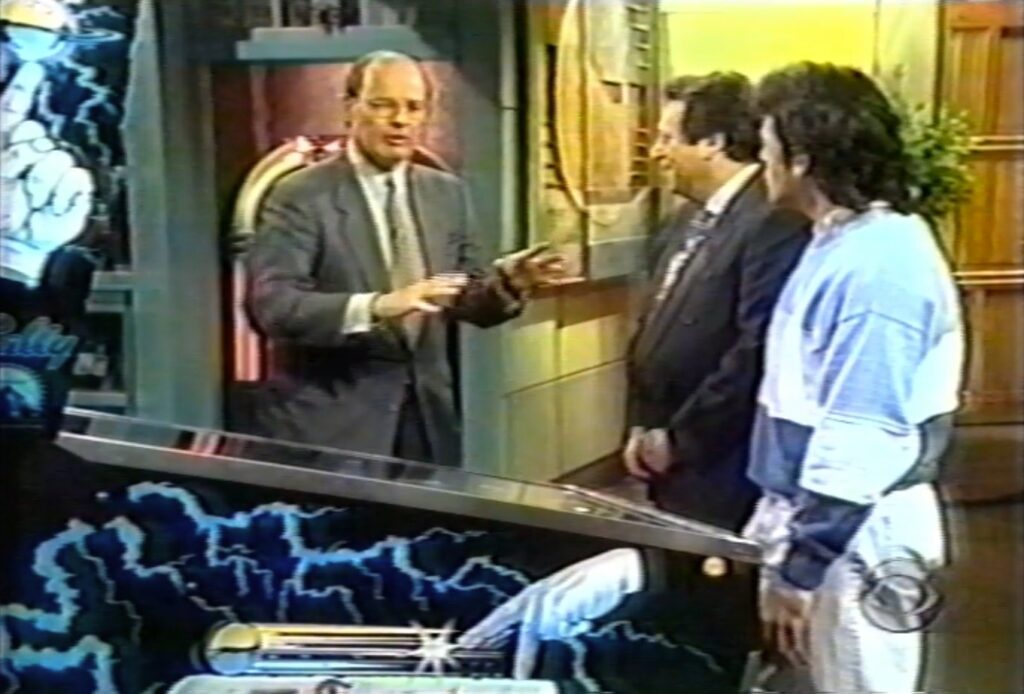
Epstein’s skill as a world-class pinball player and showman and his New York City location also gave him advantages that many other arcades did not have. His high-traffic spot in Manhattan was likely one of the top grossing arcades per square foot in the United States. Thanks to the many talented players who walked through the arcade’s doors and Epstein’s keen sense for what made a good pinball game, manufacturers used his location to test their latest games. That fact alone fueled the arcade’s reputation as the place to play the latest games, even before their wider release. Similarly, his proximity to some of the most influential news media in the world led to stories in The New York Times and The Wall Street Journal, as well as appearances on MTV and The Today Show. In these high-profile news outlets, Epstein evangelized pinball and promoted The Broadway Arcade as a place where celebrities like musicians Lou Reed, Diana Ross, and Paul Simon played pinball.
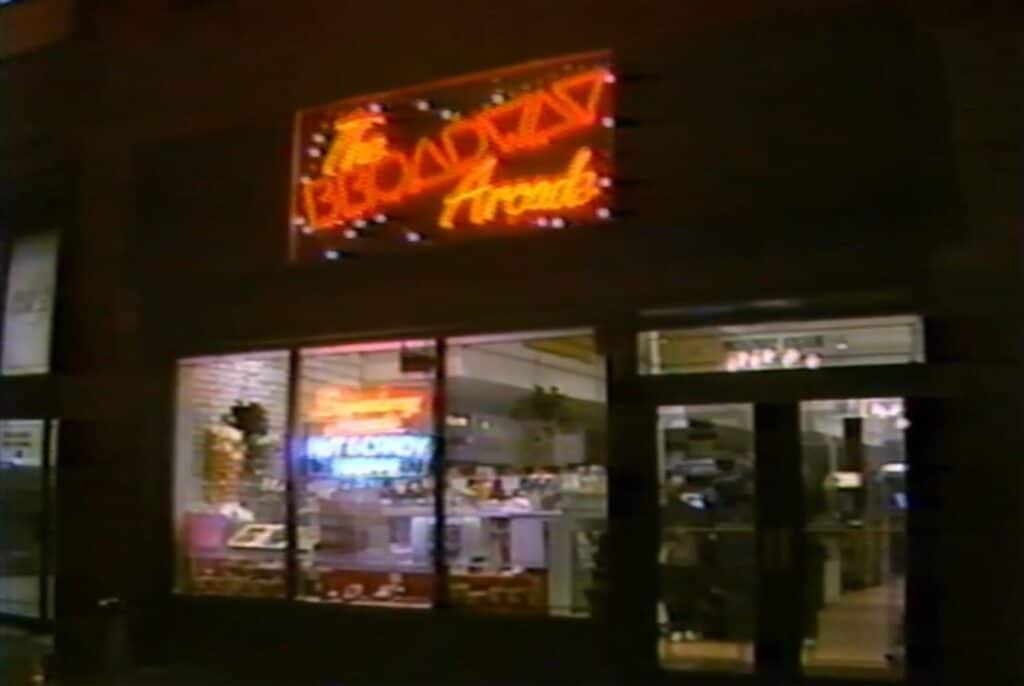
Despite all Epstein’s work and success, he ultimately fell victim to efforts throughout the 1980s and 1990s to remake the city’s Times Square area, restrictive zoning laws, and the failure to negotiate a new lease. Having already been forced to move to a smaller location at 52nd and Broadway in 1985, on December 31, 1996, Epstein shuttered the arcade’s doors and powered down its games for the last time.
Nearly three decades after The Broadway Arcade closed, The Strong is honored to care for a collection of materials that document Steve Epstein’s significant work and this remarkable place where millions of people played.
