
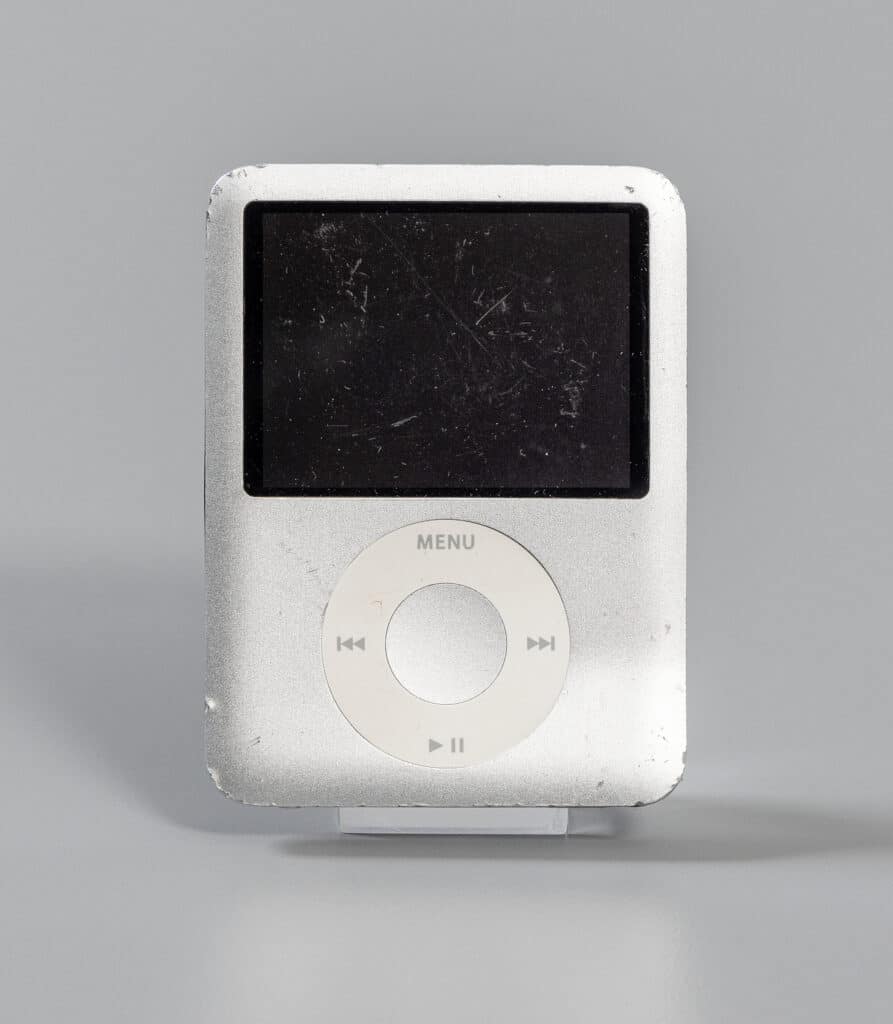
It’s interesting how as time passes, something that felt like a cultural fixture becomes a blink in time. For me, the iPod exemplifies that phenomenon. I was in middle school and high school around 2008 to 2012, during its prime, when I upgraded from a simple mp3 player to the iPod and its world of iTunes and digital music downloads. In 2008, I was rocking the 3rd generation iPod nano, and suddenly my music player could also hold and display album art, music videos, movies, and even play some games! I felt like I had taken a step into the future.
The Era of the iPod Nano
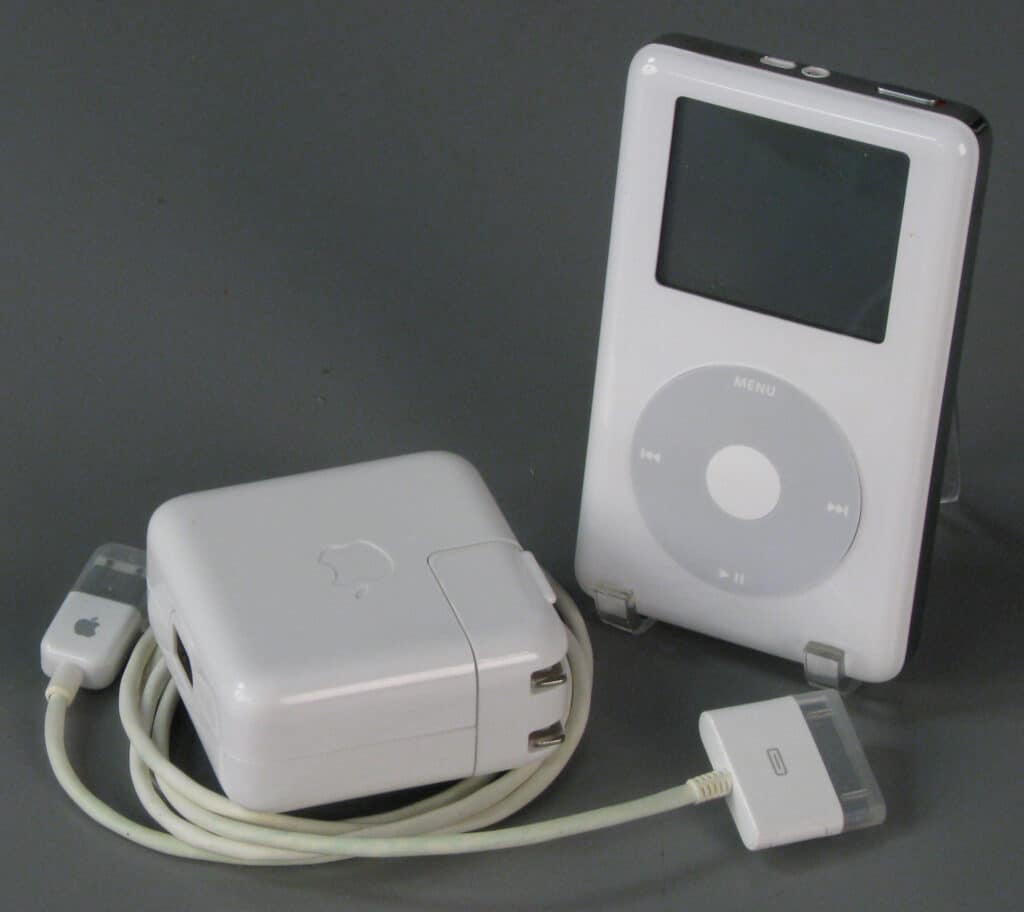
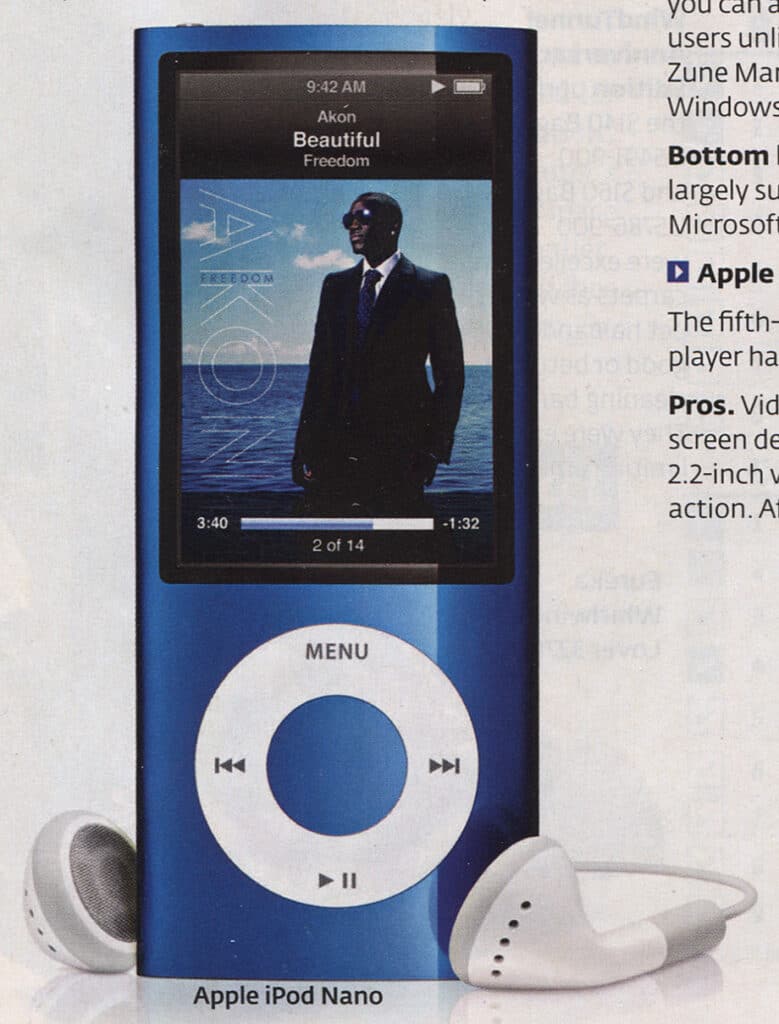
My iPod nano was equipped with the click wheel—a combination of a touch-sensitive ring and four embedded buttons plus a separate center button—that allowed the user to control the iPod both by sliding their finger around the wheel or clicking the buttons. Preceded by the scroll wheel (a wheel that physically spun) and the touch wheel (a touch-sensitive wheel with separate buttons), the click wheel lent itself to gaming by allowing both touch and click controls without having to lift your finger from the wheel. Fifty-four games were released for the iPod click-wheel, a small library of niche titles, but the nano’s unique control system acted as a precursor to the full touchscreen.
My favorite click-wheel game was Phase, a rhythm game reminiscent of Dance Dance Revolution and Guitar Hero. It even allowed players to use their own music in the game, which was what really drew me in. I vividly recall killing time in the high school auditorium playing along to Everytime We Touch by Cascadia. I also clocked many hours with Klondike (Solitaire is great on any platform) and Vortex (think Breakout but in the round) while sitting idle at rehearsals or listening to music.
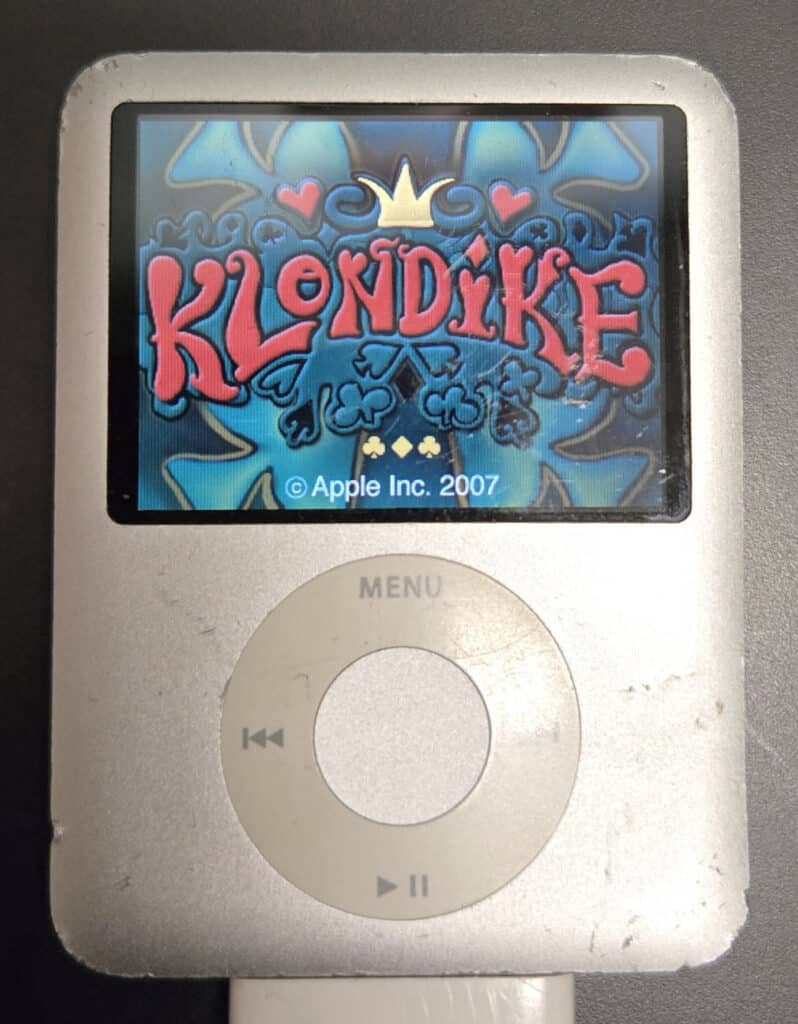
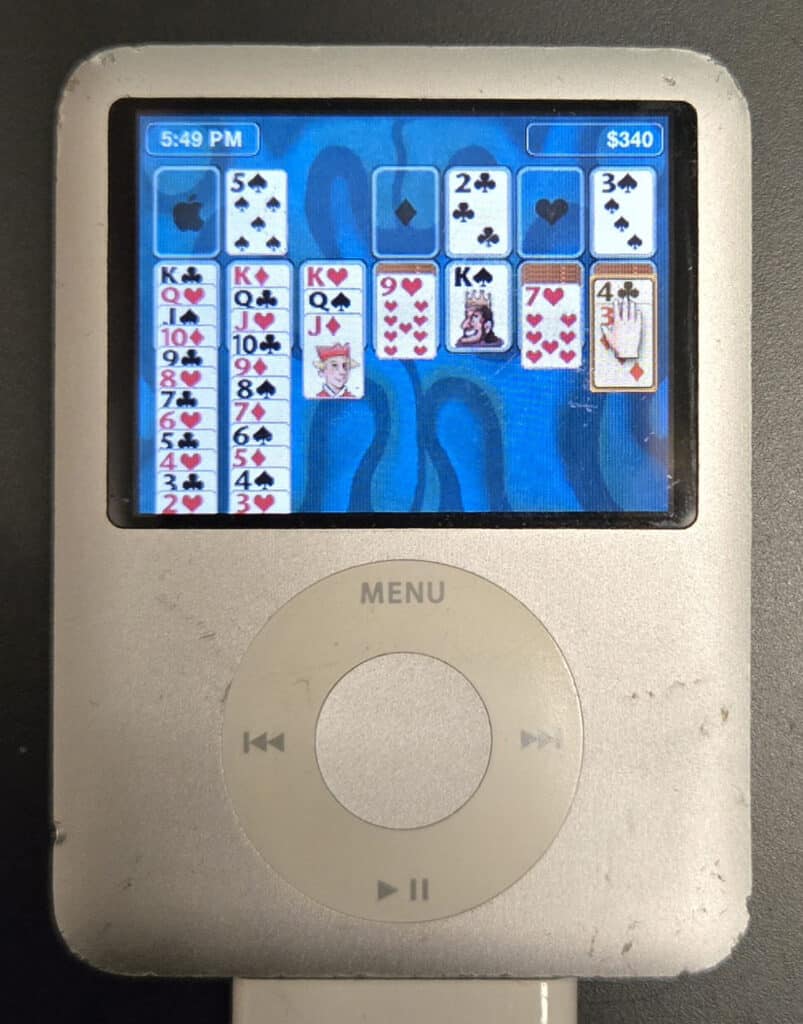
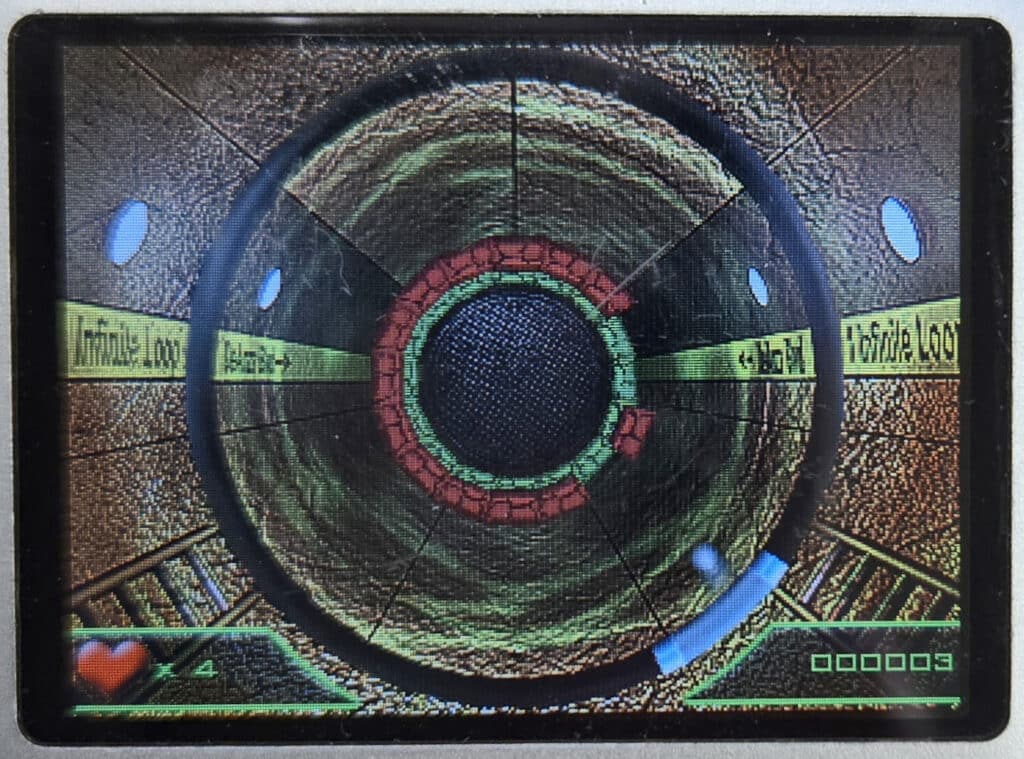
Klondike and Vortex games on 3rd generation iPod Nano, 2007 (captured 2026), courtesy of the author.
The Novelty of New Technology
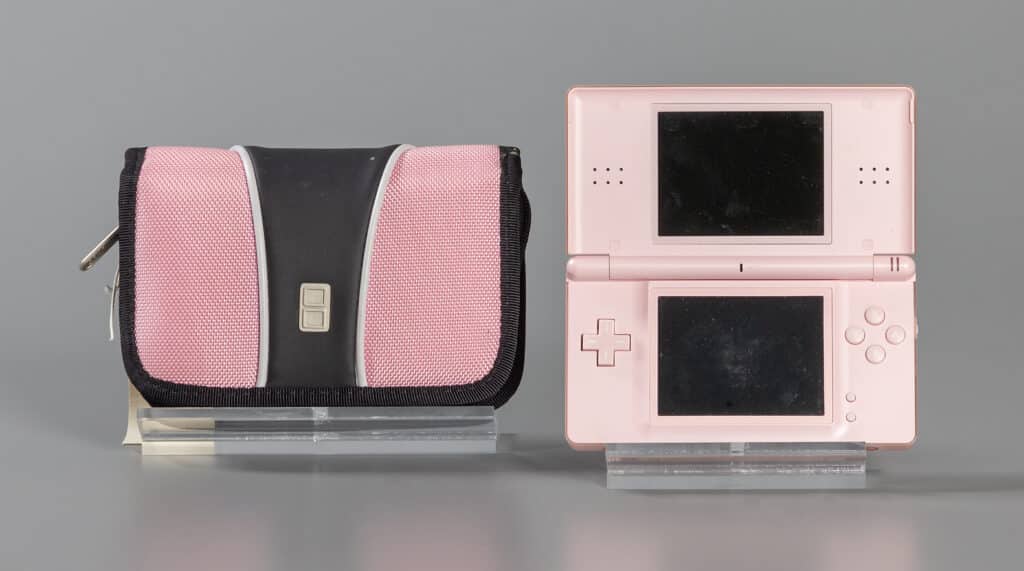
Something about the technological changes in my childhood felt magical. Perhaps it’s because hardware evolved so quickly and visibly, but each new device fascinated me. When we bought a more robust home computer, each game was like a new world, and when we got consistent internet (goodbye dial up!) online games were a wonderland. When I upgraded from the GameBoy SP to the Nintendo DS, features like PictoChat provided a connectivity that I was excited by, even if we were just sending drawings to each other in the same room. Finally getting a flip phone with a built-in camera felt like my introduction to a new era.
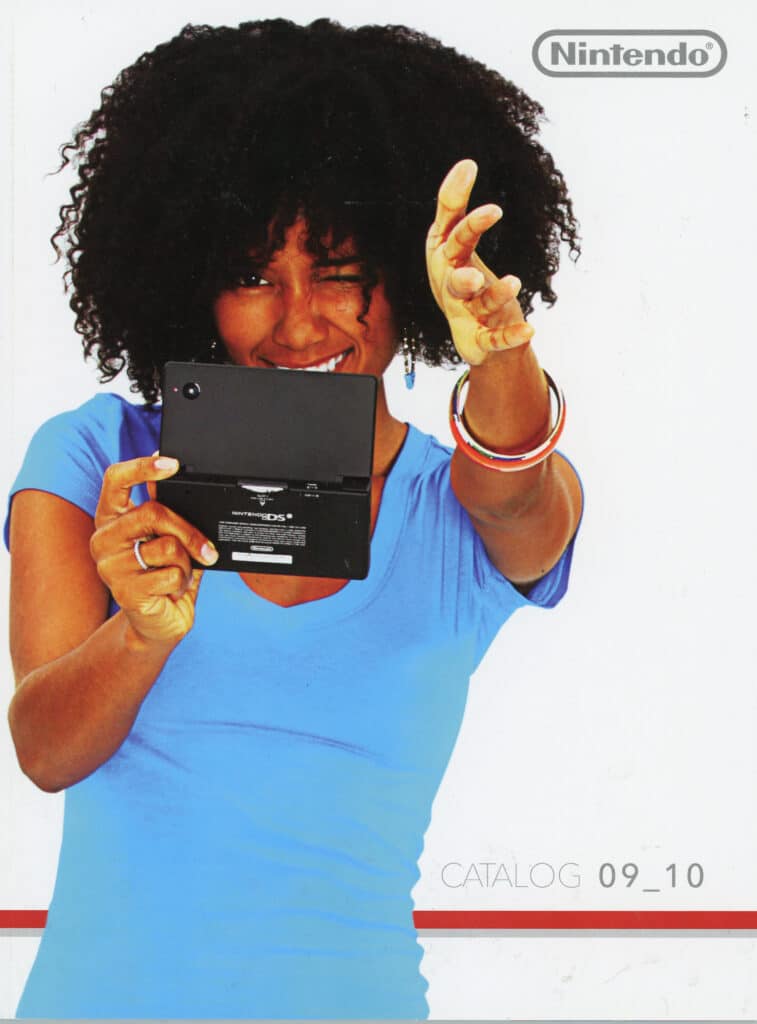
The evolution of the iPod was part of this technological playground of my youth. I had all of my music, movies, and games in the palm of my hand, ready to go with me anywhere. I was able to listen to the Jon & Kate Plus 8 podcast (I watched a lot of TLC) which updated when I plugged into iTunes. I don’t even know how many people remember that the term podcast came from the iPod: iPod + broadcast. It already felt like we were living in the future, and then the iPod Touch arrived and its potential seemed endless!
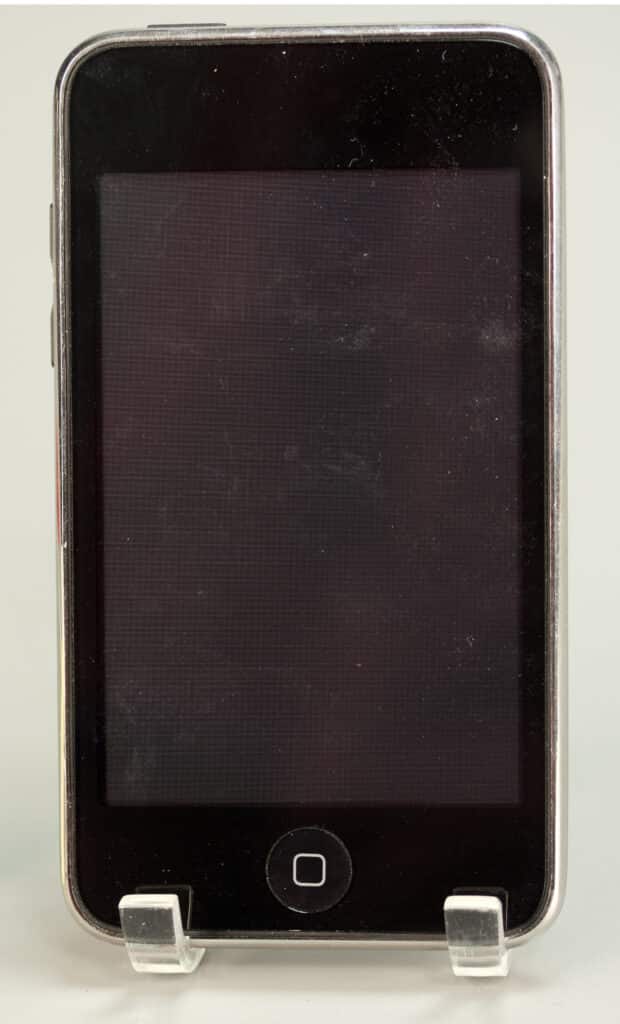
The Era of the iPod Touch
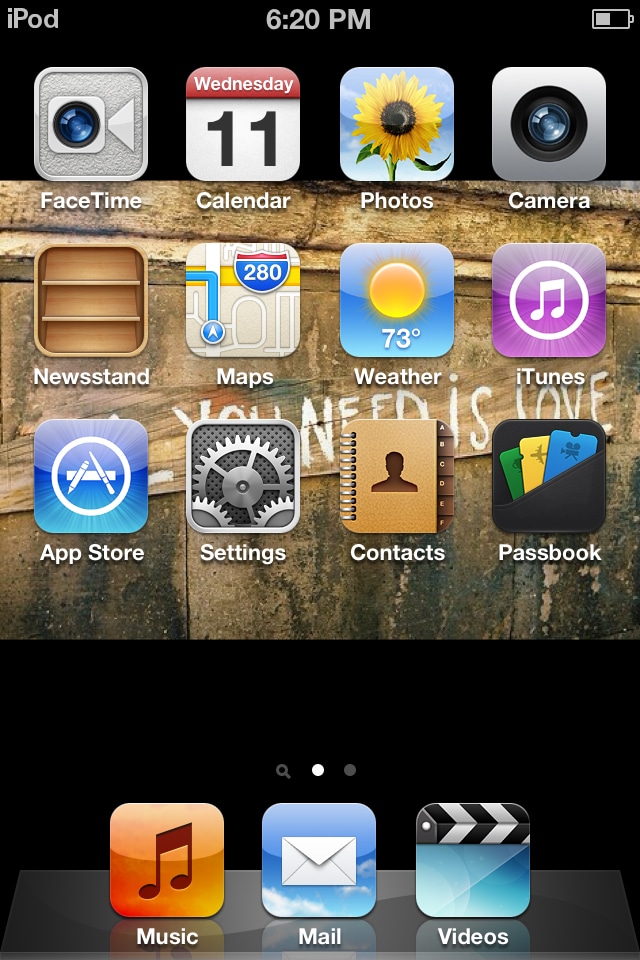
From 2010 to 2012, the iPod Touch was my smartphone before I owned a smartphone. These days I look back with envy at those years when my apps lived on my iPod (wi-fi only) and texting and calls lived on my flip phone with very little crossover. The App Store on the iPod Touch was full of everything I could imagine, and you bet a teenager like me was downloading apps for little more reason than they seemed cool and were free. I had an app that’s entire purpose was to provide instructions on different cool ways to tie my shoes. I even had a dream dictionary app for decoding the symbolism of dreams. The piano app proved really useful for getting a starting note for acapella auditions in high school.

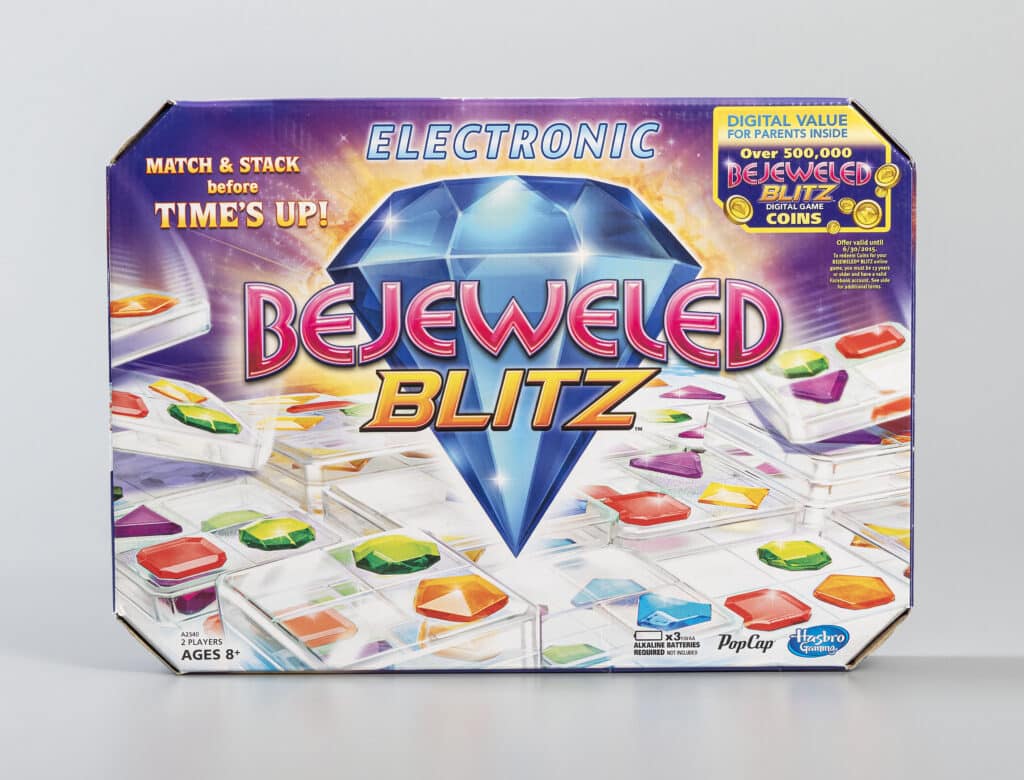
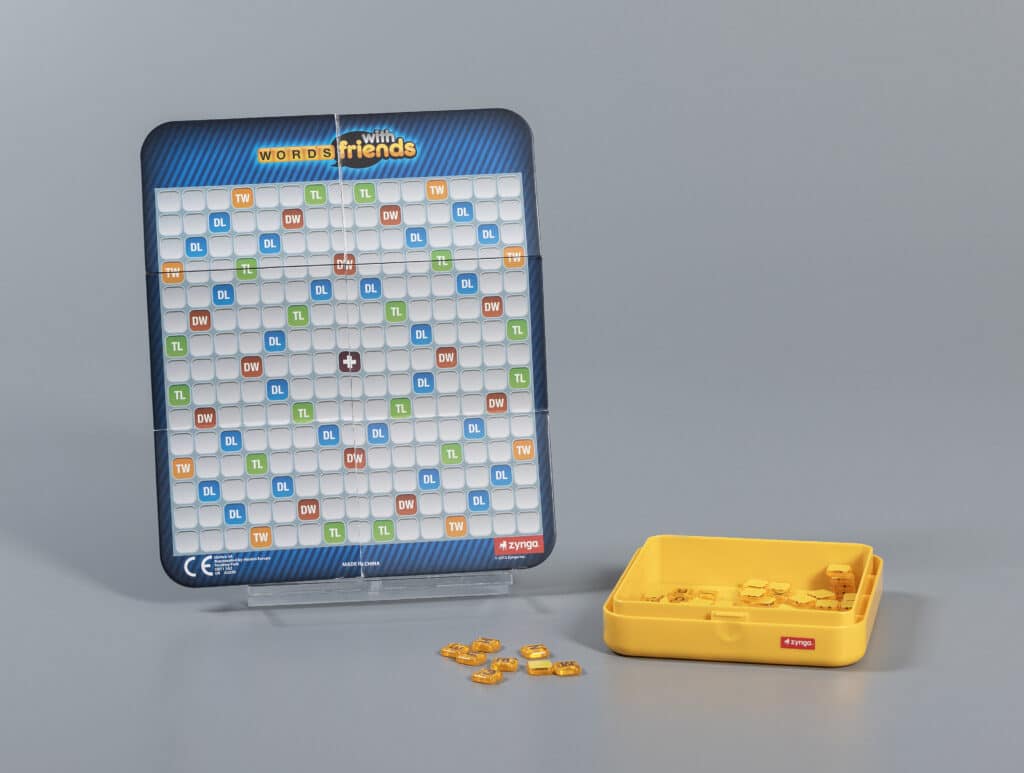
The iPod Touch (and the iPhone) also altered the game development landscape. While console and PC games had been getting larger and more complex, the App Store invited developers to create small games that encouraged repeat play. Iconic games like Angry Birds (2009), Temple Run (2011), Fruit Ninja (2010), and Words with Friends (2009)quickly took advantage of touch screen technology and growing interest in casual games.The release of the iPod Touch (and the iPhone) would unleash a rapidly growing mobile gaming market. Angry Birds alone reached billions of downloads, leading it to a 2026 induction into The Strong’s World Video Game Hall of Fame. I personally played a lot of Bejeweled Blitz (2009), Zen Bound (2009), and whatever restaurant or farming game had my attention at any particular time.
“Back in My Day Social Media Wasn’t as Awful”
This also was (in the opinion of this jaded millennial) the golden age of social media and what I lovingly refer to as “old/better Facebook.” Delving into my old iPod hoping to find screenshots of games no longer available for download, I instead found screenshots of Facebook. It reminded me that at this time we had a Facebook free of ads, a timeline in order of time (not manipulated by an algorithm), posts from real friends about nothing of consequence, and trends like “lms and I’ll post a tbh on your wall” (in Millennial, that means “like my status and I’ll post a ‘to be honest’ on your Facebook wall). It was the era of Facebook games on the PC (Farmville anyone?) and checking in on your friends on the app. Twitter was a diary and Instagram was full of sepia and high contrast filters.

In addition to being the only place to check social media aside from a computer for smartphone-less teens, the iPod Touch provided easy access to video calling away from the webcam. During the summer before undergrad, I spent hours on my iPod using Skype or Oovoo (RIP…) to video call with my future classmates who I met via—you guessed it!—Facebook.
Maybe It’s Just Nostalgia, But…
Perhaps it is the rose-colored glasses of looking back on your childhood, but I believe this era of my life, around 2008 to 2012, was a time when novel opportunities for digital play and online connection balanced well with the limitations of technology. We had yet to enter an era where algorithms have more control over your social media feed than you do and are in service of the highest or most powerful bidder. We weren’t at a point where tracking is so robust and advertising is so tailored that it seems like your phone is listening to you. Terms like bots, AI, clickbait, and doom scroll weren’t yet in my regular vocabulary. The technology still felt in the control of the user.
These days, my phone feels less like a plaything and more like a necessary evil. If it weren’t for how often I use certain tools in my day-to-day life, I’d consider going back to a “dumb phone” and a disconnected iPhone for apps and media (the iPod Touch is no longer supported). Perhaps stepping away from being perpetually online would be what I need to embrace the play instead of the doom scroll. Perhaps it would let me step back into a time when technology was an exciting novelty, not a burden. Or maybe I’m getting old and soon kids will roll their eyes at me as I start stories with, “Back in my day…” However, the June 18, 2026 headline on Engadget, Old iPods are making a comeback thanks to Gen Z, makes me think I may not be the only one who feels this way.