



Last October, I attended my first convention for the Association for Games and Puzzles International, a community of scholars and collectors, at Italy’s World Puzzle Center. Hosts Roxanne and George Miller converted a castle in the small town of Panicale into a museum of more than 100,000 mechanical puzzles. I fell asleep each night in a room filled with puzzles. Cases of them lined the halls I walked through to get to each event. I even saw a bedroom full of Rubik’s Cubes, complete with themed bedding. I spent five days immersed in puzzles and surrounded by experts.
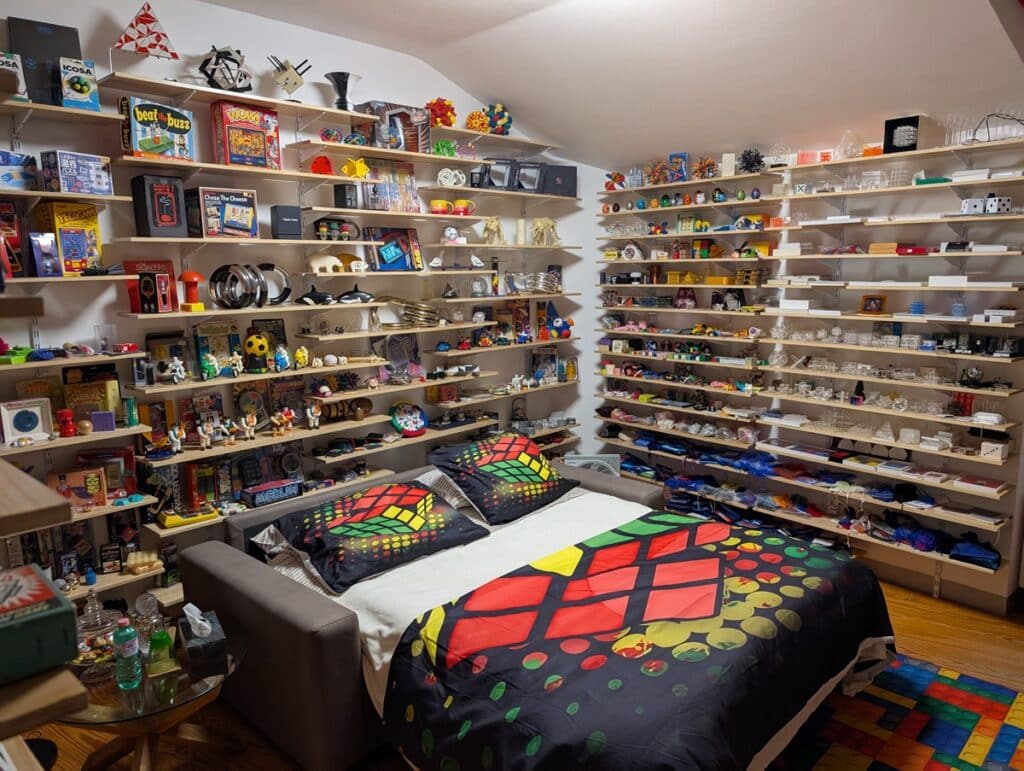
Although I’m The Strong’s curator for board games and puzzles, I must admit that my puzzle knowledge is a little underdeveloped. While I’ve learned a lot about the history and culture of jigsaw puzzles, mechanical puzzles have been a bit of a blind spot. These puzzles require three-dimensional manipulation. Rubik’s Cube is a prominent example, but you may have also seen rings to untangle or mazes to navigate marbles through. At the AGPI convention, I had the opportunity to speak with some of the world’s foremost puzzle experts. As they discussed taxonomic terms I had never encountered, I took the opportunity to pepper them with clarifying questions. I soon found myself faced with a practical exam.
A Community of Puzzle Solvers
The World Puzzle Center follows a “display and play” philosophy. Conventiongoers could attempt to solve nearly any of the puzzles, so long as we followed a few rules. First, we could attempt only one puzzle at a time. Each guest chose a small token to place on the shelf when they took a puzzle. In honor of our current exhibit, Hello Cutie: Our Favorite Kitty, I selected a Hello Kitty plush to use as my marker. Second, puzzles must be returned completed.
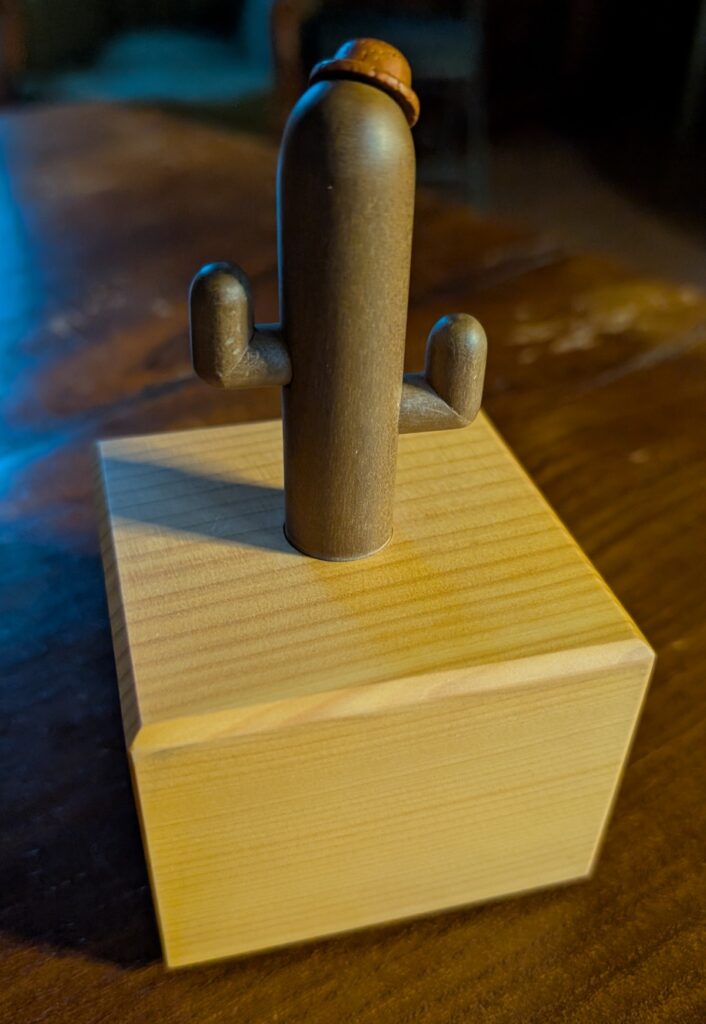
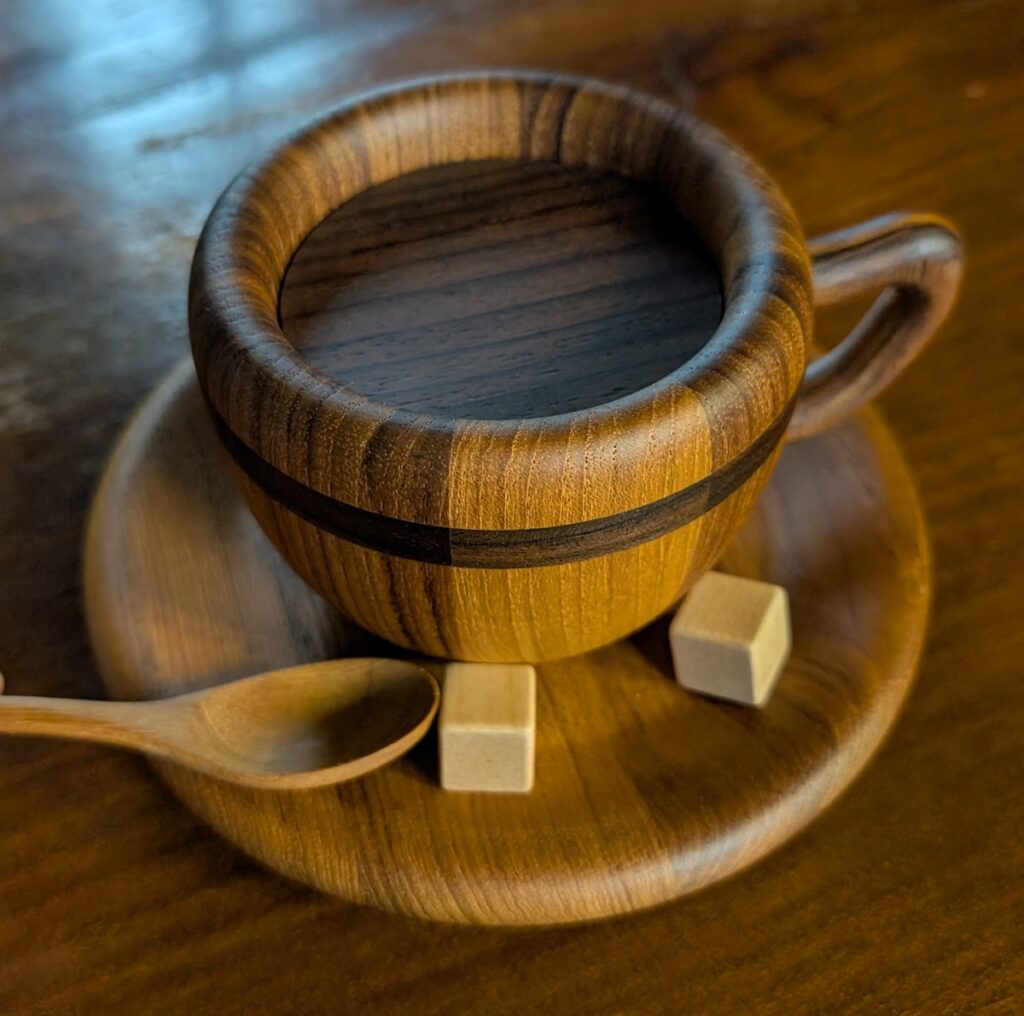
Simple enough! Perhaps due to my interest in escape rooms, I was drawn to the puzzle boxes. The Japanese “Karakuri” boxes were beautifully crafted and ingeniously designed. I mean, look at this little cactus wearing a hat. Come on! A coffee cup with sugar cubes? Get out of town. Applying my new knowledge of mechanical puzzles, I knew that these “sequential movement” puzzles require a specific series of moves to be made in order. I delighted in the twisting, pulling, and tilting required to open the boxes.
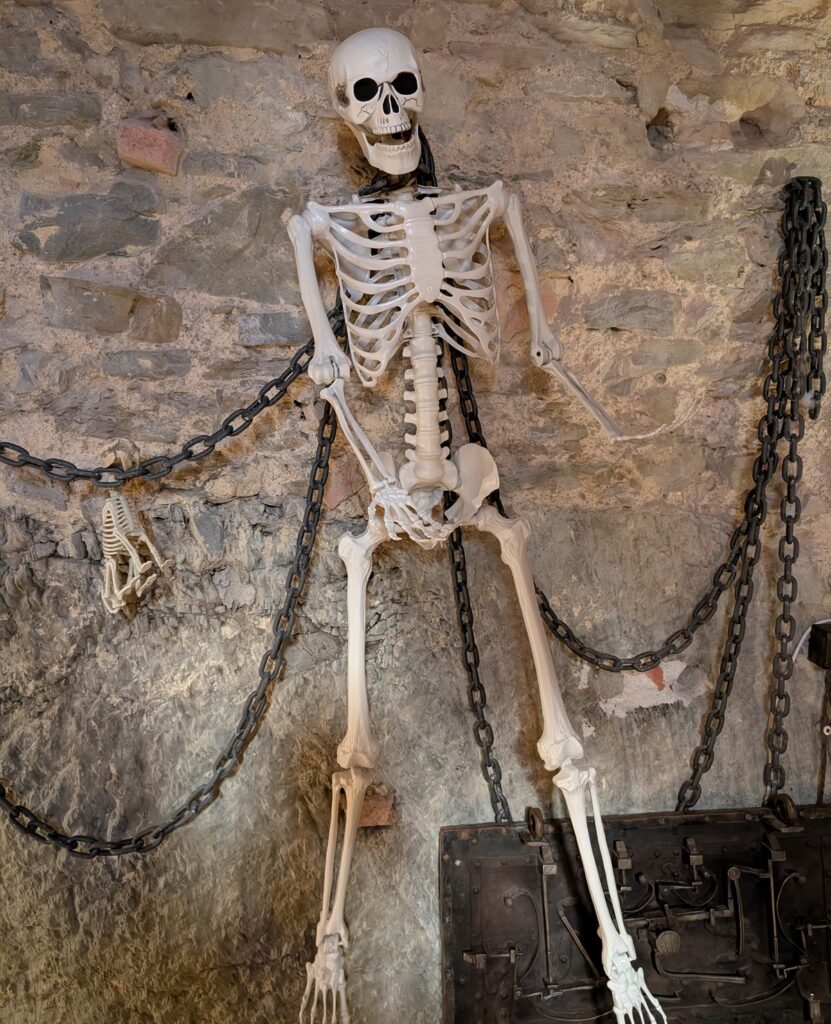
Then, in a fit of hubris, I dissembled a fascinating plastic cube before dinner. Its orange transparent pieces haunted my thoughts throughout the next day, as my Hello Kitty plush sat forlornly on the shelf. I mentally reassembled the pieces as I stared at lush green landscapes through the bus window. My mind flashed back to the castle’s dungeon, where the Millers showed us “the remains of the last guy who didn’t put his puzzle away.” I am loath to report that I ultimately cheated by finding a completed version of the puzzle and comparing it to my own. But I must remind you that my life was on the line.
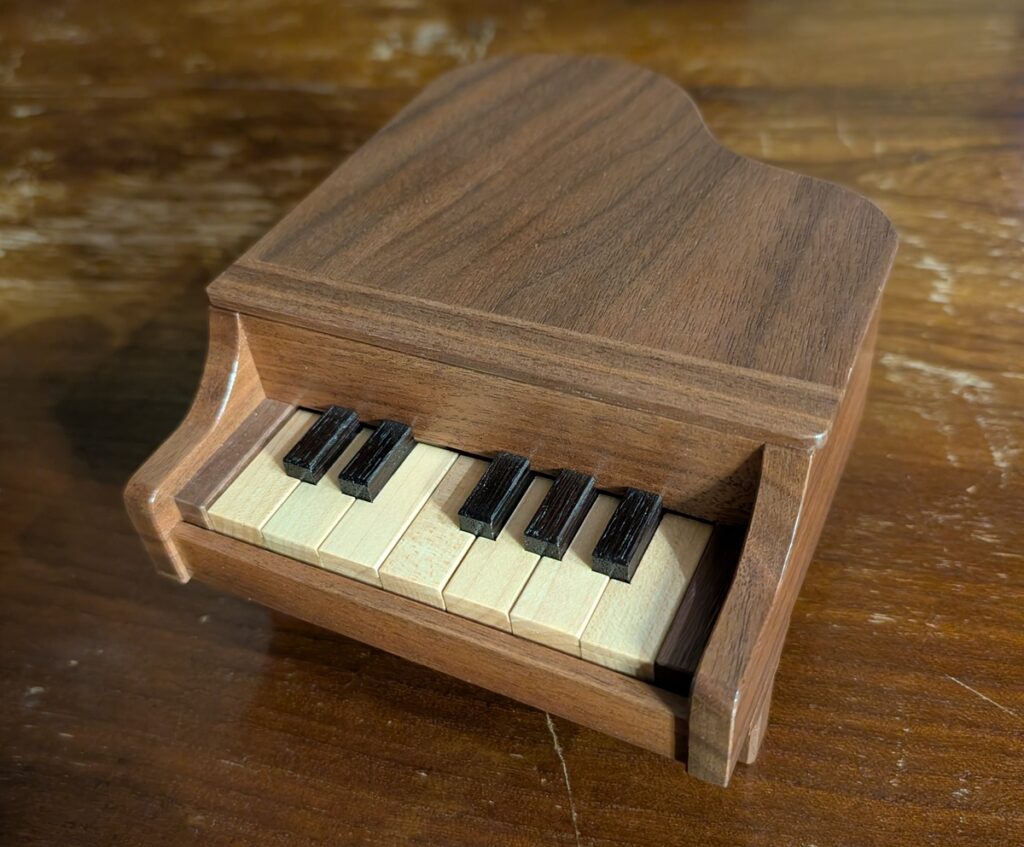
I quickly learned, however, that my solitary floundering and shameful surrender were unnecessary. One evening, a group of attendees was passing around a wooden grand piano puzzle. I examined the joints, determining that the lid must lift once you’ve pressed the correct keys. I tried playing scales and the simple songs I recalled from a childhood of piano lessons. I convinced myself that the keys had different physical resistances and that you needed to press them in some sort of order. We discussed ideas on the bus and over dinner. What chords hadn’t we tried? Were we on the wrong track entirely? When I heard that one of us finally solved it, I asked him how he did it and ran upstairs to try it myself. Even the hardest puzzles are less daunting when tackled in tandem. The jigsaw puzzle world is a community dedicated to sharing knowledge, and I was thrilled to be part of it.
In the Audience
The collaborative spirit extended to the convention’s evening presentations. From a box seat in Panicale’s historic Cesare Caporali Theatre, I learned about the legal disputes surrounding the Italian version of Monopoly and watched board game illustrator Élise Plessis explain her process. I was thrilled to learn about how Japanese independent board game designers fabricate small batches of their games and sell them at the biannual Tokyo Game Market. After each presentation, the scholars and collectors in the audience asked thoughtful questions and added insights from their own experiences. Remember that these are experts on play, though. After an early presentation featured a cat photo, subsequent speakers felt compelled to include at least one adorable cat in their slides. Each cat was met with appropriately rapturous applause.
Mr. New York in Italy
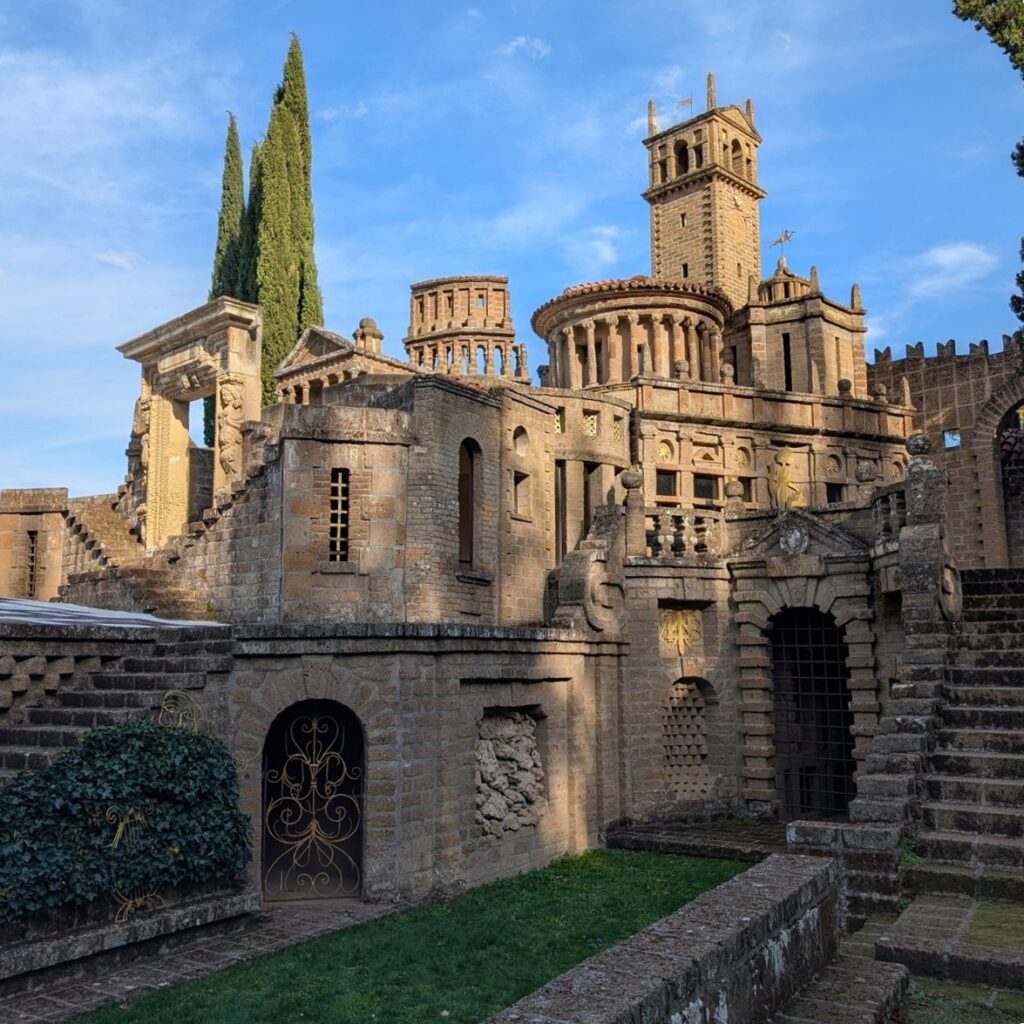
Although I would have been content to solve puzzles for the entire trip, we also spent a lot of time outside of Panicale. One of the highlights was a visit to La Scarzuola, a former monastery site that is now a private residence and tourist attraction. It’s an architectural marvel, home to seven amphitheaters of several sizes surrounding by beautiful landscaping. I was especially intrigued by its collection of “miniature” versions of famous structures, from Rome’s Colosseum to Athens’ Parthenon.
When I mentioned that I was from New York, our tour guide got excited and referred to me as “Mr. New York” for the entirety of the tour. I dodged questions like “What’s it like living on Fifth Avenue?”, since I didn’t have the heart to explain that Rochester is really quite far from New York City. The convention attendees, of course, were pleased with this turn of events. They jokingly greeted me with my new moniker throughout the rest of the trip. I was just happy to be included.
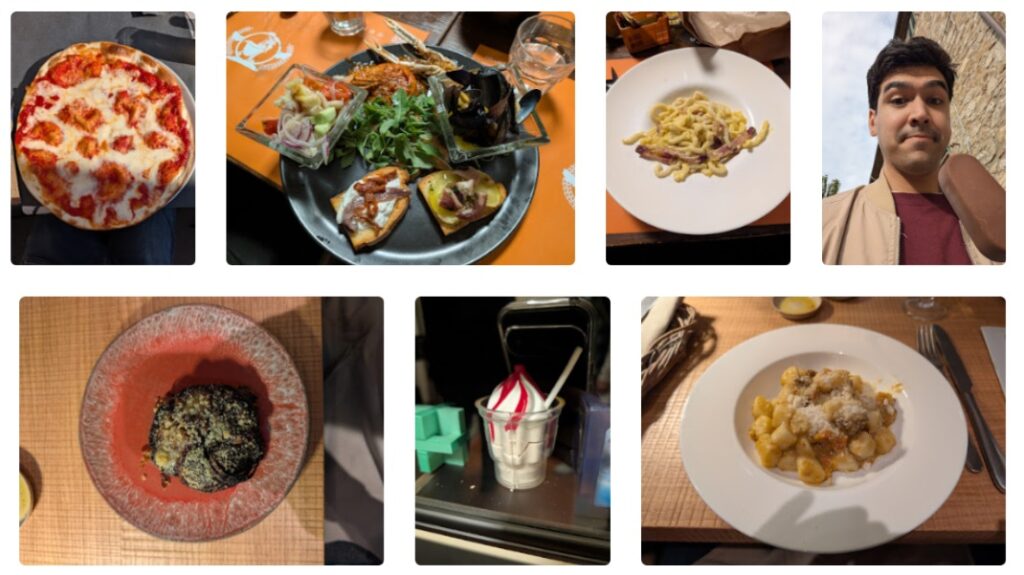
As you might expect, the food in Italy was incredible. I devoured treats at the Perugina Chocolate Factory, ate an eel caught from the nearby lake, and gorged myself on seafood and pasta. My friend demanded a full report on everything I ate, so I curated an album of food photos. Can you spot the hidden puzzle?
There’s so much that I’m not able to cover. I tried cutting a jigsaw puzzle with a scroll saw for the first time, I took woefully inadequate photos of sweeping vistas, and of course, I played many games. I was honored when the editor of the AGPI Quarterly asked me to submit a short reflection on my first AGPI convention. I hope it’s the first of many trips spent with this intelligent and welcoming crowd.
I’ll leave you here with a short teaser. Immediately after AGPI, I flew to Germany for Spiel Essen, the world’s largest board game convention. Please look forward to my follow-up blog: Mr. New York takes Essen!

