



A few years ago, while chatting with a visiting research fellow in the Brian Sutton-Smith Library & Archives of Play at The Strong, they posed an interesting question, “So, what is your area of expertise? Video games, toys, something else?” I wasn’t quite sure how to answer this. Some large libraries and archives have subject librarians who focus on individual areas such as mathematics, natural sciences, or humanities. However, at The Strong, our collections encompass all of these areas and more, while centering on play. I consider myself more like a knowledge generalist than an expert in any particular area of play. My purpose is to ensure that the knowledge in The Strong’s collections is accessible to researchers. I do this primarily through the archival descriptions in the finding aids I create. This does require a bit of what I think of as “ephemeral expertise.”
What does ephemeral expertise mean? As far as I know, this is not a real term, just something that we have talked about amongst ourselves here in the library and archives. I do not mean an expert in the temporary objects known as ephemera, which include things like flyers, greeting cards, invitations, and ticket stubs. What I mean is that my “expertise” in a particular topic is ephemeral. It exists for a short time while I process and describe a collection, and then I let it go and move on to the next one. As much as I would love to know everything, I must leave many of those discoveries for future scholars, while I work on making the next collection accessible to researchers.
For example, animal play behavior is among the many topics that I have briefly learned a lot about during my time at The Strong. While working on the papers of noted animal play scholar and reptile expert Dr. Gordon Burghardt I processed over 1,300 research articles relating to animal play behavior. Through reading abstracts of articles, I learned about the many branches of zoology, significant research studies, and the scientific names of a few dozen animals. The bits of information began to form an overview of the materials, which I used to write the finding aid for the papers. Now, over a year later, I can no longer tell you the scientific names of all those animals and have certainly forgotten the details of the studies. Nevertheless, there are always a few things from each collection that stick in my memory. In this case articles concerning two specific reptiles come to mind.
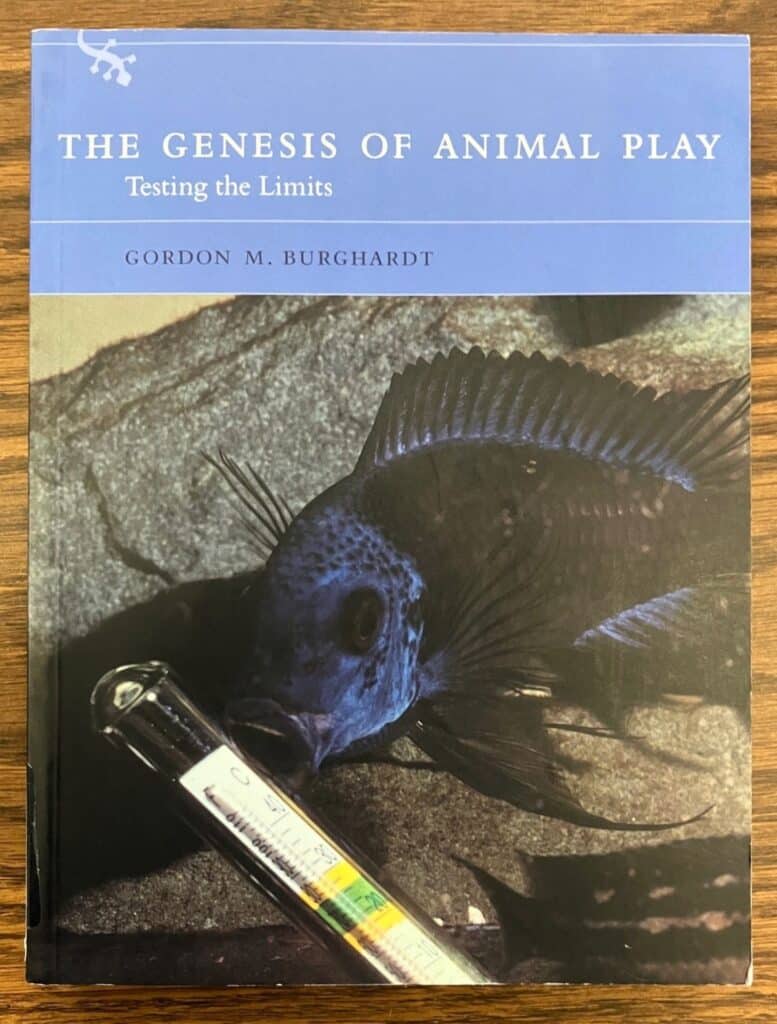
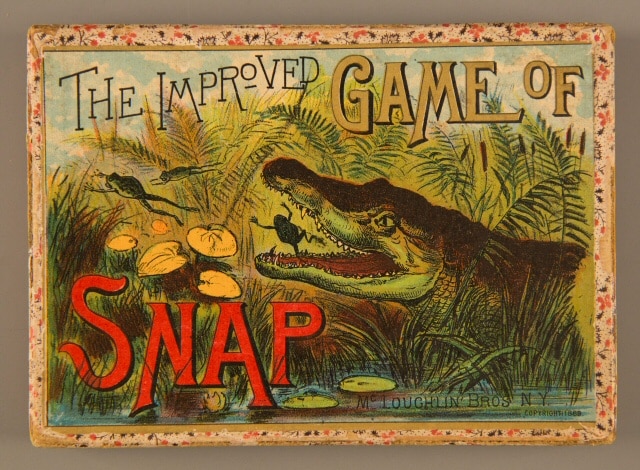
Play can be difficult to define for nonhuman animals. For reptiles, biologists have debated the nature of their behavior. Many believe that behaviors of animals must be related to their survival and any similarity with play can be ignored. Burghardt discusses anecdotal accounts of reptiles exhibiting play behaviors in his 2005 book The Genesis of Animal Play: Testing the Limits. One anecdotal account shared with Burghardt, a shortened version of which was later published by J. D. Lazell and N. C. Spitzer in the American Society of Ichthyologists and Herpetologists journal Copeia in 1977, describes a juvenile American alligator (Alligator mississippiensis) that spent the better part of an hour one June morning in 1974 interacting with a dripping pipe. Authors James D. Lazell, Jr. and Numi C. Spitzer observed the alligator repeatedly swimming up to the pipe and snapping at the water droplets. They interpreted this as playful behavior. Eventually it slowed down and let the droplets fall on its head, “By this time we thought he had finally become tired of the sport; however, this apparently was just another variation of the same game. His actions implied that he believed he was letting the drip think it had escaped; then at the last possible moment he would flip into the air and snap a drop.” Though some biologists may disagree, Burghardt deemed this anecdotal report of playful behavior “tentatively valid,” and called for future study.
The other special animal I remember is a female Komodo dragon (Varanus komodoensis) named Kraken that lived at the Smithsonian National Zoo. She was the first Komodo dragon born in captivity outside of Indonesia and the subject of an observational study by the Animal Behavior Society. Kraken was observed and videotaped interacting—perhaps playing— with many objects and people. She was seen manipulating blankets, rings, frisbees, and more. She even took objects from the keepers’ pockets and played tug-of-war with them. Dr. Burghardt compared her actions to the familiar play behaviors of a dog with a shoe, including shaking it and sticking her head inside of it.
I couldn’t say exactly why some ephemeral objects like ticket stubs and flyers are discarded and others are not. Ephemera can be intentionally saved as easily as it can be set aside and survive for years by happenstance. I also couldn’t say why the alligator and Kraken left a strong enough impression to be remembered while most of the other articles did not. Maybe I simply found the mental image of an alligator snapping at a droplet and a Komodo dragon playing with a shoe amusing. The research value of these articles is not for me to determine; I’ll leave that to the experts.

