



Recently while working on reorganizing some of the Brian Sutton-Smith’s Library and Archives collection, I began looking through our collection of miniature books. It was while going through these boxes and checking our library catalog to record them that I couldn’t help but ask some questions. Why were these made? Why would anyone wish to have a 40-volume set of Shakespeare’s works in a miniature format that is nearly unreadable? How did they make these books so tiny in the 19th century? And who exactly are these books for? Children? Dolls? Adults? The answers, as it turns out, are like most things in life—a little more complicated than expected. But I mainly wished, for our collection’s sake, to better understand what I was working with.
I think the first piece to address is: What exactly constitutes a “miniature book?” Most sources I found seemed to agree—and one book even had a ruler on the side of it to show this!—that miniature books are usually 3 inches, 76 mm, or 7.62 cm or less in height, but opinions can vary. Within our collection, we’ve set the size limit at no more than 9 cm due to the way the books are stored. This of course does not include the size of the boxes or little cases the books may have come in. That, in turn, can ironically make those miniature books need to be labeled in our collection as “oversized miniature books” due to them still being miniature but not fitting in the same storage as the others.
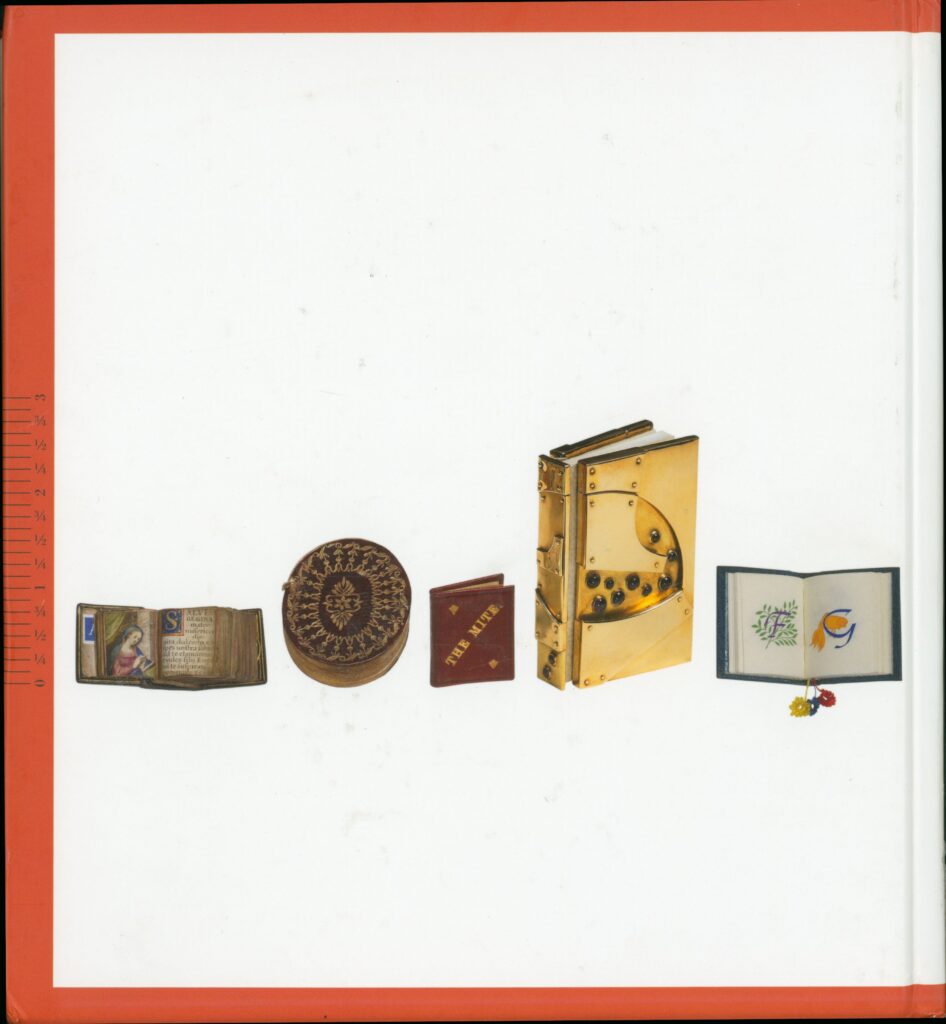
Now for the why? There are many reasons why miniature books could have been made, and often this differs due based on when the books were made. Louis W. Bondy in Miniature Books: Their History points out one of the reasons for their existence is simply because humans love to prove they can do something in extremes: “Human race always hankered after extremes. In the same way that it has tried to climb the highest mountains, explore the profoundest depths of the oceans, build the biggest and tallest buildings, it has always been enthralled by the smallest.” The creation of the tiny books, Bondy explains, was a way for printers and artists to display their skills and create sensations around their work to gain professional attention. The earliest miniature book we know of is a Babylonian clay tablet from ancient Mesopotamia about 2325 BCE. According to Anne C. Bromer in Miniature books: 4,000 Years of Tiny Treasures, “Miniature books have been produced for reasons of practicality, curiosity, aesthetics, and are limited in design only by the scribe’s and printer’s skill and the binder’s imagination.”
In Europe, similar to regular sized tomes in the Middle Ages, most miniature books of the time revolved around religion. Bibles, prayer books, devotionals, these were all made into smaller formats that a person could more easily travel with or have on hand. Then during the 18th century when women and children were allowed more access to books, miniature books of that time began to be geared towards them. Instead of mainly religious books, books were created that provided lessons in history, the alphabet, animals, and other educational topics. According to Bondy: “The advance of an interest in general education helped the production of many finely illustrated [miniature] books specially intended for children and young people. The great national literatures of past and present, plays, novels, poetry and essays, became available to miniature book readers and collectors to be perused, cherished and carried about.”
In the 19th century, these tiny books saw a rise in production and popularity with the inventions of lithography coupled with photography. Bondy explains these inventions “made possible the production of tiny volumes by the simple process of reduction.” During the Victorian era, a time full of many rituals, rules in conversation, and secret codes in social situations, women would carry such tiny books in their pockets to remind themselves of etiquette rules, flower languages, or other important points to make an evening a success. The ease of carrying the books around gave rise to the most frequently found types of miniature books: almanacs and calendars. Bondy explains these forms made great gifts during this time and they, in turn, went from utilitarian objects to beautiful and decorative ones that would “to ensure that they could be carried in pockets or handbags so as to be ready for instant consultation.” During wartimes, books have also served as a form of passing information to troops, such as miniature forms of Lincoln’s Gettysburg Address, or to provide entertainment and morale boosting for the army. When troops were overseas during World War I, Winthrop Press printed small books to be distributed by the Knights of Columbus. Each book was a short story, but the small size made it easier for soldiers to carry.
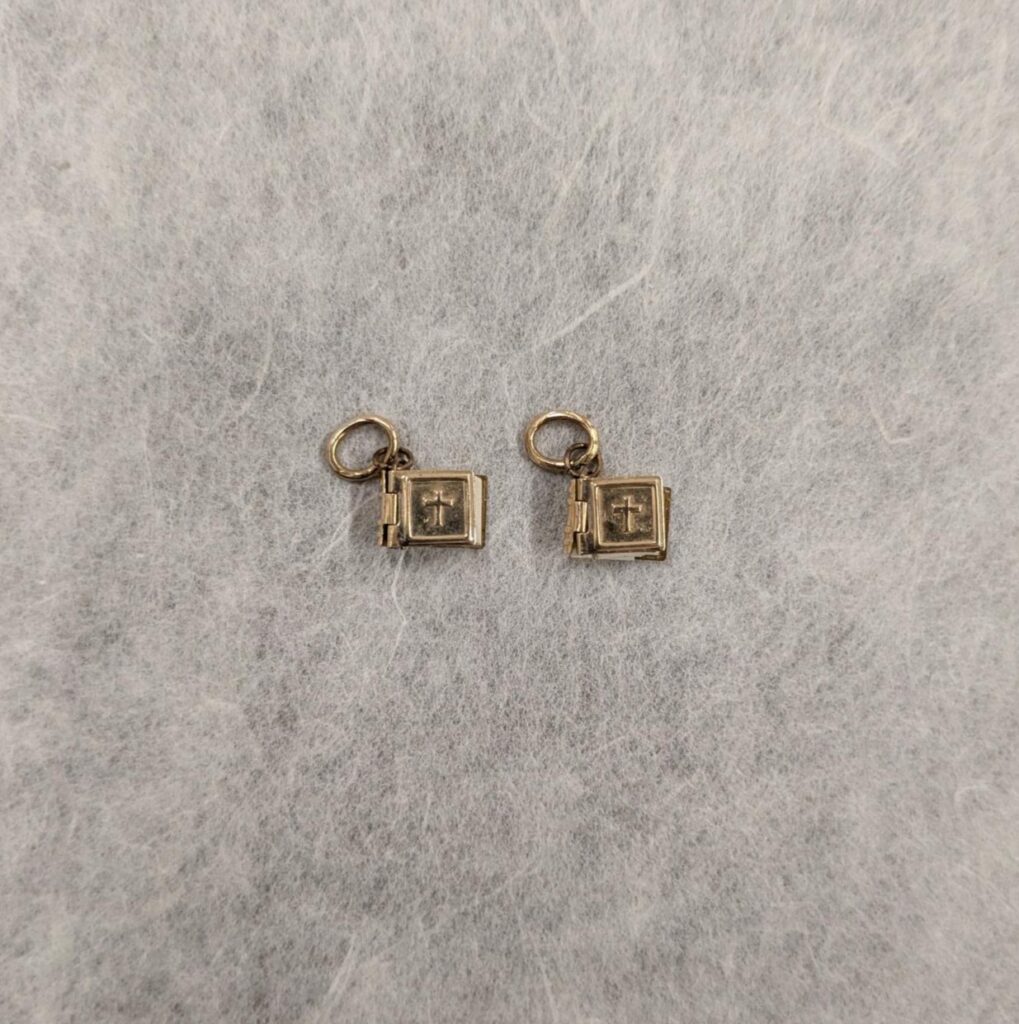
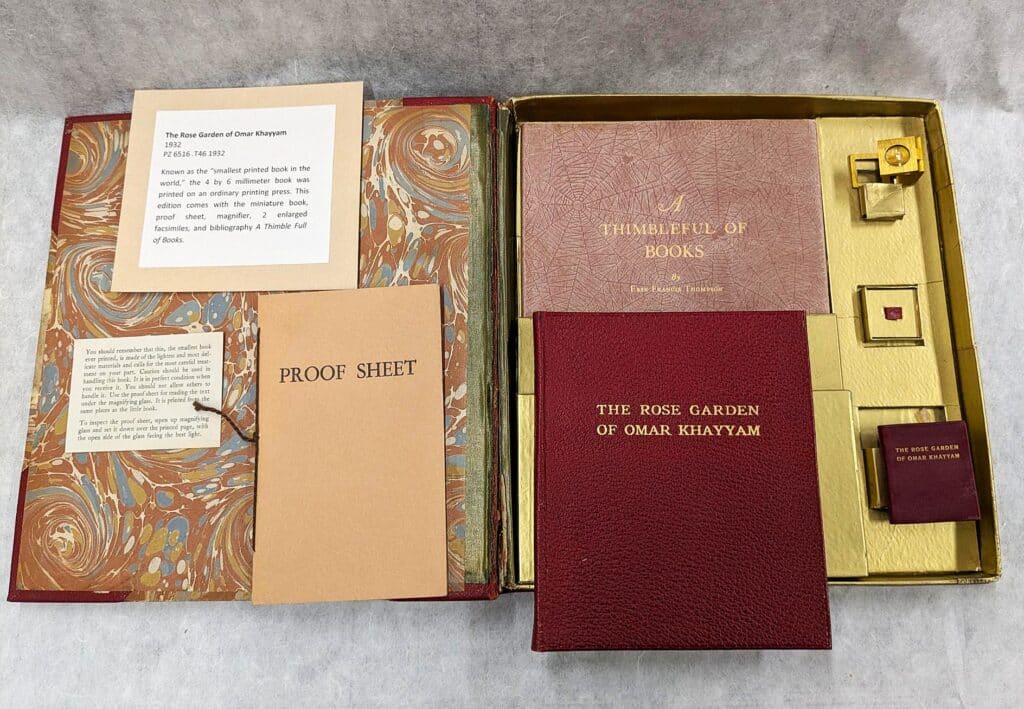
Within our collection, now that I have gone through each tiny tome, I struggle to pick out my favorite. I do certainly enjoy the two that had been labelled as the “smallest” books in the world Le Notre Père, measuring a tiny 8 x 5 mm, and The Rose Garden of Omar Khayyam,coming in at a miniscule 3 mmm. But have no fear, this book comes with its own large version and a magnifying glass in case I wanted to try to read the text on the pages. However the instructions warn to not to attempt reading, which only reinforces my question of why create a book which you cannot read. And must say I do find something cute about the various storage methods and ways in which the miniature books were made small to be portable, but were also given larger cases, to avoid having them become completely lost in one’s pockets.
Overall, the story of miniature books is an interesting dive into the ways in which we humans love to test the limits of our technology, find ways to have information on hand in pre-smartphone or computer time periods, or simply make books more accessible to those who would benefit from the smaller formats while gaining education. It was a delight to get to record these tiny tomes in our library catalog in a more searchable way and learn about their history in the process.

