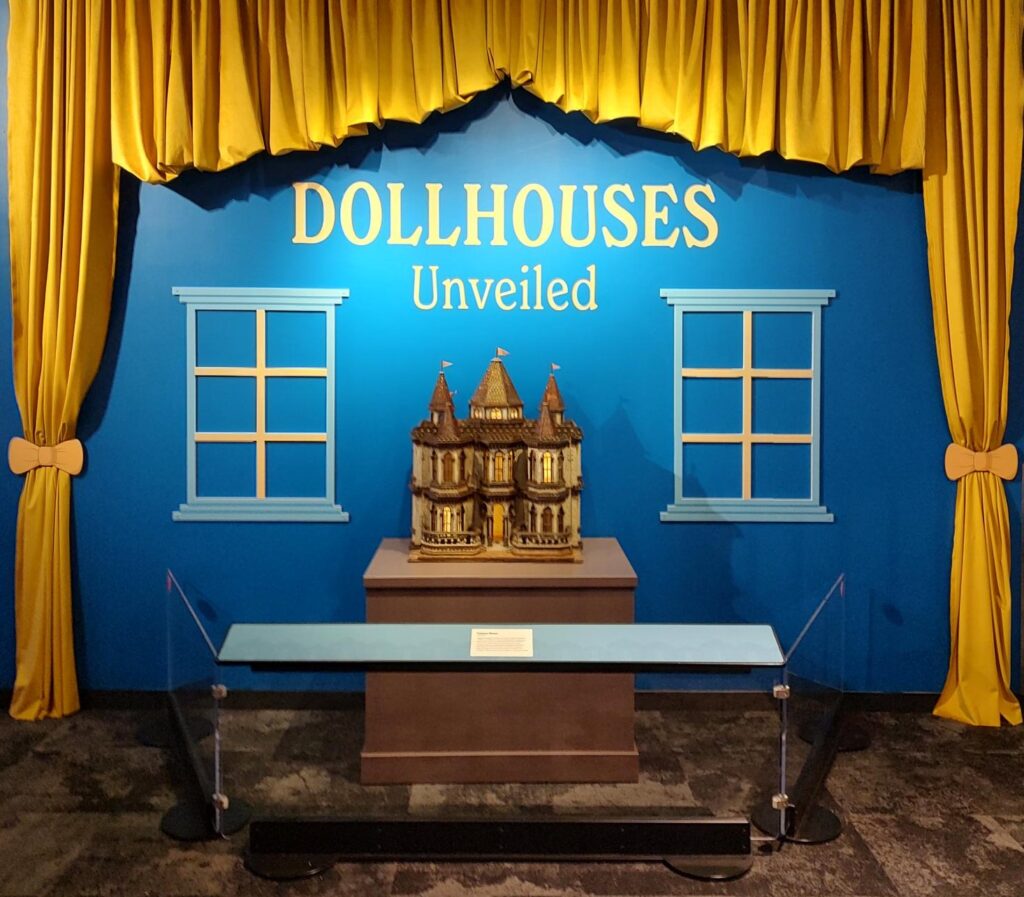

As soon as I saw the dollhouse known as Fantasy House (probably made in France in the mid-20th century), my curiosity was piqued, to say the least. In preparation for The Strong’s fall 2025 exhibit entitled Dollhouses Unveiled, I was able to spend time examining a number of dollhouses from our founder Margaret Strong’s original collection with curator Michelle Parnett-Dwyer. We both couldn’t help but linger on this piece, marveling over the extent of the details inside, which was a stark contrast to the eerie exterior.
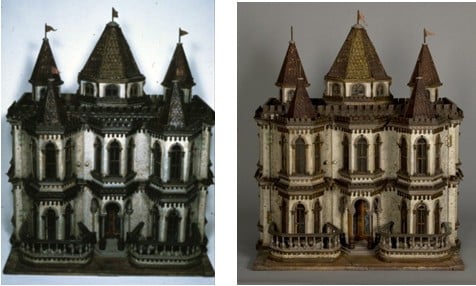
The museum’s collection management program, Argus, unfortunately didn’t have much historical information on the piece, other than providing a list of miniature furniture associated with it, as well as a few photographs of the front. Upon our initial examination, it became clear there had been some damage to Fantasy House—a section of roof was missing from the left turret and all but one of the flags were missing. Oddly, a picture from Argus in 2008 showed the flags intact, while another picture in 2011 showed the flags were already detached and missing. Additionally, no associated conservation reports or photographs were on Argus either. So in preparation for the exhibit, as Fantasy House would be the featured house on the exhibit’s main title wall, I decided to replace the missing section of roof and flags to ensure Fantasy House was looking its best for its inaugural debut. Overall, it was a standard treatment, taking approximately 15 hours in total.
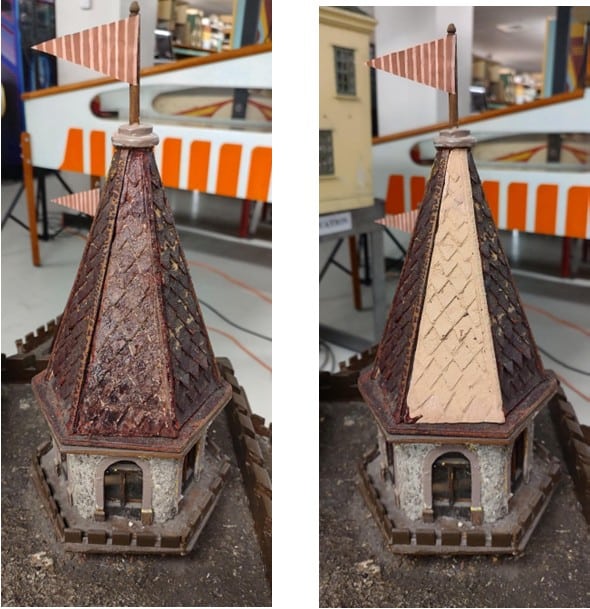
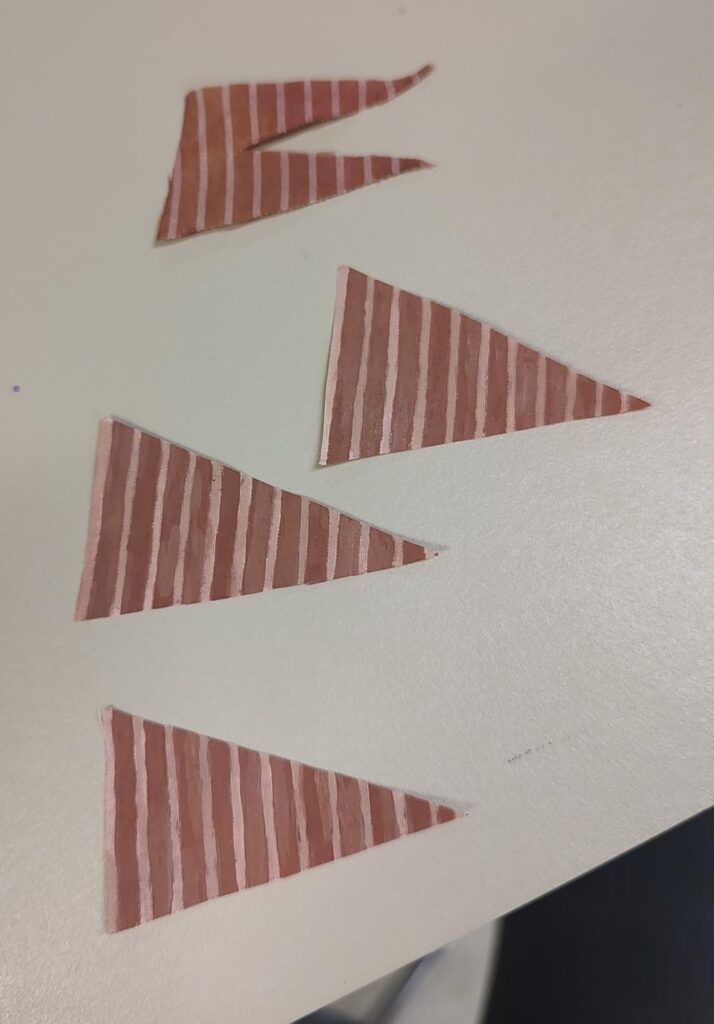
After the treatment was complete, I ended up lingering a little longer on the piece in my head and revisited the Argus entry. I was planning to write a blog about the house, solely based on the unusual characteristics I found intriguing about the house, and thought I’d be able to find something out about it historically with some digging. But the longer I kept thinking about Fantasy House, the more it didn’t make sense that there had been no treatment report or condition notes on what had happened to the missing roof or flags. It was especially strange since conservation has been a part of the museum pretty much since the museum opened in 1982, so there had to be a note or report somewhere. One of the larger-scale projects I began when I started at The Strong four years ago, was to digitize the 40+ years of associated hardcopy conservation reports and photographs that were not very user friendly or easy to access, and upload everything to Argus. Since that project is currently in stage two, which involves renaming digital file, it was currently impossible to search for a previous report related to Fantasy House among the thousands of digitized reports. I dug further into the associated miniature furnishings associated with the house and again tried to puzzle out the missing roof and flag components with Parnett-Dwyer. After giving up my research, on a whim I decided to take a look at the miniatures in person which, luckily. were all stored together in two banker’s boxes. The first box was only 4 trays of dollhouse furniture. But in the second box, lo and behold, there were the detached roof and flags in the very bottom. Thankfully, since one aspect of modern conservation practice is that anything we intervene with (repairs, glues, paint, etc.) should be reversible, I decided I would remove the repairs I had just so lovingly performed, in order to reattach the original pieces.
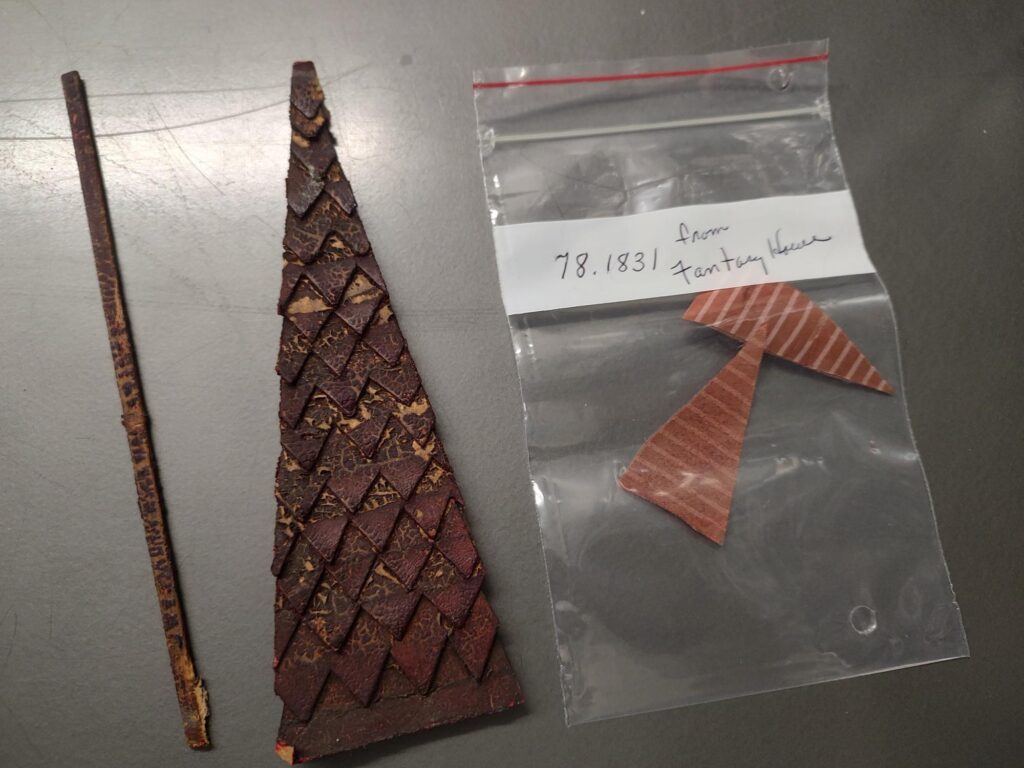
This is of course a very fortunate success story. I felt a great sense of accomplishment to be lucky enough to find the original detached pieces and reintegrate them to Fantasy House. But the larger lesson here is the importance of reports and accessing related historical information for a collection object, which doesn’t just apply to just conservators. Thinking ahead to a person who might be your future colleague or your successor, wouldn’t you want to make it easy for them to access information about tasks you completed? Or be able to understand the thought process behind a treatment performed? Historical information for an object should be available for anyone who may need it: collections managers, curators, researchers, or conservators. Maintaining reports and photographs is an important aspect of the American Institute for Conservation’s Code of Ethics and Guidelines, which any practicing conservator in the United States follows. Gaining access to previous treatment reports can help shed light on treatment successes or failures, both of which can help guide conservators making decisions regarding care for the collection object today. While treatment reports may seem mundane, they are one of the many important pieces of evidence about a museum object and essential for historical reference or provenance.