




Hello, and welcome. I’m new to blogging and only a few seasons into making maple syrup myself—but I’ve been around the process my entire life. What I didn’t realize until recently is that what keeps pulling me back to sugaring isn’t just the syrup. It’s the play.
I’ve always been a hands-on, take-it-apart, fix-it kind of person. Give me something mechanical, inefficient, or slightly broken, and my brain lights up. Sugaring fits right into that wheelhouse. The constant tinkering, the problem solving, the incremental improvements—it’s all part of the draw. But when I zoom out, I see something more: the entire sugaring process is layered with different forms of play.
And maybe that’s why it sticks.
Childhood Play: Discovery
Some of my earliest memories involve tapping trees on the four acres where we lived when I was a kid. Around age 10, we drilled into a few maple and walnut trees and hung coffee cans to catch sap. My dad boiled it down on the gas grill. It took forever. We didn’t start with much sap, which meant we didn’t end with much syrup—maybe half a pint. But it was enough for pancakes.
Looking back, that wasn’t just syrup-making. That was exploratory play. Drill a hole. What comes out? Heat it. What happens? Wait. Watch. Taste. It was science without knowing it was science. Patience disguised as curiosity.
In high school, I spent time at a friend’s farm helping with their more serious maple operation. Hauling pails through the woods. Staying up overnight in the sap house feeding the fire. At the time, I probably treated it like background noise to being a teenager. Now I realize it was apprenticeship play—learning by doing, without calling it learning. He’s since upgraded to a commercial RO (reverse osmosis) system and says he’d never boil without one. Funny how play eventually turns into optimization.
Season One: Experimental Play
Fast forward to adulthood and what my friends jokingly call my real hobby: starting new hobbies.
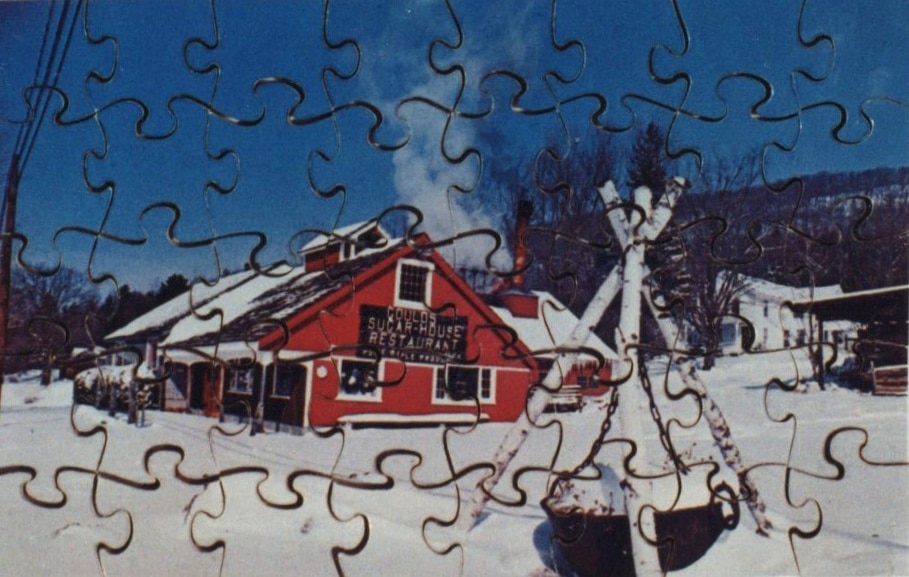
The 2020 hobby surge didn’t help. I had a handful of vintage taps I’d picked up at an antique store in Vermont years earlier. That purchase may have been the beginning of the addiction. I didn’t even own maple trees at the time, I just liked the idea of them.
Eventually, I tapped a few Norway maples at a friend’s property. Not sugar maples, but usable. I drilled, hung random plastic containers, and watched sap drip almost immediately.
That right there? That’s play. Unstructured. Improvised. A little messy. A little hopeful.
I boiled a few gallons down on my stovetop and produced something that resembled syrup. Onto pancakes it went and it was . . . okay. Thin. Buttery. Not quite right.
Failure? Not really. It was feedback.
That first season was pure experimental play. Try. Taste. Adjust. Repeat. And like any good game, once you understand the basic mechanics, you start wanting to level up.
Season Two: Creative Play
By Season Two, I wasn’t just participating—I was designing. I came in with a plan. I wanted more than a couple quarts. I wanted gallons. If I was going to invest the time and energy, I wanted to build something scalable. That meant reverse osmosis.
I could have purchased a prebuilt hobby RO system. But where’s the fun in that? I built my own using HDPE in a professional cabinet shop. It was slick. Overbuilt. Probably more refined than necessary. I’d change things now—and probably will.
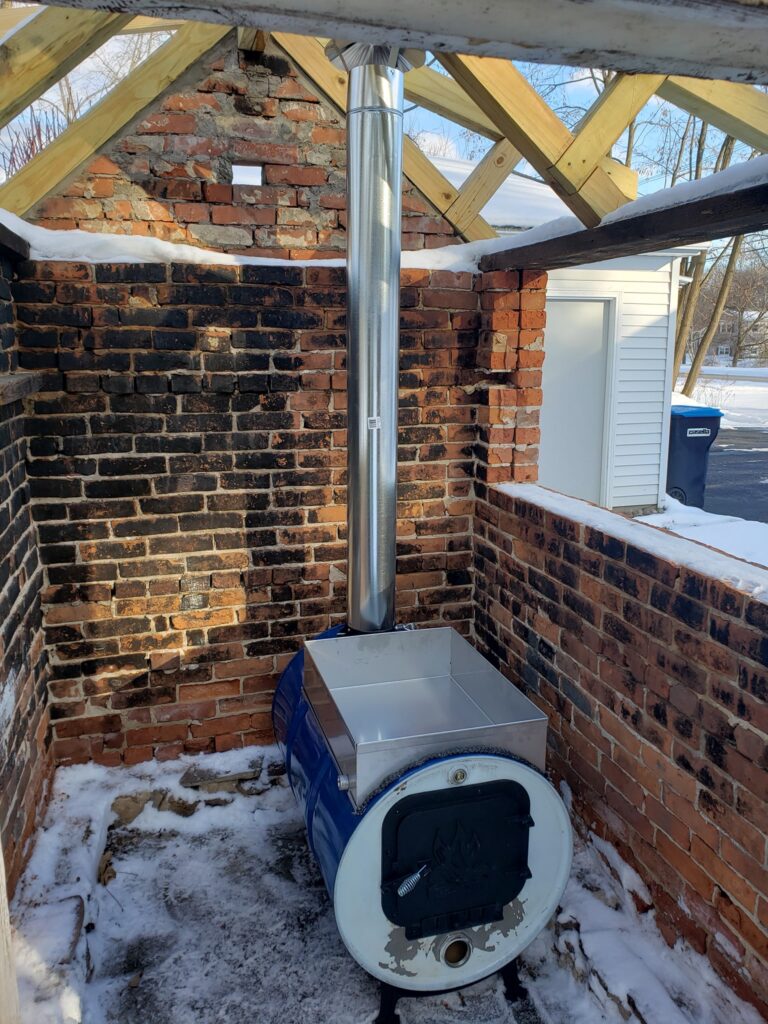
That’s creative play. It’s the modern, slightly refined version of The Red Green Show approach. I’m not in Possum Lake, but I’ve definitely cobbled together some equipment that makes a backyard syrup operation hum. As Red says, “If the women don’t find you handsome, they should at least find you handy.” I built a barrel evaporator from a free 55-gallon drum. Added a stove kit. Splurged on a proper stainless pan (no regrets there). Designed the system to allow expansion from day one.
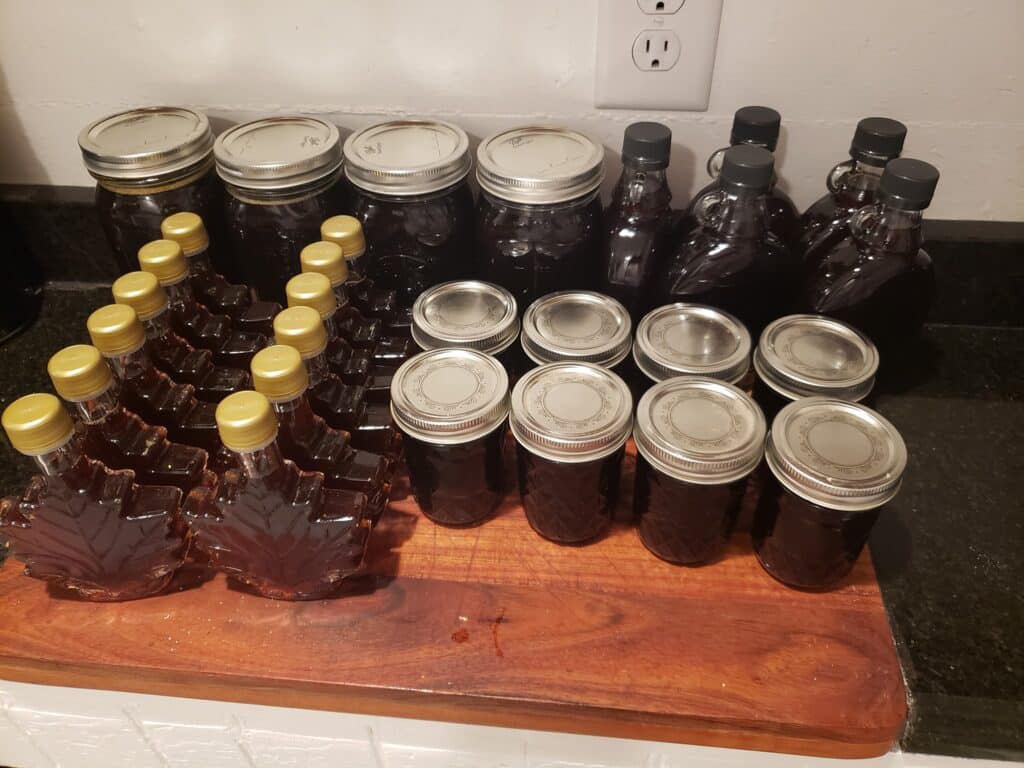
Fifty taps. Four gallons of syrup. Not just production—progress.
Physical Play: Labor and Fire
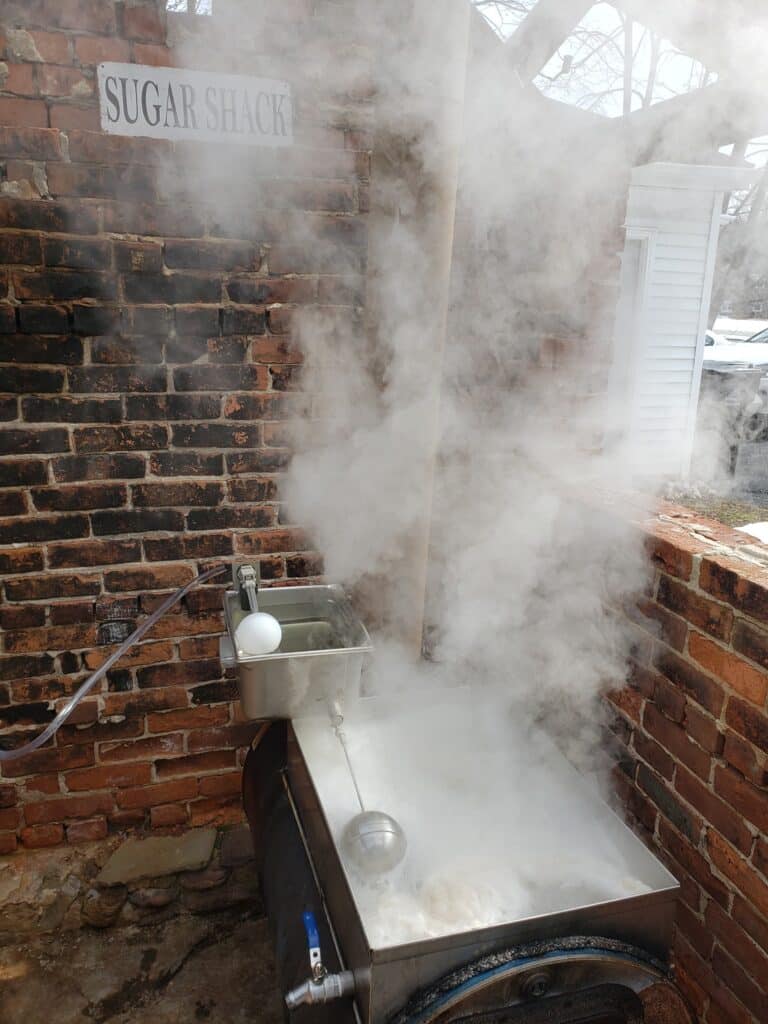
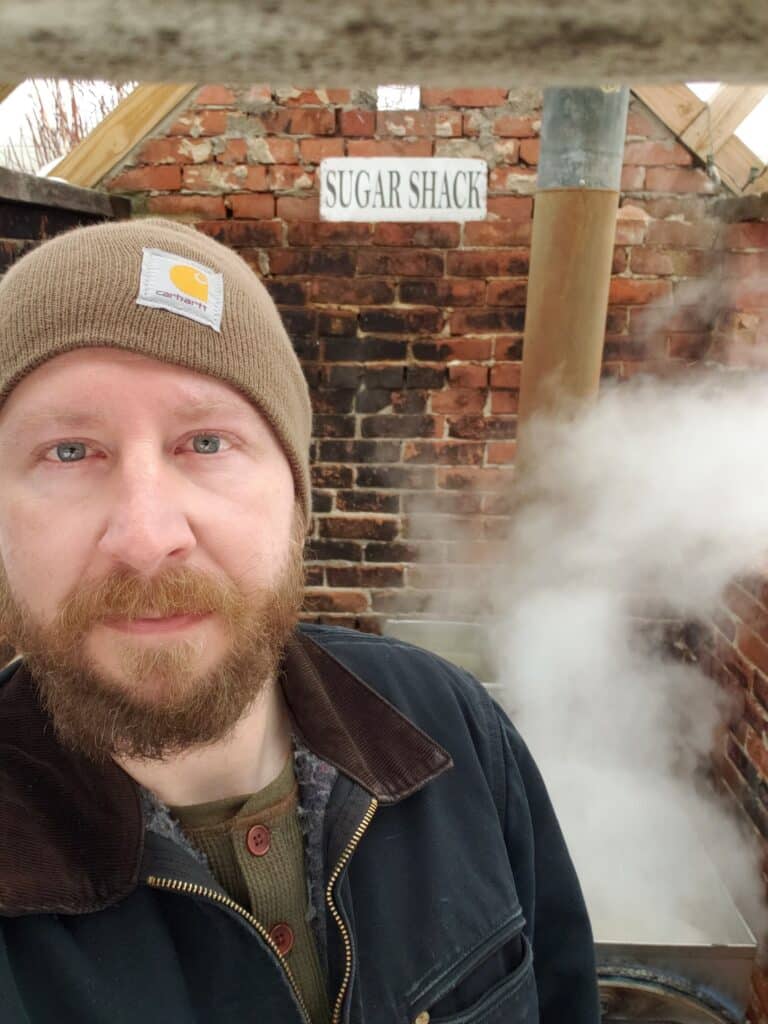
There’s also the physical side of sugaring that we don’t talk about much. Hauling sap. Chopping wood. Feeding the fire. Managing boil intensity. Standing in smoke and steam. Adjusting airflow. Watching the rolling boil. It’s rhythmic. Almost meditative. Like tending a campfire with purpose.
Play doesn’t always mean frivolous. Sometimes it means fully engaged—body and mind.
Strategic Play: The Game Within the Season
Sugaring is a game against time and temperature. You watch the forecast like a coach studies game film. Freeze at night. Thaw in the day. Run length. Storage capacity. RO throughput. Boil window. You’re constantly balancing variables:
- Sap coming in
- Water coming out
- Fuel going in
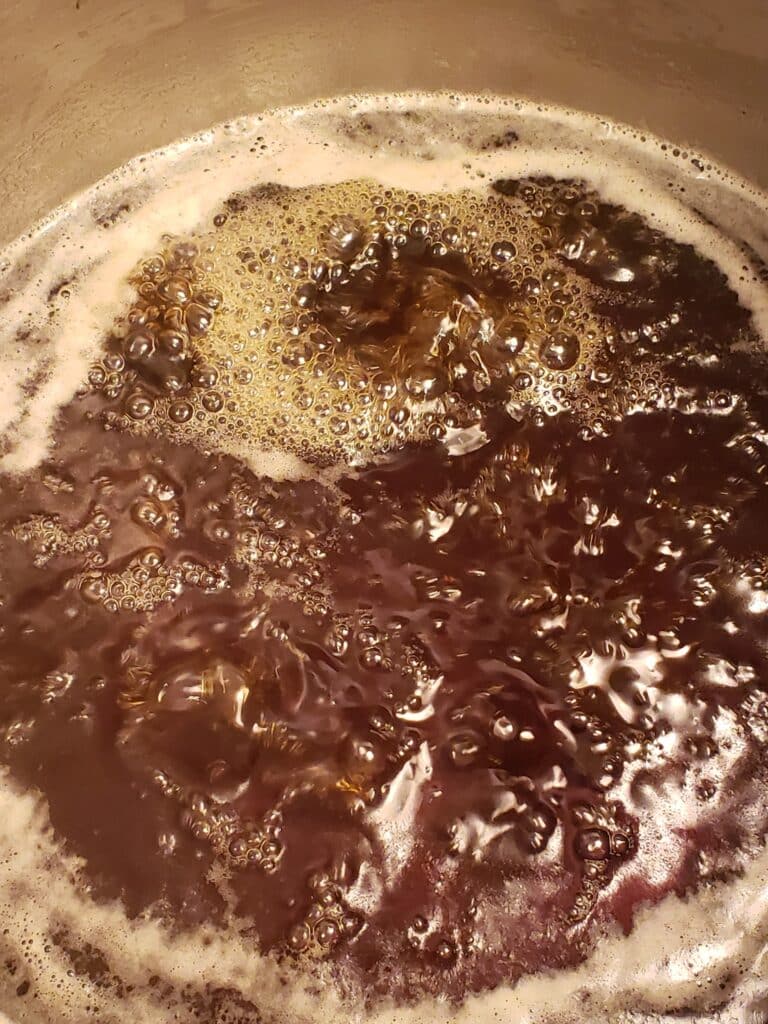
- Syrup finishing at the right density
It becomes strategic play. Planning for expansion. Designing for efficiency. Solving bottlenecks before they happen. Doubling from 50 to 100 taps? That’s not just ambition. That’s leveling up.
Social Play: The Community
One of the biggest surprises was discovering how many backyard syrup makers exist. Forums. Podcasts. Facebook groups. A post-Covid surge of hobbyists all asking the same questions:
How clear should this be?
Why is it cloudy?
What membrane are you using?
How many taps per acre?
That’s collaborative play. Shared learning. Shared mistakes. Shared obsession. The sticky rabbit hole of maple information is deep—and I happily jumped in.
Why This Matters
We tend to think of play as something children do. Something unserious. Something we grow out of. But sugaring reminds me that play evolves. It becomes:
- Curiosity in childhood
- Experimentation in early attempts
- Creativity in design
- Physical engagement in labor
- Strategy in scaling
- Community in shared experience
And maybe that’s why I keep coming back to it.
Yes, I love the finished product. Four gallons of syrup on a shelf feels satisfying. But the real reward is the process—the tinkering, the smoke, the spreadsheets, the late-night boils, the incremental improvements. Sugaring is serious work. And it’s also serious play. If you want to try sugaring without the trees, check out Master of Maple Syrup, a board game created by Sébastien Bernier-Wong, published by Firestarter Games.

