





Inducted: 2026
People have coasted down hills for millennia, but modern slides of wood, steel, and plastic turned inclined planes into toys. By the 1900s, slides became fixtures at funhouses and amusement parks. The Helter-Skelter Slide at Coney Island, for example, opened in 1906. Participants rode an escalator to the top of the chute, slid down, and landed on a mattress. Slides proved popular amusements for people of all ages.
The playground movement of the early 1900s further introduced slides into public spaces dedicated to children playing together. By the 1920s, parks departments across the country included playgrounds and recreation. Designers created what became the traditional playground with benches, water fountains, and asphalted areas with slides made from wood or galvanized steel. Metal slides remained popular for decades and many adults recall how fast they slid down these tall, narrow slopes as children. Some even remember the hot burn of the metal on the back of their legs.
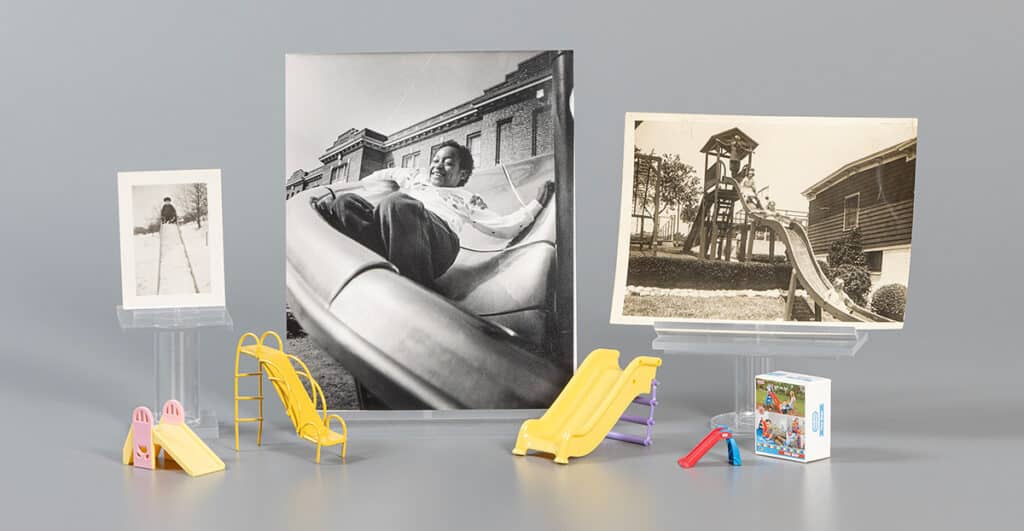
From the 1950s to the 1970s, many cities across America developed novelty playgrounds with elaborate and imaginative slides related to space exploration, animals, and fantasy. Memorable slides fire the imagination, but in 1981, the Consumer Product Safety Commission published new regulations calling for fewer climbing opportunities and additional guardrails. They also endorsed the use of vinyl coating, rounded edges, and plastics. Mass-produced prefabricated slides like Little Tikes Jumbo Hide ‘N Slide became available for home use. Many Americans placed freestanding slides in their sunny suburban lots or inside their elaborate playrooms.
Today, slides are customizable, modular, and more flexible. Although the apparatus has changed over time, the benefits of playing with a slide remain the same. Slides help kids develop motor skills, encourage exploration, and promote risky play. And many grown-ups agree that sliding down a slide is invigorating.

