




ROCHESTER, NY—Doug Reuter, inventor of the popular tabletop game Sequence, recently donated dozens of game materials and memorabilia to The Strong National Museum of Play, including four one-of-a-kind prototypes of Sequence. Reuter delivered the materials to The Strong in person and was joined by Adi Golad, the founder of Goliath Games and publisher of Sequence. (The pair also brought signed copies of Sequence for the museum’s staff and partners.)
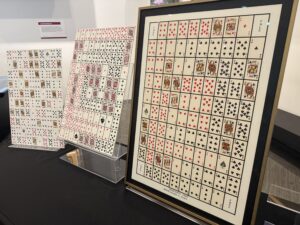
“Sequence’s longevity is evident in its numerous editions and its continued popularity; the game has sold more than 10 million copies since 2018 alone. In the 45 years since its introduction, it has become a special game to many families, including my own,” says Mirek Stolee, curator of board games and puzzles at The Strong. “We’re extremely grateful to Doug Reuter for saving these materials and donating them to the museum so that we can preserve and share them with future generations. Having the prototype boards allows us to trace this beloved game’s journey from literal dream to reality.”
Reuter first came up with the idea for Sequence in a dream and woke up to write the idea down. The donated materials include a replica of the first board he created by hand, and each iteration after, including the “final” prototype that he submitted to Jax, Inc., the original publisher of Sequence (now owned by Goliath Games). The collection includes Reuter’s first contract with Jax from 1981, and various versions of the game—including Sequence for Kids and the jumbo edition. It also includes some materials and prototypes for other games Reuter created, such as Futility, QB8, and Zigzaggle.
The materials add to The Strong’s deep collection of board game materials and will be available to researchers and for future display. To learn more about the museum’s collections, visit Collections – The Strong National Museum of Play
About The Strong
The Strong is the only collections-based museum in the world devoted solely to the history and exploration of play. It is home to the International Center for the History of Electronic Games, the National Toy Hall of Fame, the World Video Game Hall of Fame, the Brian Sutton-Smith Library and Archives of Play, the Woodbury School, and the American Journal of Play and houses the world’s largest and most comprehensive collection of historical materials related to play.

