




By Marli Simmons, Collections and Conservation Intern, 2026
Interning for The Strong’s Collections and Conservation team has allowed me to see and interact with thousands of the museum’s collections items. Many objects are exactly as you’d expect, lighthearted games, toys, and dolls. But some artifacts are a little more bizarre, eccentric, and even scary. I came to discover that many of these more unconventional objects were a part of the museum’s founding collection. Securing a charter for a “museum of fascination” in 1968 Margaret Woodbury Strong was an avid collector. She was interested in the material culture of everyday life and collected many playthings with a few that we might consider spooky or strange. As an enthusiastic enjoyer of Halloween and all things creepy myself I decided to combine this passion with my work here at the museum by compiling a list of (in my opinion) the top three eeriest objects in The Strong’s founding collection.
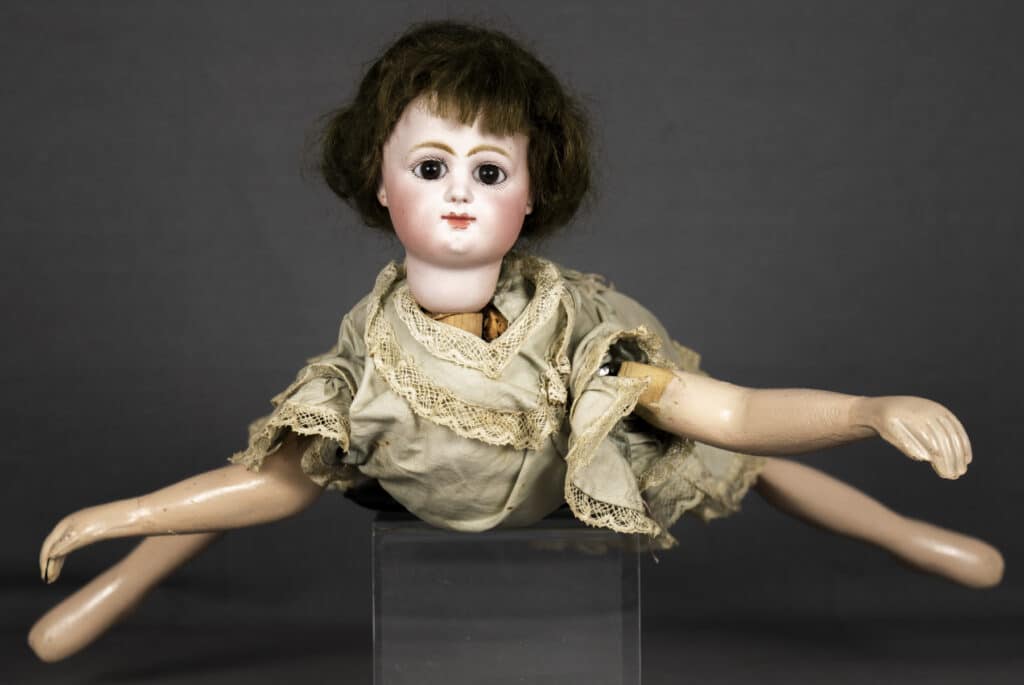
“Ondine” Roulette & Decamps swimming automaton, Roulette & Decamps, late 19th century, The Strong National Museum of Play, Rochester, New York.
Automaton
During my internship I spent a lot of time with dolls, from rehousing Barbies to cleaning display cases. I wondered, what is the creepiest doll out of the more than 560,000 items in all The Strong’s collection? Working in one of the museum’s many collections storage spaces I came across a late 19th century French Ondine mechanical swimming doll. I was so entranced by its strange posture, loose limbs, and rugged garments that I had to learn more about it.
Initially considered a mechanical crawling doll, I uncovered much more about this object’s eerie origins. Inventor Élie Martin patented the doll in France around 1876. Designed to make swimming more fun and appealing to children, a winding key on the stomach would initiate the front and back limbs to move side to side, imitating a breaststroke. However, the clock-like mechanism and buoyant cork body were relatively fragile, and the resulting movements were unnatural, far more horrifying than lifelike. A marvel of engineering for its time, few of these “Ondine” dolls exist today as their interiors degraded from prolonged exposure to water. It’s amazing that Margaret Woodbury Strong would come to possess such a rare item with features and movements that are the stuff of nightmares.
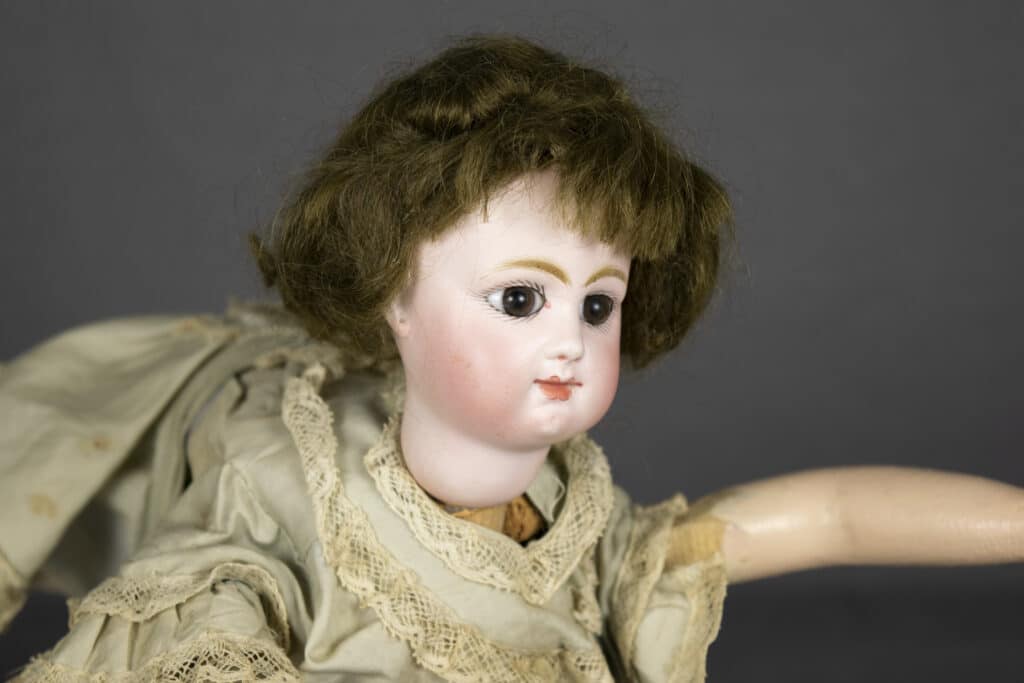
“Ondine” Roulette & Decamps swimming automaton, Roulette & Decamps, late 19th century, The Strong National Museum of Play, Rochester, New York.
Lobster Man
On the other end of the peculiar spectrum, is an object I like to call “Lobster Man,” officially known as “Whimsey” in the collection’s object file management program, Argus. Trapped in a sealed dome, with his off-putting expression and angular pose, tiny claw hands contrasting his much larger claw face. The more I looked the more unsettled I became. I had to know, where did this object come from and why is it made of lobster shells?
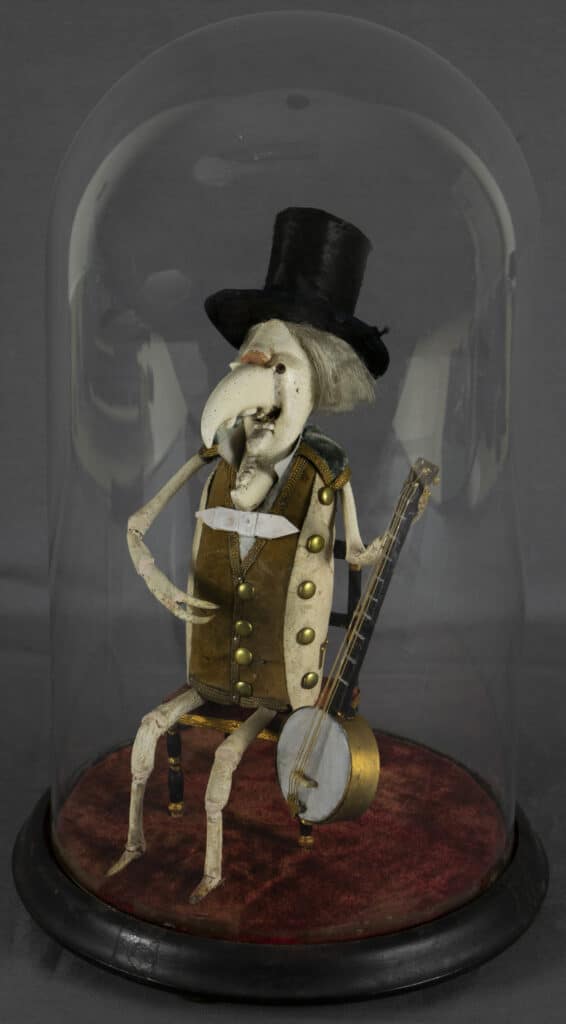
“Whimsey”, ca. 1870, The Strong National Museum of Play, Rochester, New York.
Popular during the Victorian era, the tradition of homemade shell figurines resurged in coastal communities in the 1970s. The peculiar crafts likely gained popularity due to the excess seafood waste found in these areas. They were deemed a novelty folk art and found their place amongst rising Americana and nautical interior design trends. While instructions for making such disturbing figures were published as early as 1867 it’s no doubt Margaret Strong was interested in this novelty pastime soon to become a 1970s fad. You can find a version of this lobster figure on display at The Strong today in America at Play.
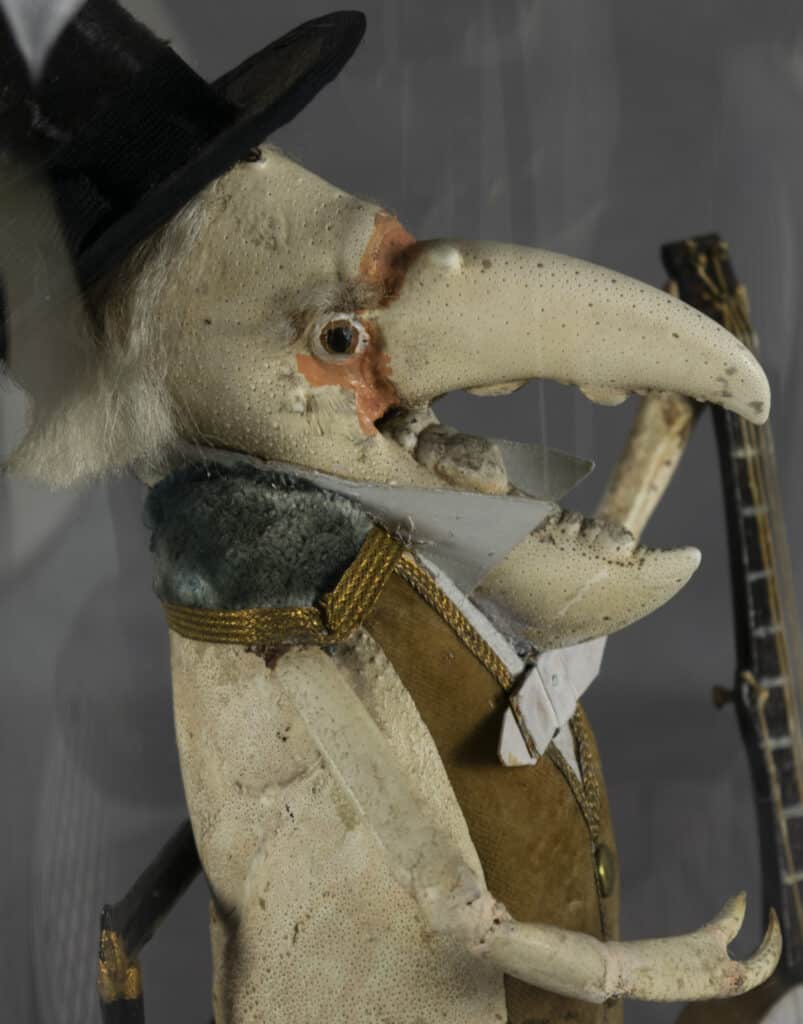
“Whimsey”, ca. 1870, The Strong National Museum of Play, Rochester, New York.
Electric Chair
A glimpse into the mind of the museum’s founder, this final object represents a dark side of late 20th century material culture. To say I saved the scariest collections item for last would be an understatement.
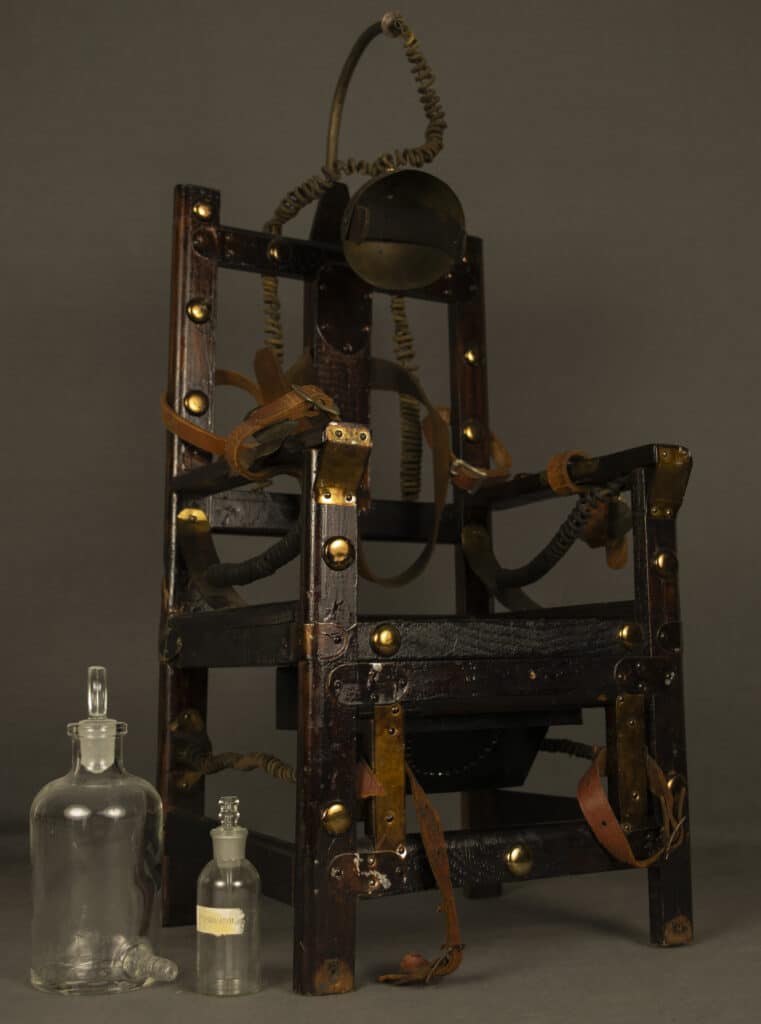
“Electric Chair,” early to middle 20th century, The Strong National Museum of Play, Rochester, New York.
A doll-sized electric chair was released in 1978 by Poynter Products. Intended as a gag gift rather than a toy used for play this chair took batteries and would produce a harmless shock when picked up by the chair’s armrests. Marketed for adult use, the scale allowed for presentation with dolls such as Barbie and GI Joe. However, the chair found in The Strong’s collection is not the chair produced by Poynter Products but rather a preceding, likely homemade version, three times the size of the manufactured gag gift. This object, a part of the museum’s original collection, still has a battery pack for electrocution much like the smaller version. So, what was this item used for? Why was it made? And how did it end up in Margaret Strong’s collection? We may never know for certain, but just thinking about it gives me goosebumps.
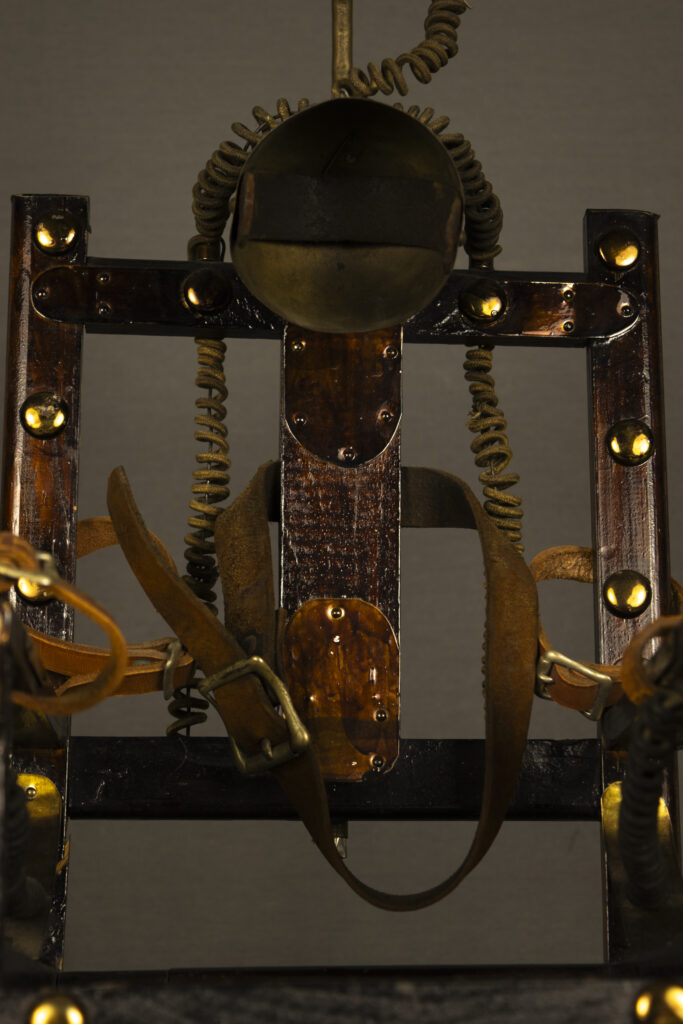
“Electric Chair,” early to middle 20th century, The Strong National Museum of Play, Rochester, New York.
I wonder if the ghost of Margaret Woodbury Strong is watching over these artifacts she once found so captivating. You’ll have to let me know, did you find these objects as shocking and eerie as I did?

