



Being an Archivist is literally my dream job but one thing I did not expect was how satisfying it is to work with interns. You get to watch as they build confidence day by day in the decisions they make, hear them laugh as they find something unexpected or funny, listen to the yawns while they’re slogging through the “boring” tasks (removing staples from hundreds of pages can get repetitive), and best of all, see that spark ignite into “YES! This is what I want to do with my life!”
In January 2025, The Strong was awarded the Rochester Regional Library Council [RRLC] Internship grant. The funding supports paid internships to introduce graduate or undergraduate students to career opportunities in archives, museums, libraries, and other cultural institutions and provide professional experience.
We chose to do an archival processing project. Two collections—the Michele Em papers and the Logitech optical dance pad design papers—were selected that provided an intern with experience working with different media types such as VHS cassettes, photographs, paper, audio cassettes, digital images, and documents.
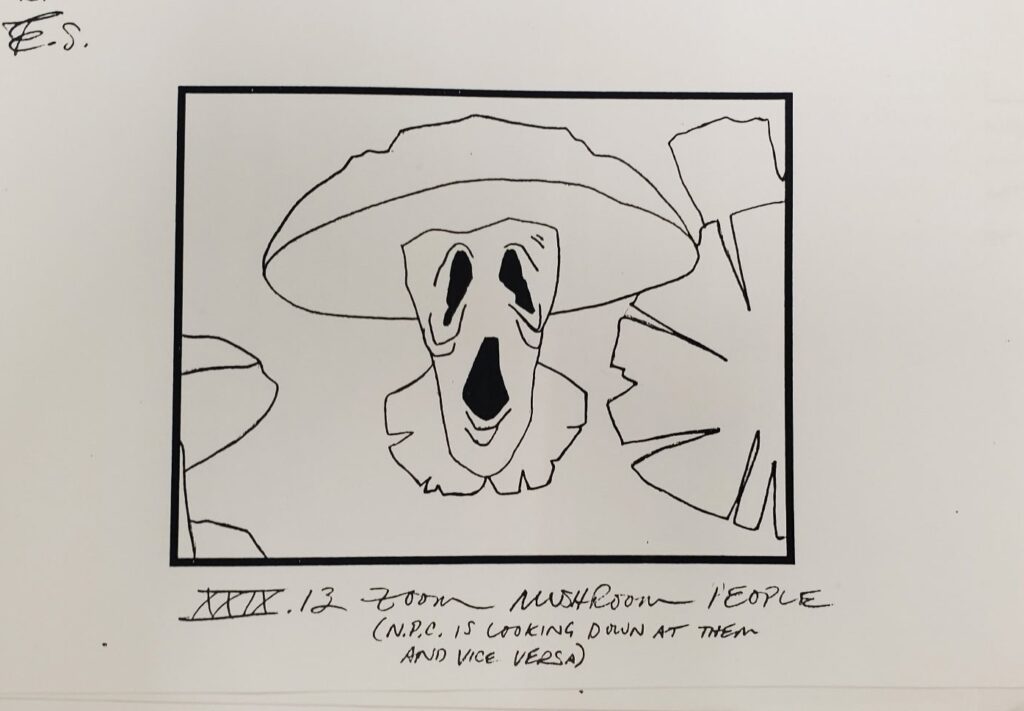
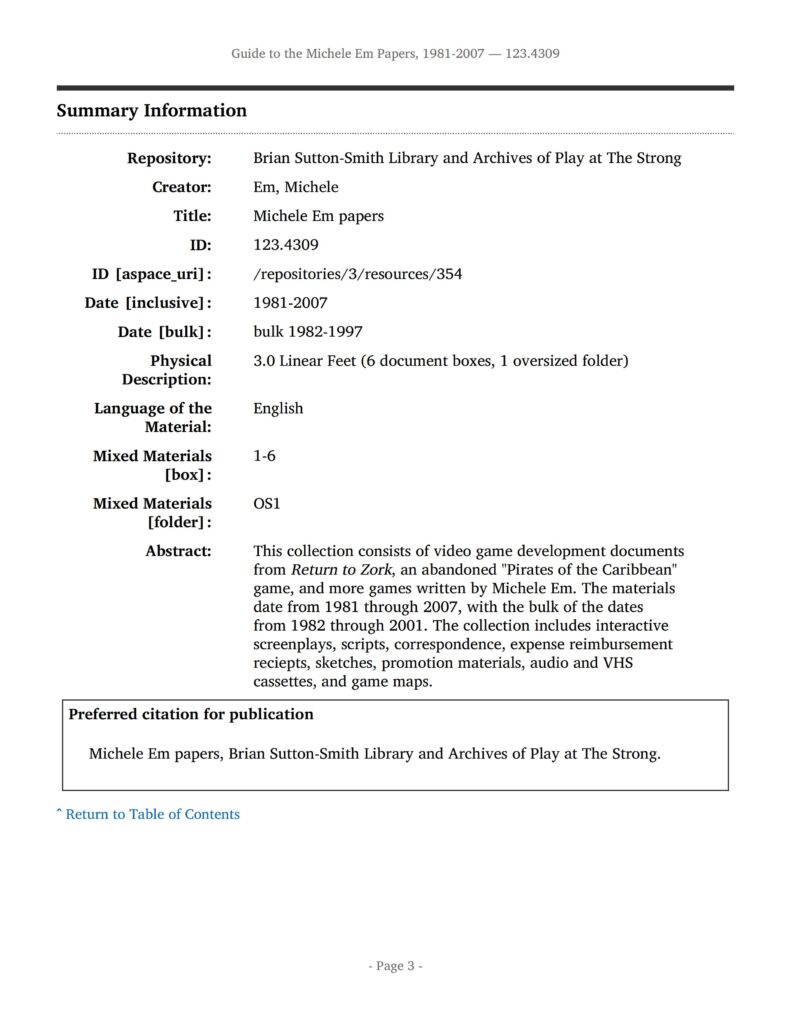
The Michele Em papers consist of approximately three boxes of game design documents, scripts, notes, storyboards, and more for Return to Zork (1993) and other unpublished games like “Pirates of the Caribbean,” “Jericho,” and “Egyptian Jukebox.” Em is a writer and producer whose work on Return to Zork shifted the narrative from the previous Zork-games. Em’s papers also help tell the story of women’s contributions to the video game industry.
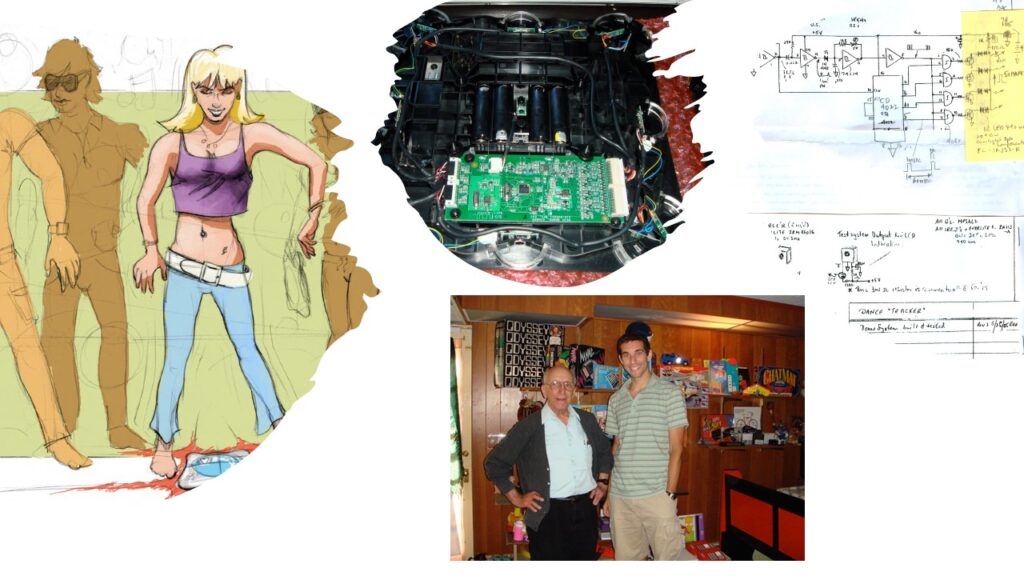
The Logitech optical dance pad design papers are stored as approximately 64 megabytes of digital files related to a joint project by inventor and engineer, Joe Grand and inventor and developer, Ralph Baer. Together, they developed Logitech’s Optical Dance Pad that launched in 2008. The digital files consist of project plans, hardware and software development documents, photographs. The collection adds to the museum’s collection of Ralph Baer materials.
Keegan, a graduate student from the University at Buffalo was fortunate to be the Chosen One for this project. Eager to learn and really excited, he had a lot of work to do in a short amount of time. Armed with his task list, archival theory knowledge, the right resources, and his very own spatula, he hit the ground running. He performed a preliminary inventory, created a battleplan, put the plan into action by performing small preservation tasks and re-housing the materials into the proper storage, and described the collection so people can find it.
The project had its challenges. We had a late start on an already short timeline— summer semesters FLY by! And at times our software program was running very………. slowly……. But there were so many more successes! The museum increased access to collections related to Women in Games and previously inaccessible collections, completed necessary archival work, and contributed to the long-range goal of preserving the premier collection of play-related artifacts.
Keegan built his professional skills, gained hands-on archival processing experience, learned some preservation techniques, was able to learn from non-archivist experienced museum and library professionals, and also got to see some really cool stuff every day. Ultimately he finished the summer with two tangible final work products for his professional portfolio.
Internship programs are so important for hands-on experience, networking, skill development, and learning more about a specific type of career before committing, but they can also boost a student’s confidence and ignite a passion for what they’re doing. Thanks, Keegan for all your hard work and to the RRLC for recognizing the importance of funding internships!

